Showing posts with label Willa Cather Short Story Project. Show all posts

Friday, May 26, 2023

The Professor's Commencement by Willa Cather: A Short Story #WCSSP2023


πŸ‘¨‍πŸŽ“ First of all, I had to google "commencement" before realizing the meaning of this academic term. It's good to have learned at least one word from a story, even if I didn't really enjoy it.

πŸ‘¨‍πŸŽ“ It is about Professor Emerson's last day of teaching in a high school before his retirement from thirty years of service. His sister, a widowed Agatha, laments his lack of ambition. The Professor himself is often disconcerted by massive industrialization of their society, which muted academic passions of his pupils.

πŸ‘¨‍πŸŽ“
On the night there is a retirement party, and the Professor, as a tradition, must give a speech. He decided, upon Agatha's advice, to read something which he had blundered years ago. Maybe this time, this last time, he could make up for his past humiliation?

πŸ‘¨‍πŸŽ“ No, he couldn't. He blundered again, but his sister consoled him, saying that "it's all right". Now the Professor is dejected and hopeless. He feels that he had achieved nothing. But had he?

πŸ‘¨‍πŸŽ“ Poor Professor Emerson is having a mid-life crisis. I pity him, not because he achieved nothing, but because even at his age (fifty), he still cannot accept himself as it is; he hasn't made peace with himself. So what if he's "just" a high school professor for thirty years, if he had given his best every day of it, and enjoying it all the while? A failure is he who possess much but does nothing; while a successful one is he who does all he could with what God has blessed him with.

πŸ‘¨‍πŸŽ“ All in all, though I felt this story rather boring (my least favorite of the year so far), at least it serves as a remembrance to always accept oneself as it is; make peace with one self; and be happy!

Rating: 3 / 5


Monday, April 24, 2023

El Dorado, A Kansas Recessional by Willa Cather: A Short Story #WCSSP2023

🌡If I must give this particular story a one-word review, it would be: swindle. Because that's what it is about. A poetical prose beautifully written by Willa Cather, about swindle.

🌡 Colonel Josiah Bywaters had lived peacefully in Virginia for years. Until one day, four years ago, his friend introduced him to a amiable young man called Apollo Gump. That's when his life was about to change completely.

🌡 This Apollo young man persuaded the Colonel to invest in Western land, but he rejected. Soon, however, the Colonel grew fond of the young man. They drank whiskey together, while Apollo told many stories about Kansas City, in particular a town called El Dorado: "the beauty of the location, the marvelous fertility of the surrounding country, the commercial and educational advantages of the town."

🌡 Soon enough the Colonel was persuaded, and after sold his business, left Virginia to move to El Dorado, along with some other men Apollo had also successfully persuaded.

🌡 El Dorado was practically owned by the Gumps. Every establishment was owned by one of Apollo's brothers; they were the banker, physician, architect, real estate agent, mayor, and so on. Apparently, El Dorado was founded by the Gumps, and now it was built by promise; promise that a railroad would be built, the waterworks would be put in, next spring. And Josiah was once more persuaded to invest his money on the land, while opening a grocery store.

🌡 When spring came, however, the Gump boys were summoned by their dying father. Excepting Apollo (he, too, later went away), they were all gone. And with them, all the funds - banking, real estate, etc. They realized then, that they were swindled.

🌡 All of them left El Dorado, but Josiah. He stubbornly refused to leave that deserted town, waiting to get his money back. Not even after other houses and buildings were torn down, and Josiah's store was the only building still intact. Would his patience bring fruitful result? Or would he be dying in the loneliness of the barren bluff?

🌡 I love this story! All the elements of what I love from Cather is here. Poetical prose, beautiful and poignant, vividly portrayal of the characters' struggles, all in a short story. And the ending is superb!

🌡 I also love how she described the landscape as a living creature:

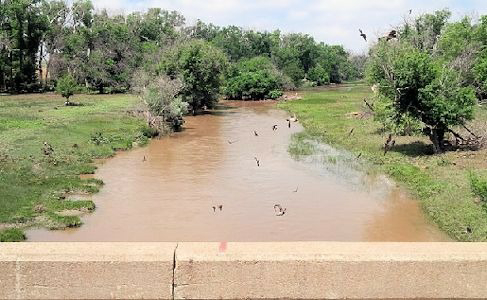
"The river is a turbid, muddy little stream, that crawls along between naked bluffs, choked and split by sand bars, and with nothing whatever of that fabled haste to reach the sea. Though there can be little doubt that the Solomon is heartily disgusted with the country through which it flows, it makes no haste to quit it. Indeed, it is one of the most futile little streams under the sun, and never gets anywhere."


"Sometimes, in the dusk of night, when the winds were not usual and only the stars could hear, the dry little corn leaves whispered to each other that once, long ago, real yellow ears grew in the Solomon valley."

"Near the river was a solitary frame building, low and wide, with a high sham front, like most stores in kansas villages. Over the door was painted in faded letters, 'Josiah Bywaters, Dry Goods, Groceries and Notions.'"


🌡 Josiah himself is an inspiring character. His patience, his strong will to endure, not so much the poverty than, the loneliness. Many others in his place would have had fallen to pieces sooner than a year. But not Josiah. Maybe we can learn a bit from him - of his resilience, not his poor judgment - such as living life as if he'd live in his happy past. Josiah would always wear his best Sunday suit, and went for fishing - though there's scarcely any fish in that muddy river. These little things help him maintain his dignity, and ridiculous as it seems, I think it help him enduring his desolate situation. Do you agree?

Rating: 5 / 5

Saturday, March 18, 2023

Jack-a-Boy by Willa Cather: A Short Story #WCSSP2023


πŸ’™ For the past five years I’ve been living in an apartment building. And so, I have a certain interest in stories which are set in apartment or flat, just like this one. The name of the building is Windsor Terrace. I don't know what 'Terrace' alludes to in this case, but the narrator - a piano teacher called Miss Harris - says that "people who live in terraces are not usually those who have made the most brilliant success in life." Does it mean that the Terrace is the humbler type of flats?

πŸ’™ Jack-a-Boy and his family just moved in to number 324. He's a six year old girlish boy with big violet eyes. At first nobody pays any attention to him. Children are usually boisterous, and in an apartment building especially, they are doubly annoying. We can hear their footsteps while running around along the corridor, or shouting excitedly to their parents inside the lift. Oh yes, little children aren't truly welcomed in apartment buildings. But Jack-Boy isn't just any boy.

πŸ’™ He's a sweet little boy, unassuming, quiet and polite, affectionately warm to others. Right after the family's arrival, he visited his neighbors one by one, and they instantly succumbed to his pleasant habit of wanting to please everyone! At the Professor's, who study Ancient Greek, for instance, the boy would curl himself on the rug, quietly browsing at a picture book borrowed from the Professor, without disturbing him. And then he asks the Professor to tell a Greek story (Trojan war), to which he listened attentively. The boy kept reverently an ugly toy dog made by another neighbor, just because he "wouldn't like to hurt her feelings". How sweet!


πŸ’™
Besides loving Ancient Greek stories and seemingly rather talented in playing piano, Jack-a-Boy doesn't like playing with other boys, because "they are such rough boys". But that doesn't mean he's a gentle coward either, for when a little girl was bullied by another boy, he bravely "flew at him like a wild cat, fists, teeth, feet and all the rest of him".


πŸ’™ Approaching May Jack-a-Boy busied himself preparing for his May-basket hanging - a basket filled with colorful tissue papers and flowers to be hung on the neighbor's door. What a sweet little boy, this Jack-a-Boy is - an angelic one, almost. And I think I've guessed all along how this story would end - what usually happens in literature to these kind of children, so I prepared myself.

πŸ’™ Reading this story, I could feel that Cather wrote it by heart; that this story is special for her. And I was right, searching on google, I learned that it's a reference to Cather's little brother whom she nursed through a serious disease.

πŸ’™ One more thing, the day after that fatal day, Miss Harris is discussing with the Professor about how missing Jack-a-Boy meant to them. The Professor's lamenting what Jack-o-Boy would have been if he were still with them - an exceptional Greek scholar. While Miss Harris was only missing him as himself, "It was the little human boy that I loved". I am perhaps more with Miss Harris, and I guess Willa Cather was too. But maybe it's better that he leaves this corrupted world while still being innocent. One might never know what he would turn into while growing up.

πŸ’™ A heartwarming little story about a little boy, that will leave you pondering more about human's frailty.

Rating: 5 / 5


Saturday, February 25, 2023

A Singer's Romance by Willa Cather: A Short Story #WCSSP2023


πŸ’— Our second Willa Cather's short story for #WCSSP2023 project has a very different tone from last month's. It is very short, light, and straightforward; and very appropriate too for a February read - a romance!

πŸ’— Frau Selma Schumann is an opera singer. She had zealously worked hard her entire life to achieve the present level. Not that she minds it, as hard working is a spirit she inherited from her father. But at forty two years old, she begins to have a little regret for never having tasted the sweet taste of romance.

πŸ’—
The story begins on a rainy night when she is about to leave Metropolitan Opera House after finishing her performance. Struggling to replace her wind-swept mantilla, she dropped her jewels bag. A handsome Latin man with black hair, mustache, and a red carnation in his buttonhole, sprightly lept to snatch it, and returned it to the owner with a bow.


"The New Yorker" by Constantin Alajalov, 1937


πŸ’— The incident is only one of several occasions where this signorino always appeares wherever Madam goes with her valuable maid/companion Antoinette. Antoinette is an orphan, daughter of a former opera singer, whom Frau Schumann took into her service.

πŸ’— Naturally Madame believes the signorino is attracted to her. But why does he never say anything, nor attempt to communicate with her? She has even manoeuvred some incidents to let him take the first move. But nothing happens. Meanwhile, Madame decided to look after her appearance more carefully, and stop drinking champagne. Still, nothing happens. When she finally hears signorino's voice, things turned out very unexpectedly, and so she turns back to champagne again.

πŸ’— Overall, it is a sweet, but melancholy story; a little humorous but ironic. It reminds me of Song of the Lark - the same hardworking women, sacrificing their private lives to be successful opera singers. And what then? They might or might not be successful, but in the end, is it all worth it?

πŸ’— I quite love this story, although it's not the usual Cather's quality writing I always expect of her, it's sweet, simple, and entertaining.

Rating: 4 / 5


Wednesday, January 25, 2023

The Affair at Grover Station by Willa Cather: A Short Story #WCSSP2023


I've made a spur decision to join Chris Wolak's Willa Cather Short Story Project 2023. Well, I've actually been meaning to join since last year, but somehow haven't. This time I was more prepared. I've just found - and instantly bought - the e-book of Delphi Classics edition of The Complete Works of Willa Cather at Google Playbook, for under $2!


I was so delighted that all the 2023 stories are included in this copy, that I instantly joined in! For January we read:


**The Affair at Grover Station**

πŸ”΅ It is a story within story, or a frame story. A geologist met his college friend, a railroad clerk. Boarding on the train from Grover Station to Cheyenne, the geologist asked his reticent friend, "Terrapin" Rodgers (Terrapin = freshwater turtle = reticent), to tell a story about the mysterious murder of the Grover station agent.

About Grover:
"You know what Grover is, a red box of a station, section house barricaded by coal sheds and a little group of dwellings at the end of everything, with the desert running out on every side to the sky line."


πŸ”΅ Larry, the victim, is Rodgers' intimate friend. He promised to come to the inaugural ball at Cheyenne, and dance with a girl he loved: Helen Masterson. He will take an extra (train) from Grover station right after his work's done. The ball started and finished, but Larry never appeared.

πŸ”΅ Feeling uneasy, Rodgers came to Grover Station, and there's no sign of Larry, either at the office or every train started from Grover last night. He's no where to be found.

πŸ”΅ Rodgers got info from a girl, who'd seen a stranger meeting Larry on that fatal night at Larry's office, and seemed to quarrel with him. From the girl's description, Rodgers felt sure that the man is Freymark.

πŸ”΅ Freymark is portrayed as a shady character. He has involved in a shady business when he's the railroad chasier clerk in Cheyenne, and it was Larry who's given him up, resulted in his discharge, and Larry took over the position. Moreover, Freymark was in love with Helen, but Helen chose Larry instead. On that fatal night, he also overheard Larry's plan which he's dictated over the radio to Rodgers. Therefore, there's no question that Freymark has had something to do with Larry's disappearance. But, where was Larry, and what had really happened?

πŸ”΅ Rodgers stayed the night at the station office that night, when lo and behold... Larry appeared in an apparition, giving his friend clues of the real event!

πŸ”΅ An inaugural ball, a dance, a murder, and a ghost, all happens in a lonely small town, surely promise an interesting story. And it is interesting! But what interest me most is not that. It is the racism shade in this story.

πŸ”΅
Freymark is a mix-raced, his father is French, his mother Chinese. He's "socially ambitious and extremely sensitive of his Asiatic blood after having been blackballed at a club." He then went to Europe and let people assume him as Jewish. At the inaugural ball, Larry's wounded dog entered the hall, threw himself at Freymark's feet and uttered a piteous howl. At this, Freymark was madly enraged and cruelly kicked the wounded brute across the hall. The way Rodgers describe the incident isn't something that I can easily forget:

"There was something fiendishly brutal and horrible in the episode, it was the breaking out of the barbarian blood through his mask of European civilization, a jet of black mud that spurted up from some nameless pest hole of filthy heathen cities."

πŸ”΅ Now, when faced with racism remarks or allusions in a book, I'm never sure whether it's the writer's personal view, or whether he/she is criticizing society racism views through the characters. Therefore, I won't jump quickly to the conclusion that Cather is a racist, but I found the passage really unsettling. It's not a mere generalization of a race (which ignorance could lead a writer to write innocently about). But to me "some nameless pest hole of filthy heathen cities" sounds full of hatred.

πŸ”΅ Again, I'm not sure it's Cather's personal view of Chinese race, but to include such hatred in her hitherto comforting books is quite shocking to me. In short, the racism has marred my enjoyment of the story, and I truly hope to be back to Cather's usual quality in next month's short story!

Rating: 3 / 5