Showing posts with label Thomas Hardy. Show all posts

Monday, January 30, 2023

The Pine Planters: Marty South's Reverie - A Poem by Thomas Hardy


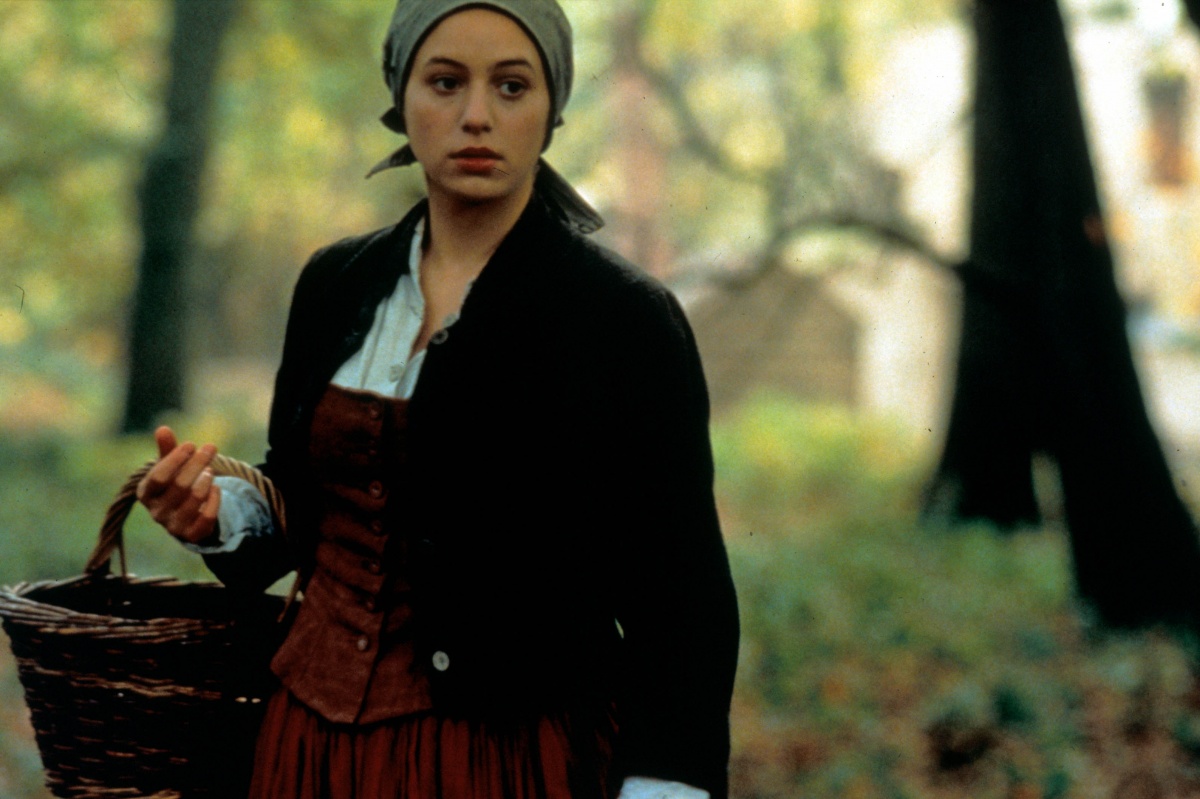
Woman in the Forest by Ion Andreescu (1880)


I'm not usually drawn to poems, but Mallika @ Literary Potpourri has pointed out to me the other day that Hardy had wrote a poem about Marty South, an important figure on The Woodlanders, which is also subtitled: Marty South's Reverie. I've found the poem, and it's too beautiful not to be featured in a special post. So here it is, Thomas Hardy's poem in two parts. The first part is about Marty South's unrequited love, while the second is, I guess, more about how she sees her life in the woodland in the end. Hope you'll love it as much as I do!

I

We work here together
In blast and breeze;
He fills the earth in,
I hold the trees.

He does not notice
That what I do
Keeps me from moving
And chills me through.

He has seen one fairer
I feel by his eye,
Which skims me as though
I were not by.

And since she passed here
He scarce has known
But that the woodland
Holds him alone.

I have worked here with him
Since morning shine,
He busy with his thoughts
And I with mine.

I have helped him so many,
So many days,
But never win any
Small word of praise!

Shall I not sigh to him
That I work on
Glad to be nigh to him
Though hope is gone?

Nay, though he never
Knew love like mine,
I'll bear it ever
And make no sign!


II

From the bundle at hand here
I take each tree,
And set it to stand, here
Always to be;
When, in a second,
As if from fear
Of Life unreckoned
Beginning here,
It starts a sighing
Through day and night,
Though while there lying
'Twas voiceless quite.

It will sigh in the morning,
Will sigh at noon,
At the winter's warning,
In wafts of June;
Grieving that never
Kind Fate decreed
It should for ever
Remain a seed,
And shun the welter
Of things without,
Unneeding shelter
From storm and drought.

Thus, all unknowing
For whom or what
We set it growing
In this bleak spot,
It still will grieve here
Throughout its time,
Unable to leave here,
Or change its clime;
Or tell the story
Of us to-day
When, halt and hoary,
We pass away.


Friday, January 27, 2023

The Woodlanders by Thomas Hardy: A Review (CC Spin #32)


🌳 Because I love nature, it's only natural that I tend to be attracted to books where nature poses as dominant aspect. The Woodlanders falls into this category, and that's why I loved it!

🌳 I was drawn, particularly, to the simple life of the woodlanders; their occupation, their view of life, and their intimate relation with mother nature. I was also interested in the spars making craft (I didn't know what a spar is until I googled it). And that was, actually, how we were first introduced to this book: a simple nineteen year old girl, Marty South, making spars in the dead of the night to get paid in the morning. That's how woodlanders had lived, and, but for some influences from "outsiders", they would all live contentedly. And that's what this book is about - greediness and ambition which wrecked the beautiful balance of natural life in a woodland village: Little Hintock.

🌳 As I have analyzed before, I see Marty South as the centre of this story. She is reserved, calm, hardworking, and possesses enough skill for improving her life. Then the outsiders' unnatural greediness or ambition starts to shake her world. First, Marty must sacrifice her luscious long hair to be sold for money, just because Mrs. Charmond, a rich widow with many lovers, wants to have it as a wig!

🌳 The hair symbolizes Marty's femininity. Without it, she loses hope of ever attracting Giles Winterborne, a woodsman whom she loves, though unrequitedly. Giles is in love with another: Grace Melbury, who has been "promised" to him by her father.

🌳 The ambitious Mr. Melbury had sent his only daughter Grace to be educated abroad to improve her future. He takes back his promise to Winterborne, as he thinks her daughter should marry higher than a mere woodsman. A young doctor called Fitzpiers, who is charmed by Grace, is the one Mr. Melbury believes as a more suitable husband for Grace.

🌳 What about Grace herself? It is interesting to see how she'd view the woodland after returning from abroad. Would she be contented with her old life (and lover), or would she view them as flat and boring, seeking more refined, more amusing life and husband? It was amusing to see her blundering through her choices, in Hardy's universe, which was always ruled by chances, bad timing, and errors. Could Grace escape it all unscathed? But more importantly, how would she re-shape the life of those who are truer woodlanders?

🌳 Hardy himself had classified this novel in the group of "Novels of Character and Environment" [source: wikipedia]. And I agree. The Woodlanders is about clashes between classes and different environments, poor marriage, adultery, wrong choices. It's not a cheerful story, but it's Hardy, you can't expect nothing more, right? But no worry, Hardy compensated the gloomy plot with his rustic settings of the woodland and his usual beautiful narration. And also, with one of the strongest 'heroines' I've ever read.

Rating: 4,5 / 5


Further reads on The Woodlanders:
- Character analysis of Marty South
- Book cover art analysis
- Hardy's poem on Marty South 


Friday, January 13, 2023

Classic Character: Marty South from The Woodlanders (Thomas Hardy)


Marty South might not generally be considered the main character in this book, but for me, she is the center of The Woodlanders. She is the epitome of a true woodlander. She works with tree and woods, and has an amazing skill in making wooden spars, though she must work very hard only to be paid very poorly.

Marty is pictured as no more than nineteen or twenty years old, but poverty and hard working "had forced the provisional curves of her childhood's face to a premature finality." In every aspect of feminine appearance, "she had but little pretension to beauty, save in one prominent particular - her hair. Its abundance made it almost unmanageable."


In short, Marty South is an unattractive woman in the eyes of men. Men tend to treat her as just a worker (one of themselves, perhaps), though no doubt, she is much more talented than most of them. One man she loves, Giles Winterborne (another woodlander), never sets eyes on her, much less saying anything other than business. Her last resort of ever attracting and winning Winterborne's heart is her beautiful hair, but, alas, that too she must sacrifice for money, as her father is ill and can't work. Thus, her final hope is crushed.

To be honest, I admire Marty South. She, who lives in solitude and obscurity, is one of the most courageous female characters I've ever read. Her unrequited love doesn't crush her. She keeps working hard, and she never hates Grace, the woman whom Winterborne loves. When instructed by Grammer Oliver to help in Winterborne's "scheme" to win Grace's heart, Marty silently relents and do what she's expected to.


True, she's a little mean when she reveals about the "hair chronicle" to Fitzpiers, in the last attempt to ever win Winterborne. But that's the only moment of her spur competitiveness, and it's quite understandable. Other than that, Marty proves to be loyal and persistent in her life. And in the end, those qualities give her peaceful mind and life improvement - in short, happiness.

Oh Marty, you rightly deserve to be happy, and I'm so glad of Hardy's ending to this story. It's always about a woodlander who is true to her heart and land, from the beginning to the end.

Sunday, October 17, 2021

The Return of the Native by Thomas Hardy

πŸ”… The story is set in a fictional heath called Egdon. It's mostly about misperceptions and misplace.

πŸ”… Eustacia Vye was forced to live in the heath when her father moved there, though she hates it and prefers a more exciting life in a town.

πŸ”… When Clym Yeobright, a native of Egdon Heath, came home from Paris, where he'd been in the diamond trade, Euatacia sees a glimmer of hope. Marrying him would be her ticket of deliverance from the despicable place.

πŸ”… But in reality, Clym has returned for good, to open a school in Egdon. A fact that Eustacia should have realized, if she wasn't too obsessed by her dream of living in Paris.

πŸ”… Clym, too, should have realized Eustacia's longing, if he hadn't been focusing on his dream as a school principle. Anyhow, they both married, believing that the other must have wanted the same thing as him/her self. Misperception #1.

πŸ”… Egdon people - mostly illiterate - don't really like Eustacia because she's...well, different; the women even think her a witch! And so Eustasia despises them. She clearly doesn't belong there. But is it true that one can't live where one doesn't belong? How if one is forced to do so by circumstances; when one doesn't have enough resources to alter one's situation? What then? Surely one must try to make compromises. Yes, but that's only possible when one is independent enough to make the best decision for one self. Many people aren't that fortunate. Eustacia Vye, for instance, like many women in her era, can't afford that luxury.

πŸ”… I can well relate with Eustacia. I, too, was born in the wrong land. Tropical developing country with this crazy humidity and polution isn't for me. I despise it with all my heart! But I grew up here. My parents live here. What can I do? I compromise. I'm much more fortunate than Eustacia that, living in this era, I can be as independent as I want to.

πŸ”… To make it even unbearable, Mrs. Yeobright - Clym's mother - dislikes her daughter in law. She didn't even attend their holy matrimony because her son married the girl she didn't approve of. What a selfish, hypocrite mother! To be honest, I think Mrs. Yeobright is the main antagonist here, and an arrogant person who thinks herself higher and holier than others, truly deserves her tragic ending, which, by the way, is caused by a major misunderstanding.

πŸ”… Clym is the perfect copy of his mother. The way he treated his wife with arrogant accusation is disgusting. And it is one of the greatest ironies in literature, that all of the tragedies took place just because of one complex misunderstanding.

πŸ”… As usual, Hardy wrote how human's fate is influenced by Nature and circumstances. It's quite a dark novel with tragic heroine.

Rating: 4 / 5

Tuesday, July 14, 2015

Far from a Madding Crowd by Thomas Hardy

These two months have been hectic months for me, and I know I’m much behind my schedule in this (and other) challenge(s). Although I kept reading, I could not find time, focus, and energy to write any reviews. Today, as I find myself more relaxed, I force myself to write this. Hopefully I can catch up again for the rest of this semester. Now, Far from a Madding Crowd turned out to be my new favorite. I think I have picked the right book to begin with Hardy. I really enjoyed it, and now am ready to read his other books.

I loved Gabriel Oak (he is now one of my most favorite characters), and loved the rural country life presented by Hardy. Bathseba Everdeen is a combination of proud, vigor, and beauty. She is loved by three men—passionately by Sergeant Troy, possessively by Farmer Boldwood, and quietly by Shepherd Oak. When she inherited a farm from her uncle, Batsheba felt independent. She thought she could just rely on her passion, and the world would be as she wanted to be. Folly after folly, and only after reaping what she had sown, did she realize that there is no independence without responsibility.

While Batsheba represents female emancipation, Gabriel Oak represents hard work and perseverance; two perfect themes for a Victorian novel, combined with a slight touch of realism in Hardy’s writing. That makes Far from a Madding Crowd a wonderful reading!

Four and a half stars for Oak and Hardy!

~~~~~~~~
I read Penguin English Library paperback

This book is counted for:


Wednesday, July 4, 2012

[Short Story] The Three Strangers by Thomas Hardy


After being overwhelmed by my last classics reading, I opted to switch temporarily to short stories. Still in A Victorian Celebration, I have picked several works from several different Victorian authors. The first one is Thomas Hardy. I have planned to read Tess of D'Urberville, but before that I would like to first have a feel of his writing, to decide whether I'm going to like it or not. And this is what I have picked from Hardy, The Three Strangers, which was written in March 1883.

There was once a shepherd who lived in a lonely cottage on a coomb of a country. At that particular night, rain had poured heavily, but it did not prevent the shepherd's family to hold a jovial party. It's a christening party for their second child. Twenty people were invited, and the party would have been enjoyable, if there were not a sudden knock at the door...

A stranger was at the door, looking for a shelter from the heavy rain; and the shepherd, being in a jovial mood that night, invited the stranger—who chose to sit at the chimney-corner—to join the party. A few moments later there was a second knock at the door by another stranger. This man—who was also looking for a shelter in his way to Casterbridge—was also invited by the host. The two strangers got acquainted each other in no time, they drank the shepherd's homemade mead together, and were singing together, while came another knock at the door...

The third stranger, upon looking at the other two strangers, got pale and shocked, then quickly left the shepherd's house without any explanation. At that time the guests had realised that the second stranger, the cinder-gray man was actually an executioner who must go to Casterbridge jail to hang a poor watch-maker who had stolen a sheep from a farmer.

A little moment later a gun shot reverberated through the air, a sign of a prisoners escape from the jail. That should be the man whom the second stranger must hang the following day. A search was immediately conducted, and I think you can already guess, that the prisoner must be one of three strangers. The question is, which one?

This is not a mystery story, though it's quite interesting to closely follow what should happen next during the search, to pay attention to the three strangers--who's who, and to guess who had lied and who had told the truth. However, I think Hardy had not intended to create a mystery in the first place. I suspect it's his way to criticize the law. Did the poor prisoner really deserve to be hanged for his crime, stealing one sheep because he was so poor? It's also interesting how Hardy mocked the law enforcement through this story. One of the party guests who joined the quest of the escaped prisoner was a constable, who was pictured so stupid and absurd:

In the scene when the men had found the fugitive and were about to capture him,

Constable: "Your money or your life!"
One of the men: "No, no, tisn't our side ought to say that. That's the doctrine of vagabonds like him, and we be on the side of the law." 
Constable: "Prisoner at the bar, surrender, in the name of the Father—the Crown, I mane!"

This was my first work of Thomas Hardy, and I can sense a little of his writing style which I quite like. However, unlike Dickens, his uses of many unfamiliar words have been quite disturbing me, especially since English is only my second language. Of course I can always search for those words in dictionary or Google, but I think the effort does not worth for a single short story! It just makes me take a second thought before moving to Hardy's novel, I mean I still want to read Hardy, but not in the near future. Anyhow, I still find this short story a well written one; short, yet I learned something from it. Four stars for Thomas Hardy!

[I read ebook version from Project Gutenberg]
This post is included in Short Stories on Wednesdays