Showing posts with label #ClassicCharacter. Show all posts

Wednesday, April 19, 2023

Classic Character: Denise Baudu from The Ladies' Paradise (Émile Zola)


Denise Baudu's is perhaps one of the most wonderful character-developments in literature. She came from a small village in France, where she worked as shop assistant. Denise is about 18 y.o. when she first arrived in Paris as an orphan with two little brothers to take care of.

Despite her uncle's unceasing hatred towards the grand department store across the street, which ruined his and other shopkeepers around the block's businesses, Denise is fascinated and greatly attracted by this modern establishment.


She arrived at the Ladies' Paradise, on her first day to work, as a timid, skinny, unkempt country girl, with her worn wooden clogs and wild hair. The other staffs laughed at her. The humiliation and her bewilderment with metropolitan Paris made her failing at the job she must've been qualified, thanks to her former experience.

Her first meeting with Octave Mouret, the genius behind, and owner of, the Ladies Paradise, left unexpected effect on each of them. Denise admires Mouret's visionary genius but a bit afraid of him - at least that's what she thought she's felt. I think Denise has fallen in love with him from the first (and it's reciprocated, though Mouret, too, didn't realised at first)!

During the bullying and poverty phase, Denise shows her true quality. Her only friend, Pauline, shows her how easy to solve her problem of poverty: take a lover! Apparently it was a common thing for Parisian working-class girls to take a lover, who would buy them dinners, take them to nice places, and buy them dresses. But Denise vehemently rejects the idea. Denise, who appears to be meek, is actually a strong girl full with resilience and determination.

With those quality she succeeded to return to the Ladies' Paradise after her earlier dismissal (by people who dislike her). Not only return, but return triumphantly with promotion - although this is partly due to Mouret's support - but Denise really deserves to be Assistant Buyer.

Octave Mouret is a womanizer. But neither his charm nor his wealth could tear down Denise's determination - she always says 'No!' She loves Mouret, this she finally realizes, but she don't want to be a man's mistress.

I admire Denise's courage and resilience. She is disliked by her colleagues, and humiliated by Mouret's former mistress, but she bears them valiantly, never loses her integrity. She's still the amiable, humble but dignified, kindhearted girl from the country, though she is now a respectable manager! Not only that, Denise is a very intelligent girl. The Ladies Paradise keeps improving thanks to Denise's many feedbacks to Mouret. I can't blame Mouret for being obsessed with this skinny, plain girl, for she's single-handedly changed both Mouret and his employees' life for the better!


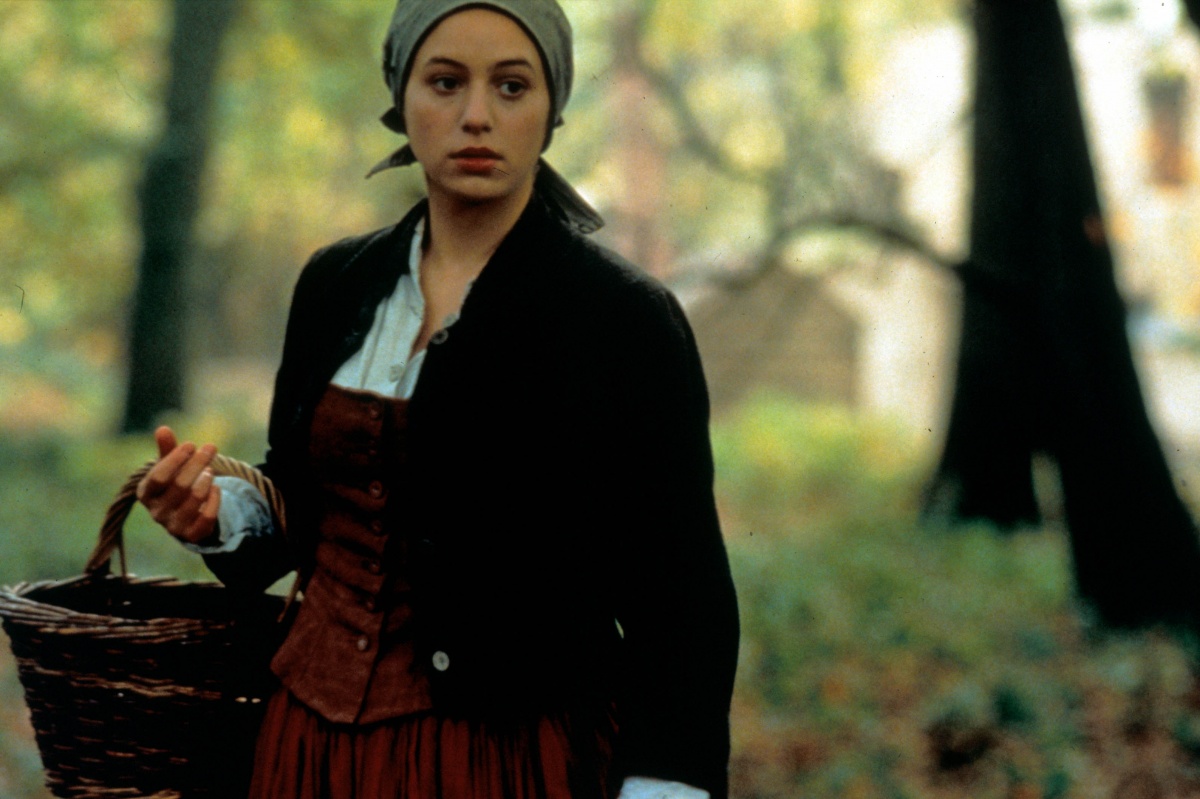
Denise's humiliation by Henriette


Denise Baudu is now officially my most favorite character from Zola's Rougon-Macquart universe.

Friday, January 13, 2023

Classic Character: Marty South from The Woodlanders (Thomas Hardy)


Marty South might not generally be considered the main character in this book, but for me, she is the center of The Woodlanders. She is the epitome of a true woodlander. She works with tree and woods, and has an amazing skill in making wooden spars, though she must work very hard only to be paid very poorly.

Marty is pictured as no more than nineteen or twenty years old, but poverty and hard working "had forced the provisional curves of her childhood's face to a premature finality." In every aspect of feminine appearance, "she had but little pretension to beauty, save in one prominent particular - her hair. Its abundance made it almost unmanageable."


In short, Marty South is an unattractive woman in the eyes of men. Men tend to treat her as just a worker (one of themselves, perhaps), though no doubt, she is much more talented than most of them. One man she loves, Giles Winterborne (another woodlander), never sets eyes on her, much less saying anything other than business. Her last resort of ever attracting and winning Winterborne's heart is her beautiful hair, but, alas, that too she must sacrifice for money, as her father is ill and can't work. Thus, her final hope is crushed.

To be honest, I admire Marty South. She, who lives in solitude and obscurity, is one of the most courageous female characters I've ever read. Her unrequited love doesn't crush her. She keeps working hard, and she never hates Grace, the woman whom Winterborne loves. When instructed by Grammer Oliver to help in Winterborne's "scheme" to win Grace's heart, Marty silently relents and do what she's expected to.


True, she's a little mean when she reveals about the "hair chronicle" to Fitzpiers, in the last attempt to ever win Winterborne. But that's the only moment of her spur competitiveness, and it's quite understandable. Other than that, Marty proves to be loyal and persistent in her life. And in the end, those qualities give her peaceful mind and life improvement - in short, happiness.

Oh Marty, you rightly deserve to be happy, and I'm so glad of Hardy's ending to this story. It's always about a woodlander who is true to her heart and land, from the beginning to the end.

Thursday, August 27, 2020

Classic Character: Lisa Quenu of The Belly of Paris

Lisa Quenu is perhaps my most favorite character from the 20 novels of Rougon-Macquart cycle. I always think the Rougons are boring, while the Macquart are mostly full of "colors", and thus, much more interesting. However, from the Macquarts' offsprings (Lisa, Gervaise, Jean), I think Lisa is the least "flawed".

In the opening novel: The Fortune of the Rougons, Zola wrote that Lisa "was big, good-looking child, very healthy and sanguine, and looked very much like her mother. But she had not inherited her mother's animal-like capacity for hard work. Macquart had implanted in her a firm desire for ease and comfort." I think Lisa is the perfect balance of her mother and father, in term of character flaws. She loves ease and comfort, but unlike Macquart, she earns it with working diligently. But unlike her mother, she chooses a profession that requires her brain, more than physical labor, so that she can put her work and comfort in a perfect balance. That's what I love most from Lisa, because I, too, love balance of work and leisure.


Lisa is so fortunate that a middle class woman (the wife of a postmaster) took a fancy on her when she was a child, and hired her as a maid. Later on when the postmaster was dead, the wife moved to Paris, taking Lisa with her while she's only 12 y.o. Maybe that's how Lisa managed to "skip" the worst part of her parents: drunkenness.

I also admire Lisa's patience, discipline, and determination, as was portrayed in The Fortune of the Rougons: "When she was still very small she work for a whole day in return for a cake." Later on she would show these qualities after the owner of a charcuterie named Gradelle, who hired her to attend the counter, died suddenly. Lisa and Quenu - Gradelle's nephew who handled the cookery - found Gradelle's hidden money under the salting tub and decided to move the business to a more respectable place. The couple, combining Lisa's refined taste and great skill at business and marketing, with Quenu's passion of cooking, run the charcuterie together, made it a perfect family business.

So, finally, Lisa's dream of living respectably came true. She combined work and pleasure to achieve peaceful and comfortable life. That's my dream life! In running the successful charcuterie, Lisa shows her sensibility, intelligence, and orderly qualities. Zola mentioned her as of sanguine person, but I don't agree. She's more an introverted person. She minds her own business, dislikes social activity (outside 'business hospitality'), and hates drama. Her life evolves around her family (husband and daughter). She doesn't gossip, and when trouble comes (Florent's growing revolutionary activities), she silently consults the priest, and then acts methodically what she thinks best. She doesn't envy the rich people, and never talks about others' faults. She even takes Florent in her home though she distrusts him, just because Quenu loves his brother. Maybe her only flaw is ever competing with La Belle Normande. It's useless, and she should be above that.

Lisa Quenu (née Macquart) might be a fictional character most relatable with myself. No exaggeration, everything in a moderate, balanced level. That's why we can never be heroine of any story, because others would find our lives dull.

What do you think of Lisa Quenu?


Saturday, July 25, 2020

Classic Character: The Loyal Gabriel Betteredge of The Moonstone

Gabriel Betteredge is my only favorite character in The Moonstone. He first worked for the Verinders as bailiff, but as he's getting older and less vigorous, Lady Verinder makes him the house steward (a combination of butler and housekeeper). Betteredge loves Defoe's Robinson Crusoe so much, it becomes a kind of Bible to him - not only comforting and calming him when he's distressed, he also consults it when confused. He will open his battered copy to a random page, and somehow, certain passage would justify his conviction, or assure his idea.


I wonder if he is a true classics literature (besides Robinson Crusoe) reader, because he seems to be quite an open-minded Victorian man. True, he still holds common Victorian prejudices on women, races, and social background - he's grown up with those values anyway, however, when he knows the qualities of certain person, he doesn't hesitate to respect and acknowledge his/her true values. We can see the proofs in Betteredge's acknowledgment of (Lady) Julia and Rachel Verinder, his daughter Penelope, and also Rosanna Spearman, whom he regards as different from common women. It's more difficult, though, for Betteredge to deal with Ezra Jennings because of his appearances and social background. Betteredge complies with him at first only in obedience to his master, but little by little he begins to grow respectful towards Jennings.

Besides being funny, smart, witty, loving person, and a good writer (his narrative is my most favorite), I love Betteredge also for always being so kind to Rosanna Spearman, in spite of her background. When he gets to know her shady personal qualities, he learns to trust her, that when the the Moonstone is missing, and Sergeant Cuff suspects her, Betteredge keeps defending her.


But perhaps I admire Betteredge mostly for the way he serves the family with loyalty, respect, and dignity. Though just a servant, Betteredge is proud of his profession, and proud to serve such an honorable family. Now that is a quality you rarely find these days - perhaps one of few aspects I admire from Victorian era. People nowadays tend to underestimate the dignity of serving; they criticize people who are satisfied of being employee for the rest of their lives without having slightest ambition to "upgrade" themselves to the employer level. They even call us employees as "corporate slave". We are no more slaves than our bosses, really!

A friend of mine has repeatedly told me that I possess capability of being an entrepreneur, why didn't I use it to start my own company, rather than serving my boss? Well, so what if I retire as an employee, if I've done my job well? I'm not worse than they who become entrepreneurs. I believe that we were born with different background and qualities (nowadays they call it privileges, but it's the same really). Some are born rich, some poor; some with management skill, some administrative, and so on. 

The Verinders, Franklin Blake are born upper classes; Betteredge working class. But without Betteredge, the Verinders won't be able to maintain their households, as Betteredge won't be able to feed his family without the Verinders. There is the codependency built upon their employment.

So, I admire Betteredge for being proud of his job - which he'd done respectably and professionally, that in the end the Verinders become also respectful towards him, as they couldn't do without him. He's also proud of being employed by the Verinders; he takes the family as his own, that he'd feel insulted when others insult the family. In the end, loyalty towards one's employer - when given in a mutual respectable relationship - is not a sign of weakness, or even slavery. On the contrary, it's an honorable and fulfilled life of one's profesional career. If I have lived in Victorian era, I would have chosen to be in Betteredge's position (having pride of my skill) than to be a lady (with vain idleness). And I also regard present my position as employee with steady income and growing skill, is much fulfilling than to be an entrepreneur with all the risks and headaches!

Monday, June 1, 2020

Classic Character: The Ambitious Thea Kronborg from The Song of the Lark

Thea Kronborg is one of the most complex characters I have ever analysed for #ClassicCharacter. A daughter of a Swedish Methodist minister in a small village called Moonstone, she is a strong-willed, reclusive, serious, uncommonly intelligent girl. Since childhood she possesses an unleashed desire - of what exactly, she didn't know herself at first. But people around her - at least some of them (her mother, Doctor Archie, Ray Kennedy, Spanish Johnny, Aunt Tillie, Herr Wunsch) - could feel the extraordinary and great talent hidden in her frail body. Though for common people, she is just a queer, selfish, self important girl. Thea Kronborg was loosely based on a real life Opera singer: Olive Fremstad.


I thought at first that she was just an introverted girl, of whom I can relate very well, as our most satisfying moments are those spent on our own. That's me! - cried I silently. But when the story was unfolding, I realized that it is a story of the making of an artist - an opera artist.

Though I'm no artist, we have both few similarities, one of it is perfectionist. We always try to do our utmost best, and would be disappointed when we don't perform as best (or hard) as we ought to (to our own standard). We also enraged or even disgusted when others less talented boasted of their imperfect performance: "how could they??" The other one is uninterestedness where common people's envy and hostility are concerned - the let-them-say-what-they-will, we-don't-care attitude. But our similarities stop there.


Driven by ambition (or is it passion?), Thea left her home for good, to study music and singing. Focus is one thing to pursue one's career, and I endorsed her decision to leave Moonstone for good, for there are a lot of obstacles from even her family, which will weigh her down from reaching up the stars. However I didn't agree with her when she prioritized her job over her dying mother. I told myself, that Thea would be tortured by remorse for the rest of her life. And I'm not completely wrong. During her career Thea is always torn between two natures. She is driven by ambition, but also crushed by uprootness from her origin. She tries to leave the past behind, but at the same time always return to the embrace of the past when in trouble. In short, Thea is UNHAPPY. Yes, she is beaming after a triumphant performance, but then becomes sad and dejected after. And when she begged Doctor Archie to come at her hotel because "there's a lot she wanted to talk about", I began to understand how lonely a great artist can be.

In the end I asked myself, whether Thea Kronborg is purely selfish or merely ambitious? From her relationship with Spanish Johnny and the Mexicans, I know that she's an affectionate girl. But her ambition forced her to sacrifice many things dear to her. Does it really necessary? Can't she care for both - affection and career? When her mother was dying, for instance, couldn't she afford to let go of that one performance and spent time with her mother, even only several hours, after all that Mrs. Kronborg had done for her dear little girl? True that she might not get another chance of the performance for a long time. But one'll never know, there's always another chance, while one's mother only dies once! No, I strongly believe that however big one's ambition is, one's true fulfillment comes from honest consciousness of having performed love and kindness (especially) to one's parents. That consciousness would then clear one's path to whatever achievement one might seek for the rest of one's life. So, to answer my question, Thea Kronborg is ambitious AND unhappy. Maybe that's the only way of making great artists? I don't know. What do you think?

Saturday, April 11, 2020

Classic Character: The Transformation of Godfrey Cass from Silas Marner

Godfrey is my favorite character from Silas Marner, and the most interesting one. Of course he isn't the ideal hero, but I loved following his transformation from a careless, egocentric young man to be a more mature, generous man.

Born into a rich family and having been spoiled by his father, Godfrey grew up as a reckless, irresponsible young man. All his needs was provided by the servants, no effort was required from little Godfrey. And whenever he wants something, all he need to do is asking his papa, and he will (happily) grant it. He grows up knowing that his part in this world is just wishing, and it's everyone else's job to fulfill. It's all about "me", and never "you"; least of all "he/she", because he has the privilege. It's not his original character - we will learn this later - but it's the way he was raised. Though he might have had moral education from his governess or private teacher, I think emphaty is not something he is familiar with. Why, taking feels much better than giving, anyway!


I imagined Molly is one of the pretties working girls in Raveloe, and young Godfrey is attracted to her. He marries her (clever of you, Molly, at least you've got him legally married you!), though he doesn't have plan to provide for her, least of all acknowledge her (I really wish Eliot wrote more about this!). Anyway, Godfrey doesn't even think it wrong to woo a middle class girl after abandoning Molly. He simply doesn't think his first marriage as marriage; for him it's just a pleasure, and now, an obstacle to his present wish: Nancy Lammeter, or just an annoying subject to get scolded by his dear papa. Godfrey's comfort and pleasure must come first!

Then, Molly's corpse is found, and Godfrey realizes for the first time, that his past reckless act DID have consequences: his own daughter Eppie. I think this revelation is his first turning point. How often is it that a man changes to the better after the birth of his child? So Godfrey, too, starts being responsible and a little more generous, by giving some money to Silas Marner (for Eppie's sake). Unfortunately he is still cowardly and indecisive enough to confess the truth to Nancy.


The revelation of Dunfrey's death shatters Godfrey's last door to self-denial. Without further doubt, he confesses everything to Nancy: first marriage, child, and all. Lastly, Eppie's rejection of living with him, shatters the last of the remnants of his ego. Godfrey is humbled by his daughter! After this last event, we do not know clearly how Godfrey's live has become, only that he contiunually provides for Eppie and Silas. He even pays for Eppie's wedding party, though he doesn't attend it. This is a big change in Godfrey's character. The selfish, egocentric young man has transformed into a selfless matured man, who still loves, cares, and provides for his daughter, despite of her rejection, despite of his realization that Eppie would never be his. We know that at the end of the story, Silas, Eppie, and her husband Aaron live a happy life. I wish Godfrey too, find love, solace, and happiness with Nancy. He deserves it, because after all, he was born as a good natured person.