Showing posts with label The Scarlet Letter. Show all posts

Thursday, November 15, 2012

Pearl in The Scarlet Letter: Character Thursday (37)


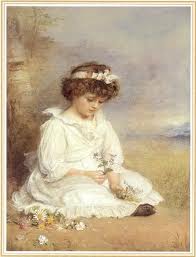
Little Pearl is one of the most interesting characters I have featured here in Character Thursday. First, she was just a little girl—around seven years old—however she played a major role in The Scarlet Letter. She was Hester Pryne’s daughter, a child that born from adultery.

Just after I finished the book, I realized that Pearl’s most important role is as a mere symbol. Pearl was a product of her parent’s passionate sins, and Hawthorne often used her to criticize or even to point out the moral essence of this story. Throughout the story, Pearl’s character was often preternatural. She was sometimes described as a nymph or elf, and other mystical creatures. Maybe Hawthorne did use her as a symbol, instead of creating a true character, but I prefer to see her as a child.

To me, Pearl’s life from the beginning was not an ordinary one, especially at that era. She grew up without a father, and from her childhood, she was constantly encircled with hatred and loneliness. She lived with her mother in a secluded cottage, and whenever they were strolling on the street, people avoided them. I imagine Pearl often heard how people talked to Hester in condescending tones, without any respect. Pearl might have caught their scrutinizing eyes upon her mother, or—perhaps—even their slightly disgusting looks on her and her mother.


Moreover, Little Pearl did not have any friends to play with. She used to play by herself or with her imagining friends. Children of her age (got examples from their parents) used to throw pebbles to Pearl and her mother while they were passing by neighbors’ houses. In short, those treatments affected Little Pearl much more than Hester. I believe those conditions built the evil or wicked temperament in Pearl. While you were surrounded by negative atmosphere, the same sense will root in your soul too.

However, beyond that, I think Hester’s love had an effect too to Little Pearl. With their solitude life, they had been depending to one another, and they pour their loves to one another, because they had no one else. This soften Pearl’s hear, that sometimes when she was in good mood, she could appear as a little loveable angel. And look what she did when some children were throwing pebbles to Hester, she defended her mother by chasing those bigger kids out of their way. Ha!

And when they left New England, stayed away from negative influences of Puritan’s unfair system, Pearl could finally live a happy normal life. Good for Pearl!


Tuesday, November 6, 2012

The Scarlet Letter


In the Puritan society in New England, Hester Pryne committed adultery with a man whom she concealed the identity. For that, she must wear the scarlet letter of ‘A’ (symbolizing ‘Adultery’] embroidered on her bosom, and was expelled from the society together with her daughter Pearl. An old physician—who turned out to be her long missing husband and called himself Roger Chillingworth—promised Hester that he would take avenge to her lover. His suspicion was soon directed to a Reverend Arthur Dimmesdale, whom Chillingworth then took as his patient, to be able to ruin his soul.

This is a tale about sin and passion, beautifully written by Nathaniel Hawthorne. Although many times I got confused with his so many metaphors and magic realism symbols, I finally managed to grab most of the meanings in the end. Really worth the effort, because I have been enjoying reading this book right from the first sentence of the first chapter! Four stars for The Scarlet Letter; and these are my answers to the inquiries from my The Well Educated Mind Self-Project.


Grammar Stage Inquiry [What]

Which character is the most affected? How is that character affected by the book’s main event?

It’s all about Hester Pryne. It’s Hester Pryne’s battle to be repented from her sin: How a woman survived pressures from Puritan’s unfair system by bearing her humiliation; but in the end she proved that she cultivated much more than the hypocrite society by bearing her symbol of sin, in contrast with her companion of the crime—who faded away from the world after being mistakenly praised as holy and divine by the same society.

Logic Stage Inquiry [Why & How]

What does Hester Pryne want? What is standing in her way? What strategy does she pursue in order to overcome this block?

Hester wanted to be set free or repented from her sin. However, voluntarily wearing the scarlet letter and performing good deeds for the poor were not sufficient to change society’s view on her. As long as she wore the scarlet letter, people would always regard her only as an adulterer, a poor sinner, no less or no more than that. So, Hester kept bearing all the tortures in her in order to be stronger. Her little Pearl was also a big help for her to survive. Together they lived a humble life, never wanted more than the society permit them, but when the magistrates wanted to take Pearl from her, Hester did everything she could to keep Pearl.


Image and metaphor, is any particular image repeated again and again? What does this represent?

First, the contrast of gloomy prison door and the shining rosebush in front of it; the prison door represented the sin (dark patches in human’s soul), while the bright rosebush represented the fruits which culminated from the sin. From the seclusion from the society, Hester sprung out of her sin, being a much stronger than before, that enabled her to help others and performing many good deeds for the society. In other words, Hester’s sin had outshone the pureness that the Puritans were proud of themselves.

Second, the scarlet ‘A’ letter. It shone on Hester’s bosom, glowing even more in the dark; represented the sin that Hester honestly admitted glowed from the dark hypocrisy of Puritan society. Pearl’s particular interest in the scarlet letter (she even wrought the same letter from seaweed for herself) represented her self as the fruit of the adultery, who at the end could have a happier life outside New England.

The scarlet letter appeared as stigmata in Dimmesdale’s chest to represent that once you commit a sin, it would stay there as long as you permit it. You have the choice whether to admit it or to hide it behind your hypocrisy, it’s all the same, you are a sinner.

The letter ‘A’ represented how people used to see things as they wanted to see. When a letter ‘A’ appeared on the horizon, Dimmesdale took it as the sign of what he feared the most: that his sin was to be revealed. However, people saw it as ‘Angel’ because a worthy Governor died at the same hour, and they imagined angels came to pick him up. On the other hand, several people who regarded Hester’s willing hands to help people in needs, assumed the ‘A’ on her bosom has changed to ‘Able’.


Rhetorical Stage Inquiry [So What]

What does the setting of the book tell you about the way human beings are shaped?

I don’t know much about Puritan, but from this book I think Puritan only made people look ‘pure’ on the outside, but not in the inside. They created strict laws, dull lifestyle, they prevented the society to have pleasures. They praised their magistrates and church authorities, they were touched by any beautifully-performed sermons, but they forgot to bear in mind the real essence of them. You were regarded highly in the society only if you were ‘pure’, there’s no place for wrong doing, because once you committed it, you were banished from the society. The pressures were so high that I think they were far away from being happy, and made them hypocrites.

What exactly is the writer telling you?

That humanity lies not on the right or wrong, holy or sinful, but on our decisions and principles, on what we do and what we think. People do make mistakes, but it’s not on the size of the mistake that we should judge others, but by what they do from that. Remarkable things might come from sinful personages, amazing yet true, just as the rosemary bushes could culminate from the death soil in front of the old prison door….

Do you agree? Is this work true? In what sense is the book true?

Although Hawthorne picked Puritan era as the setting, the conflicts were still relevant to today’s life, so I can say positively that this work is true. I have created a diagram of Hester vs Dimmesdale, in term of how they made up with their sins, and from that I could see that life is not black or white, but we grow up from mistakes and sins; that if we are brave and strong, we can change our dark past to a fruitful future, not only for ourselves, but also for the world. Just as Hester Pryne had done.  


Sunday, November 4, 2012

Weekend Quote 10: The Scarlet Letter


I happened to find this lovely quote from The Scarlet Letter. This quote appeared in the narration, when Hester and Dimmesdale met each other in the forest in ‘A Flood of Sunshine’ chapter. This was a crucial moment for both of them, for many things changed (especially for Dimmesdale) after this forest excursion. Here is the quote…

Love, whether newly born or aroused from a deathlike slumber, must always create sunshine, filling the heart so full of radiance, that it overflows upon the outward world.

In fact, I believe that Dimmesdale found his courage and new spirit from his meeting with Hester, particularly after having Hester’s love and support. Without it, I think Dimmesdale would keep continuing his life under the evil power until his death. Love DOES create sunshine, doesn’t it?


This Weekend Quote is hosted by Half-Filled Attic. Feel free to join. You can:

  • Give the context of the quote
  • Give your opinion whether you agree or disagree with it
  • Share your experience related to the quote
  • Share similar quotes you remember
  • Or anything else. Just have fun with the quote.


Saturday, November 3, 2012

Hester’s Way Or Dimmesdale’s Way?


When I was working out with The Scarlet Letter for my The Well Educated Mind self-project, I came to the thoughts of “Sin” and “Repentance”. Hester and Dimmesdale were both sinned, they worked together to their falls, however each proceeded with different ways. And suddenly I was curious to watch both their progresses, and how their conducts brought them to their ends. So I made this diagram, to conclude in the end, who’d succeed and who’d failed. This is interesting….


I think we can learn from this diagram too—I don’t say that we must wear a kind of token to show off our sin in public, but I am thinking about how we’d best represent ourselves before God. Only with humbleness and openness we could receive His mercy and forgiveness, and with that we could revive from our sin, and instead of fading from life like Arthur Dimmesdale, we could be more useful for others, or for the society, just like Hester.

Why had Hester Pryne succeeded? I incline to think that she had been purged from her burden of sin by wearing the scarlet letter, and at the same time accepted in her calmness of being secluded, humiliated and scowled by the Puritans, while she kept doing kindness to them. All these lifted her burden, and she could renew her life after her freedom, she had her own choices.

Why had Arthur Dimmesdale failed? Because he was too hypocrite and too cowardice to admit that he was a sinner. He had accepted what he deserved for all his services to God (people appraisal). I can only think that Dimmesdale did his sermons and anything else just to get God’s (and people’s) rewards. In the end his sin only made his divine efforts distinguished.

So, which way would you choose for your own, Hester’s way, or Dimmesdale’s way? :)

Friday, November 2, 2012

The Scarlet Letter – Summary Chapter XXI – XXIV


Chapter XXI – The New England Holiday

Election Day was one of the rare holidays for New England when the Puritans—usually repressed by their strict law—could enjoy merriments; this was also the day Hester would be set free from wearing the scarlet letter. Chillingworth appeared and had conversation with vessel’s captain—who previously had arranged to take Hester and Dimmesdale in his boat; then the captain informed Hester that they would have another passenger, which was—in Hester’s horror—the old physician.


Chapter XXII – The Procession

The procession began, exhibiting the honorable ranks of the magistrates and citizens, then appeared Rev. Dimmesdale appeared, energetic and with an angelic look. Hester felt as if Dimmisdale had gone away from her, she then approached near the scaffold—where she had been seven years ago—to listen to Dimmesdale coming Election Sermon.


Chapter XXIII – The Revelation of The Scarlet Letter

Rev. Dimmesdale’s sermon was so wise and holy to the people’s ears, however at the end of it he looked suddenly pale and feeble; he called Hester and Little Pearl to step up on the scaffold with him, while dismissing Chillingworth’s last attempt to win his soul. Dimmesdale finally admitted to the public that he was the man who committed adultery with Hester, and proved it by tearing his robe to reveal what some of the people witnessed as a scarlet letter on his bosom; he finally died after having kissed Pearl.


Chapter XXIV – Conclusion

There are many speculations about what was the mark on Dimmesdale’s bosom; meanwhile Chillingworth’s energy had vanished after his vengeance came to end, and he bequeathed his estates to Little Pearl before his death. Hester and Pearl disappeared from New England, but some years later Hester returned alone to her old cottage and kept the scarlet letter and giving counsels and comforts to the people in sorrow as her repentance; while Pearl had married and lived happily somewhere.


Wednesday, October 31, 2012

The Scarlet Letter – Summary Chapter XVII – XX


Chapter XVII – The Pastor and His Parishioner

Dimmesdale and Hester met each other in the forest; Hester told him that Chillingworth was his husband who wanted to take avenge, and encouraged him to leave the past and sought for new life elsewhere. Dimmesdale did not have the courage to make it alone, and asked Hester for help, which Hester agreed.

Chapter XVIII – A Flood of Sunshine

Right after their plan of leaving together was settled, Hester put off her scarlet letter which made her beauty shone again at once; and both she and Dimmesdale felt free and delighted, just as the sun suddenly brightly shone. Dimmesdale was afraid Pearl would not love him, but Hester insisted that she would.

All at once, as with a sudden smile of heaven, forth burst the sunshine, pouring a very flood into the obscure forest, gladdening each green leaf, transmitting the yellow fallen ones to gold, and gleaming adown the gray trunks of the solemn trees.” (p. 173)

[source]


Chapter XIX – The Child at the Brookside

When Pearl returned to the scene from playing with animals and flowers on the other side of the brook, she refused to come to her mother, whom she was not familiar without her scarlet letter; and only after Hester put it back—and her shine of beauty vanished—Pearl came to her. However Pearl refused Dimmesdale’s affectionate kiss on her brow, and washed it at the brook.

Side note:
Hester felt estranged from Pearl when she put off the scarlet letter. Was it because Pearl born from the sin (thus symbolized by the scarlet letter), and when she denied it, she lost her bond with Pearl? Dimmesdale felt it too: “I have a strange fancy, that this brook is the boundary between two worlds, and that thou canst never meet thy Pearl again…” (p. 178)


[source]


Chapter XX – The Minister in a Maze

Out from the forest, Mr. Dimmesdale saw things around him differently; he had wicked thoughts in him now that were eager to burst out, and wondered where it came from or why it happened. He dismissed Chillingworth’s medical service, and casually hinted that he might left the city, then ended the night by re-writing his sermon for the next day’s Election—in his newly awaken passion.


Tuesday, October 30, 2012

A Letter To Arthur Dimmesdale – The Scarlet Letter


If I was one of Rev. Arthur Dimmesdale’s parishioner in The Scarlet Letter, this is what I would write him….

Dear Rev. Dimmesdale,

I am your humblest parishioner, writing from my humblest heart, as I happened to know the deepest secret you have kept in your heart for the last seven years. I know that what you have done was a sin, no one would disagree that, but I also remember from your sermons, many times you have emphasized that our God is a Merciful God. Thus, when people fall in sin, and they really regret it and ask for repentance, you told us yourself, that God would forgive them. So, why don’t you just do that, instead of torturing your own soul with the realization that people see you as a holy person while you are far from it?

Dear Mr. Dimmesdale, no mankind is free from sin, Jesus was the only Man who have never committed sin. You might not know, but your colleagues are definitely sinners too, including your senior Rev. Wilson. Even St. Peter and St. Paul had also fell in sin in the past, and what Paul had done was as great as—if not greater than—adultery; he murdered a large numbers of Jesus’ followers! But look at what happened to him afterwards, God forgave him, and gave him a bigger task to gain much more souls to be baptist.


If I, your humblest parishioner, may share my humblest opinion of what you should do next—and this I collected from your sermons too, mind you—I think you must stop blaming yourself, it won’t bring you anywhere. You have committed a sin. Ask repentance from God. Leave the past behind. Remember what God had put you in your position for. Finish your job. Move from the parish if you want, but for God’s sake, build your new life and be useful for Him!

But, once again, I’m just a humble parishioner. I did not have the right to make decision for you, dear Mr. Dimmesdale. What I do know is that you should leave the parish, leave Hester Prynne and little Pearl, and especially that wicked Mr. Chillingworth. Ask God for a new spirit to build your new life. I can only pray for the best of you and to God’s plan for you.

--Your humble parishioner—

Monday, October 29, 2012

The Scarlet Letter – Summary Chapter XIII – XVI


Chapter XIII – Another View of Hester

Seven years after Pearl was born, now people saw Hester as a kind and charitable woman who always helped the needs; that the letter ‘A’ on her bosom had a new meaning of ‘Able’. Hester herself has changed from a woman with passion and feeling to one full of thoughts; and seeing Dimmesdale on his last vigil, Hester resolved to rescue him by confronting Roger Chillingworth.

Side note:
A dark question often rose into Hester’s mind with reference to womanhood: “Was existence worth accepting, even to the happiest among them?” –a hint of feminism? (p. 140)


Chapter XIV – Hester and the Physician

Talking to Chillingworth, Hester realized how he had transformed from wise and intellectual man to a fiend; and he refused to let Dimmesdale free. Chillingworth realized his own soul corruption but accepted it as fate, even when Hester threatened that she would reveal the secret.


Chapter XV – Hester and Pearl

Pearl—who was let playing on the seashore—wore seaweeds on her bosom to resemble her mother’s scarlet letter. Pearl kept asking her mother about the meaning of the scarlet letter, and why the minister kept placing his hand over his heart; but Hester did not want to explain the truth, so she lied to Pearl about the scarlet letter.

Side notes:

  • At first Hester wanted to tell the truth about the scarlet letter meaning to Pearl to be able to share her burden, however at last she kept it to herself, why?
  • By lying about the scarlet letter…. “a guardian spirit, who now forsook her, as recognizing that, in spite of his strict watch over her heart, some new evil had crept into it, or some old one had never been expelled.” (p. 154)


Chapter XVI – A Forest Walk

Hester and Pearl had a walk in the forest to intercept Dimmesdale, to warn him about the danger of Chillingsworth’s company for his soul. Pearl asked her mother about the Black Man, whether he had anything to do with the scarlet letter on her bosom and with the minister’s habit to place his hand on his heart.

My thoughts:
Pearl: “And, Mother, he has his hand over his heart! Is it because, when the minister wrote his name in the book (Black Man’s book), the Black Man set his mark in that place? But why does he not wear it outside his bosom, as thou dost, Mother?” Well, that’s a good observation, child! You should be proud of your mother, who had the courage to admit her wrong doing, and not hiding under a hypocrite mask. (p. 159)

Side note:
What about the scene of Pearl catching the sunshine (and eventually could catch it)? Did it point to Pearl’s innocent vs Hester’s sin? (“Mother, the sunshine does not love you. It runs away and hide itself, because it is afraid of something on your bosom.”) p. 156


Friday, October 26, 2012

The Scarlet Letter – Summary Chapter IX – XII


Chapter IX – The Leech

Roger Chillingworth befriended with young minister Dimmesdale who got paler and weaker day after day; and finally lived together with him in an apartment to investigate the illness, but his real purpose was to dig his deepest secret—according to Chillingworth’s suspicion. Meanwhile, people saw Chillingworth had transformed from a kind hearted physician to an evil leech to Dimmesdale; they wondered whether the clergyman was being haunted by Satan’s emissary in disguise of Chillingworth.

[source]


Chapter X – The Leech and His Patient

Roger Chillingworth concluded that Dimmesdale’s ill was not bodily but spiritually, and offered to examine his soul, which made Dimmesdale angry; however their friendship had remained unbroken. Few days later when Dimmesdale was asleep, Chillingworth put aside the clergyman’s vest, then went away in an evil ecstasy as if the Satan has won a soul.

My thoughts:
What was that that he might have found in the clergyman’s bosom that he always kept closed?


Chapter XI – The Interior of A Heart

Chillingworth's mind playing games resulted on the clergyman’s soul suffering from his guilt; he wanted to confess to his people but scared to do it, while the people thought the topic of sin in his sermons were heavenly. Dimmesdale began to feel scared at Chillingworth but did not know why, and was having delusion about Pearl pointing her finger to his heart; then one night he had an idea of how to end his anguish, and left home at once.

My thoughts:
We tend to judge a person from his outside appearance, for example, we always assuming that clergymen are more holy than us, just because of their robes. Dimmesdale and Hester Pryne shared the same sin, but people condemned Hester because she wore the scarlet letter on her bossom, while Dimmesdale hid behind his ‘holy’ robe. Priests are God’s representative on earth, their task is to lead us to God, but it doesn’t mean they are better than us; they are—just like us—not immune to sin.


Chapter XII – The Minister’s Vigil

Dimmesdale went straight to the scaffold where Hester had stood in shame years before, to die on it; Hester and Pearl who had passed by, joined him, when suddenly the light of meteor shone and illuminated them on the eyes of Chillingforth, who finally took Dimmesdale home. Meanwhile, a great red letter ‘A’ appeared in the sky—a projection of the meteor—that Dimmesdale took as a signal of his guilt, while people took it as ‘Angel’ which pointed to a dead Governor at the same night.

My thoughts:
People used to believe things as how they want to believe. A glare of red line that resembles a letter ‘A’ could be seen as different things, depends on each point of view.


Wednesday, October 24, 2012

The Scarlet Letter – Summary Chapter V - VIII


Chapter V – Her Needle

"Hester at her needle" (courtesy of
Nathaniel Hawthorne Collection)
Out of the prison, Hester lived in a small cottage, and for living she did a fine embroidery needle work—which decorated the Puritan’s fashion, including the Governor's—while on the other hand she did charity by making coarse clothes for the poor. On the contrary of her fine work, Hester felt lonely as the society—even the poor and neighborhood children—secluded her because of her scarlet letter.

My thoughts
It’s absurd that people who regarded Hester Prynne as a sinful woman, wore her embroidery works with all pride. “Vanity, it may be, chose to mortify itself by putting on, for ceremonials of pomp and state, the garments that had been wrought by her sinful hands.” (p.70)

Side note
Hester had a sense that there are hidden sins in other hearts, that ‘the outward guise of purity was but a lie, and that, if truth were everywhere to be shown, a scarlet letter would blaze forth on many a bosom besides Hester Prynne’s’. (p.73)


Chapter VI – Pearl

Born from sinful passions, Pearl turned out to be a beautiful and radiant little child—especially with elegant dresses Hester made for her (it’s been years after Hester’s release from prison). However, there is a shadowy evil reflection from her face and manner that often terrifying Hester, and made the Puritans believed Pearl to be a demon offspring.

My thoughts:
Although she was only a little child, Pearl could seem to understand that she and her mother were to be secluded from society. She never complained about her loneliness, for never being allowed to play with children her age. She could create her own amusement, but unfortunately those amusements were Pearl’s way to express her anger from being treated unfair. Is this what Puritan believed the best result of punishing a sinner? Creating a new ‘demon’?

Side notes
The two sides of Pearl’s soul; at times she was an angelic sweet creature, but at another time she was like a demon; and the transformation was so quick!


Chapter VII – The Governor’s Hall

Hester went together with Pearl to Governor Bellingham’s mansion as people were speaking of separating Pearl from her mother because she was believed to be demon origin. While waiting at the mansion hall, Hester saw Pearl’s devilish expression reflected from the Governor’s shining armor, as well as her exaggerated scarlet letter.

My thoughts:
Pearl became sensitive and protective (for her and her mother) towards any insults from the outside; she fought children who tried to insult them; so now it’s not Hester protecting Pearl, but Pearl protecting her mother (and herself). (p. 86)

Side notes:

  • The rich and luxuriant of Governor’s mansion, and his pride of his ancestor’s history were described in detail, what was it reflecting? (p. 88)
  • Pearl was so excited when she saw rosebushes in Governor’s garden outside the window. Was it related somehow with the rosebushes in the prison door? (p. 90)


Chapter VIII – The Elf-Child and the Minister

The Governor, who came into the hall with Rev. Wilson, young minister Arthur Dimmesdale, and Robert Chillingworth, wanted to take away Pearl from Hester; but being pleaded by Hester, Rev Dimmisdale defended her by saying that uniting the child and the mother would keep the mother’s soul from Satan’s grab; the defense succeeded, and Pearl showed her appreciation by tenderly pressed Rev. Dimmisdale’s hand to her cheek. Before leaving the mansion, Hester was invited to join a witches gathering by Governor’s sister, which she rejected (but would have accepted had she failed to keep Pearl).

My thoughts:
Robert Chillingworth’s comment towards Dimmisdale’s defense: “You speak, my friend, with a strange earnestness” and Pearl’s instinctive affection towards the young minister…. Were they signals of who might have been Pearl’s real father?...


Tuesday, October 23, 2012

The Scarlet Letter – Summary Chapter I - IV


[A woman’s sufferings from cruel treatment and humiliation of Puritan society]

Chapter I – The Prison Door

[source]
An old prison in Boston presented a contrast between its dreary door and—strangely—the freshness of wild rosebush near the threshold.

My thoughts:
The contrast is representing good moral that will be fighting against the Puritan.

Side note:
Ann Hutchinson is a Puritan woman, courageous exponent of civil liberty and religious toleration.

Metaphor:
Black flower of civilized society.


Chapter II – The Market Place

Hester Prynne—holding her baby—was brought out of the prison with a scarlet letter ‘A’ embroidered on her breast, to be paraded to the market place where she was exhibited to public shame for her sin: adultery; but she confronted the condemning eyes of spectators with dignity and elegance. Meanwhile, a series of memories about her past crossed her mind; from her childhood, about a man with slightly deformed feature and a bright future she might have had.

Side note:
The women hated Hester more than the men, jealousy? (p. 44-46)


Chapter III – The Recognition

From the crowd Hester recognized a man with slightly deformed figure, and became alarmed; the strange man recognized her too before he learned the complete version of Hester’s story: wife of an intelligent English man who sent her away two years ago, then committed an adultery until giving birth to a baby. The clergymen (Rev. Wilson and young Rev. Dimmesdale) persuaded Hester to confess who her lover was, but she refused to speak up.

My thoughts:
 The young clergyman, in spite of his task to make Hester talk, seemed to admire her brave for holding the truth: “She will not speak…wondrous strength and generosity of a woman’s heart! She will not speak!

Side note:
It was whispered: ‘The scarlet letter threw a lurid gleam along the dark passageway of the prison’.


Chapter IV – The Interview

Hester and the baby need physician, and the man who recognized her in the market place came for the call; made draught for both mother and baby. Roger Chillingworth—the name he called himself—did not want to avenge, he admitted his folly by marrying a much younger girl who did not love him, then made Hester swore to keep his identity as her husband, and promised her that he would somehow find the mysterious lover she kept the secret.

Side note:
Roger Chillingworth last words: ‘not thy soul’…did it mean that he would take avenge to Hester’s lover?