Monday, September 30, 2024

#MurderEveryMonday: Cover with Drink On (or in the Title)


Murder Every Monday
was created by Kate @ Crossexamining Crime and @ArmchairSleuth. Put simply, the plan is for readers to take a photo of a crime fiction book (novel or short story collection) which meets a given week’s theme criteria and to then share it online, using the hashtag #MurderEveryMonday.

This week's theme is:


Cover with a drink on (or in the title)


Have your read any of them? Which cover(s) do you like most?

If you want to participate, here's the list of the weekly theme:

Saturday, September 28, 2024

Six Books Saturday #11: Books with Interrogative Sentence as Title


#SixBooksSaturday
is my personal monthly bookish meme, inspired by Six Words Saturday, which I've stumbled upon @ Travel with Intent. It's basically to list six books of random category, which I'd decided on the spot. Anything is possible according to my whim. I post Six Books Saturday on last Saturday of each month. If you're interested, you are, of course, welcomed to join me. There's no rule, really. You can post six anything about books.


This week prompt is something I've just realized, that I have read quite a few books with certain similarity, here it is...


BOOKS WITH INTERROGATIVE SENTENCE AS TITLE

1. Madam, Will You Talk? (Mary Stewart)


A gripping romance-thriller novel, of which genre, Mary Stewart has always been the queen. The curious title was quoted from an old Chesire song lyrics:

O will you accept of me a new silver pin
To wrap up your hair and your fine muslin?
Madam will you walk, Madam will you talk with me?


2. How Do You Live? (Genzaburo Yoshino)


A coming-of age Japanese psychological fiction which the author wrote specifically for younger readers, to teach them the importance of free and rich culture to human progress. It was an essay that his friend offered the job to write at first place, but fortunately he wrote this deep and enjoyable novel instead.


3. Where Are You Now? (Mary Higgins Clark)


A classic suspense-romance from another queen from another era (the 80s): Mary Higgins Clark. A young property agent accidentally witnessed a murderer leaving the victim's house, and she was put into witness protection program. With a new identity, nobody's supposed to know where she was.


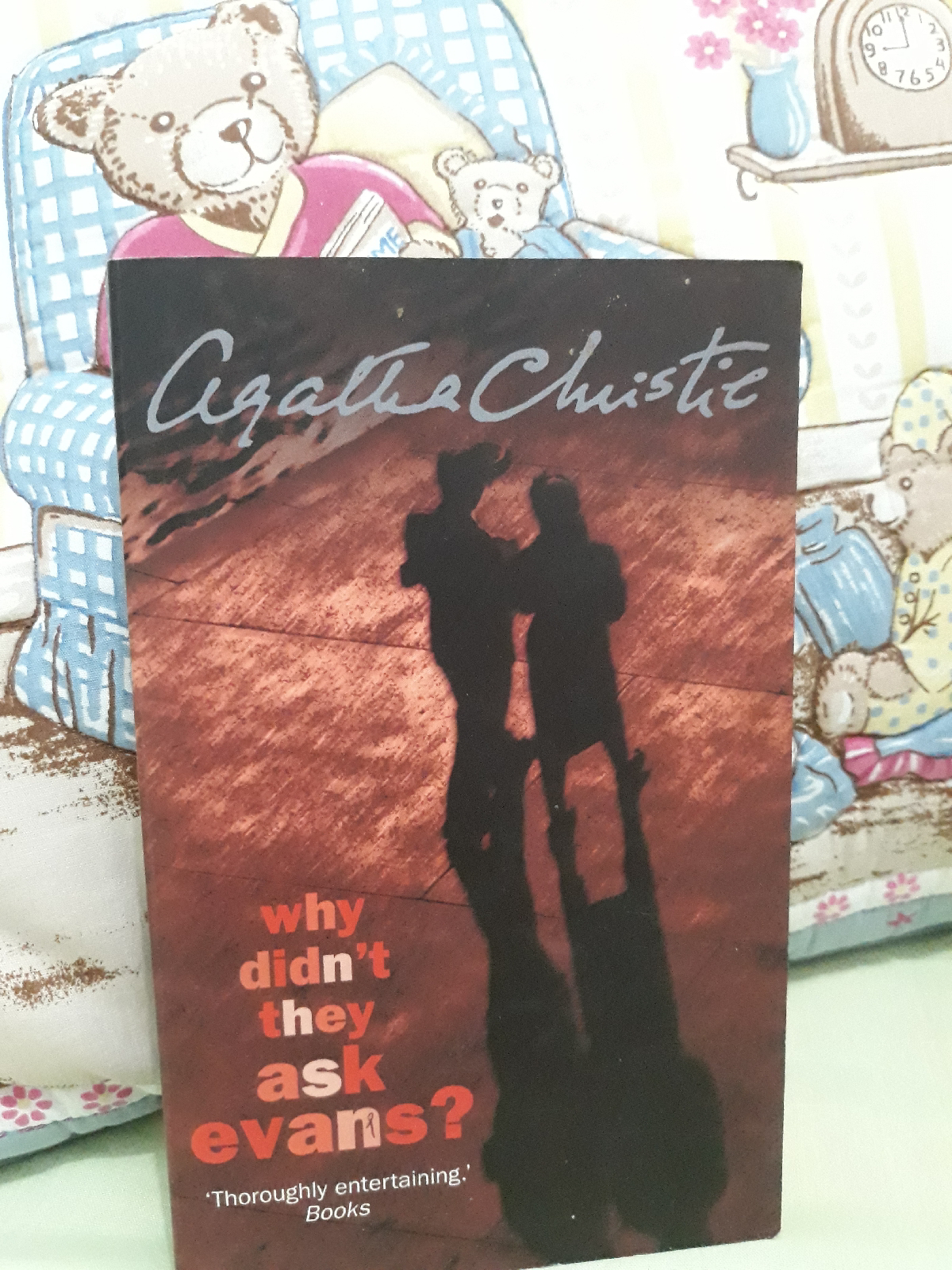
4. Why didn't they ask Evans? (Agatha Christie)


One can always trust Agatha Christie to get interesting idea for her book title. This one isn't quoted from nursery rhyme, as were with many of hers. But rather, it's a remark from the sleuths when they finally realized that the key to their puzzling mystery should have been in the hand of the person called Evans.


5. N or M? (Agatha Christie)


It's a Tommy & Tuppence mystery, so it's naturally about spy operations. N and M are the initials of two German spies whose identities Tommy and Tuppence must find out among the seemingly innocent guests at a seaside hotel.


6. Whose Body? (Dorothy L. Sayers)


This was my first Dorothy L. Sayers (and still is - I need to read more soon!) A bachelor architect found a dead body of a stranger in his bathtub one morning, and no one have any idea of the who and why. It's an intriguing mystery for Lord Peter Wimsey to solve!


Have you ever read books with interrogative sentence as title? What's your favorites?


Next Six Books Saturday: 26th October 2024.

Wednesday, September 25, 2024

Excellent Women (1952) by Barbara Pym #SpinsterSeptember


❤ Spinsters and clergymen seem to always be center in most of Barbara Pym's novels. My first Pym was Some Tame Gazelle, which I found suited my taste. Excellent Women, my last pick of this year's #SpinterSeptember (hosted by @pearjelly_) is no different.

❤ Mildred Lathbury is in her thirties, a spinster, and a clergyman's daughter. She rents a furnished room in a respectable household, and is counted as one of the excellent women of the parish. Excellent women here means the kind of women who perform small but meaningful duties in the service of churches and voluntary organization and are usually taken for granted (especially by men).

❤ The narrow and peaceful existence of Miss Lathbury is about to be thoroughly stirred by the arrival of three strangers: Rockingham (Rocky) and Helena Napier, and the young widow Mrs. Allegra Gray The Napiers live in the downstairs room of the same house where Mildred lives. Rocky is a charming man to whom women used to be drawn to, while Helena is a anthropologist - an interesting career of a woman in the field usually dominated by men, at least in 1950s. Mildred notices from the first that Helena is much more excited to discuss things with her colleague Everard Bone, than to converse with her husband. Her work seems to alienates her husband, who would usually visit Mildred where he expects to be offered a cup of tea or coffee.

❤ Unwittingly, Mildred becomes more involved in others' lives. The Napiers, Everard Bone - whom she disliked at first, but changed her mind when she met him at the church. More so, after he confided to Mildred that he doesn't really care for Helena. Gradually and very subtly Everard Bone attracted Mildred's attention - an awkward meeting at first, then tea, then lunch. I was relieved that Mildred could see Everard's deeper qualities and was immune to Rocky's charm and his casual teasing - not at first, but also not too late. Many inexperienced spinster would fall to Rocky's charm and the seemingly cold Everard.

❤ Other than Rocky and Everard, many people around her have thought she would eventually marry their unmarried vicar, Julian Malory, who lives with his also unmarried sister Winifred at the vicarage. The siblings are Mildred's close friend, and she often visits the vicarage. But then, enter Mrs. Gray - a young beautiful widow - who rent the attic room of the vicarage. It's not a surprise to anyone, perhaps, when Julian announced his engagement to Allegra Gray.

❤ Those two implications, so to speak, disturbed the two spinsters: Mildred and Winifred, rather severely. What will happen next? Will everything come to normal again, or will there be huge changes to their world? Whatever the end will be, it was a witty and gentle read, which is surprisingly quite relevant to our modern time. How many people unjustly suppose that unmarried women always lead an idle and trouble-free life, and thus the perfect end receiving of other married people's burdens?

Rating: ⭐⭐⭐⭐

Monday, September 23, 2024

Mr. Finchley Discovers His England (1934) by Victor Canning


🚲 A story about middle-aged solicitor's clerk taking an adventurous holiday for the first time of his life is quite irresistible for me. And this book is just about that. No plot or story line, it's just a series of Mr. Finchley's hilarious, and often absurd, adventures around the countryside and little towns of England. The result is a refreshing and entertaining read!

🚲 Mr. Finchley's life can be accurately described in two words: regulated and rules. He's been working for years as clerk, and has never taken holiday from work. When his boss instructed him to take a three weeks summer holiday, Mr. Finchley was quite confused. But he bought a ticket anyway for a journey to a seaside town.

🚲 But Edgar Finchley never reached the town. For just from day one he always met with unexpected complications that thwarted his original plans. And these events and people he met are often comical; most of them very absurd. They are ranging from good to bad people. A Gypsy couple, a car thief (that's how he deviated from his original plan in the first place), and a male version of Miss Havisham are only a few I can remember. Along his journey, which he took either by foot or by bicycle, he was alternately kidnapped, on the run from an asylum, on the boat helping a smuggler, working at a gas station, and helping at a street show. Not to mention being chased by either the police or the angry gypsy because he thought Mr. Finchley had pinched his wife!

🚲 On the whole, this is a light read with cheerful tone, silly and charming. Overall I liked Mr. Finchley's adventures, though I was a bit uneasy when he just brushed off the smuggler's occupation just like that as if it's not wrong - because a crime is still a crime, though the criminal is kind and warm towards you, right? I know that in his position he couldn't do anything for his own sake, but I would feel troubled had I experienced the same. Excepting the game of cricket - which was too long and boring - I loved this book.

Rating: ⭐⭐⭐1/5

Thursday, September 19, 2024

A Far Cry from Kensington (1988) by Muriel Spark #CCSpin


πŸ’œ #CCSpin brought me a novel by a-new-to-me author: Muriel Spark. A Far Cry from Kensington is a reminiscent of post war London in 1954-1955 by a young widow: Mrs. Hawkins. At first I thought Mrs. Hawkins was in her late thirties or even early forties. She seemed matured, motherly, and loved to dispose advises. But it turned out she was quite young, only twenty nine. I think it's because of her large body, as well as her personalities, that made her seemed older and unattractive.

πŸ’œ Mrs. Hawkins lived alone in a rooming house (boarding house) in South Kensington, and worked as editor in a struggled publishing company. Also residents in the house are William, a medical student; Kate, a nurse; and Wanda Podolak, a Polish dressmakers. The later is the first center of Mrs. Hawkins' story, the other is an aspiring writer called Hector Bartlett, whom she used to call a "pisseur de copie" due to his books which were of rubbish quality.

πŸ’œ Wanda Podolak is the kind of hysterical and nervous woman. She's a good dressmaker and had many clients, men and women. One day she received an anonymous letter, threatening her to pay her taxes, or else, prison. This is just the beginning of Wanda's declining. Mrs. Hawkins and the rest of the house thought it just a bully, but Wanda, being an immigrant and hysterical in nature, took it very seriously. It didn't help too when she began taking to radionics - a pseudoscientific form of alternative medicine in the shape of a black box, which was actually a historical event in the early 20th century. The writer of the letter became an exciting mysterious puzzle that was only be solved near the end.

πŸ’œ Hector Bartlett also proved to be thorn in Mrs. Hawkins's flesh due to her rude but honest appellation of him. Besides these complexities, Agnes (or Nancy) Hawkins, thirty years later, reminisces her days in the publication world, the eccentricities of her fellow residents and neighbors, as well as her efforts to be a better self - diet is one of them. And it is a thinner and much more contended Nancy Hawkins who told us this amazing story thirty years later from Italy - a far cry from that 1955 Kensington.

πŸ’œ I am so glad I had the chance to come upon this book. It seems a short and ordinary story, but it has many layers that intrigued me long after finishing it. Muriel Spark is a brilliant author to capture the depth of humanity in the post-war, but which also applies and is relevant in any era.

Rating: ⭐⭐⭐⭐1/2

Tuesday, September 17, 2024

Mini Reviews for #AgathaChristieSS24 - September


The Herb of Death

🌿 It's another story told around a dinner table of Colonel and Mrs. Bantry. Same as in The Affair at the Bungalow, the guests are Sir Henry something, ex-Scotland Yard or something, a doctor, an actress who "provided" the story in The Affair at the Bungalow, and of course, our dear Miss Marple. This time, Mrs. Bantry told an intriguing event when the Bantrys were guests at Clodderham Court.

🌿 The duck they had for dinner was wrongly cooked with foxglove leaves instead of sage, and everyone was ill from digitalis poisoning. But one girl, Sir Ambrose's ward, was dead. It was supposed as an accident, but of course it's a murder. Everyone gave their opinions from every angle, but in the end, it's Miss Marple who guessed correctly.

🌿 Agatha Christie "strikes" again with a poisonous murder, which is always her forte, and which I always love for its simplicity.

Rating: ⭐⭐⭐⭐1/2


The Bird with the Broken Wing

πŸ•Š Here is my most favorite Mr. Quin's story so far. On a seance, Mr. Satterthwaite "received a message", apparently from his old elusive friend, Mr. Quin. It instructs him to go to Laidell, where he was initially invited but thought of skipping. But now he decided to go, as something would surely  happen.

πŸ•Š An "enchanting" girl was strangled by her ukulele string. Everyone thought it's a suicide, but Satterthwaite knew otherwise; though he couldn't say to the police about Mr. Quin, but still... Moreover, the girl had confided to him that night, that she was very happy - that something is coming that would make her happy. So suicide is beyond question. But who's the murderer? Mr. Satterthwaite knew whodunnit, as well as I, though I didn't guess the how.

πŸ•Š A very enjoyable mystery, and that, I guess, is because of Mr. Satterthwaite's confidence. Mr. Quin's involvement is almost zero; he only appeared in the end after the mystery's solved. That is just the right amount for me...

Rating: ⭐⭐⭐⭐1/2

Friday, September 13, 2024

Rhine Journey (1980) by Ann Schlee #SpinsterSeptember


🚒 Rhine Journey is not only a journey on a steamer through the river Rhine in Germany. More than that, it is also an internal journey of an unmarried 19th century woman, from repressed spinsterhood, to independence. Charlotte is the spinster, and she is the reason Nora @ pear.jelly_ picked this book for a group read during #SpinsterSeptember.

🚒 Charlotte is an English woman, and she goes on the journey to Germany with her brother's family - Reverend Charles Morisson, his wife Marion, and their teenager daughter Ellie. On board the steamer Charlotte sees a man who resembles and reminds her of her youth lover, from whom she was separated by her brother and sister in law because they felt he didn't suit her. The man was Charlotte's only passport to happiness. Instead, she was forced to live as a retainer of the family - someone invisible and whom no one ever noticed.

🚒 It turns out the man isn't her ex lover, but a husband and a father. She begins to be infatuated with the man, even fantasizing and dreaming about making love with him, whom, in her dream, reciprocates her feeling, and treats her like how she had wanted to be treated. Then something happens that ends those fantasies, and it is at that point that Charlotte's change begins.

🚒 Charlotte had actually received a fortune, bequeathed by a Mr. Ransome, to whom she had been a caretaker. She could have had her independence then, but I think the repression of her brother and sister-in-law had been too much that she felt helpless to start an independent life. Charlotte's life had been regulated to the family's needs for too long for her to begin a new one which is her own. Loneliness is also an issue she's afraid to face.

🚒 On the whole, it's an intriguing novel, without much plot or action, as the biggest "turmoil" is happening inside Charlotte's mind. It's not an easy read for me as sometimes the line between reality and fantasy or dream is blurred. I think that's what the writer had intended it to be, and it worked. Ann Schlee captured the Victorian spinsterhood repression beautifully, though the story feels more like in the late 1910s or even 1920s.

Rating: ⭐⭐⭐⭐