"To be part of something one
doesn't in the least understand is, I think, one of the most intriguing thing
about life."
🧡 Dame Agatha Christie is
one author whose books I continually read since I was 11 years old. Yet, I
didn't really know much about the author herself. Until I read this book, her
autobiography. From now on, I would call her Agatha - or Aunt Agatha - because
that's how I felt about her after reading this Autobiography, as intimate as an
aunt and her niece!
🧡 Agatha wrote this
autobiography at the age of 75. It covers her life from childhood (about five
y.o.) to the time she wrote this. It is by no means a chronological account of
her life. Instead, she wrote from memory. Scattering bits and pieces of bygone
events and perceptions which came to her memory as she's writing, she told it
us; adding sometimes her views on certain subject, or comparison with her
present situation.
🧡 Just imagine listening
to your grandma telling you stories about her past: "I remember one day
when I was about five or something..." - it's that kind of stuffs. But
from these stories, and Agatha's comments on the events, we came to know much
about her. Just like how you would've known your grandma more intimately after
listening to her for half an hour every day during one summer holiday. You
would feel you've known her all your life. And so, this review would also be
bits and pieces of what has impressed me from this book.
🧡 Agatha's father was a
caring, generous man with sense of humor, and liked by many people. Her mother
was shy, impulsive, and melancholic. And she was a good story teller. Her
stories was always different. One of them was The Curious Candle - a detective
story! Her mother, however, didn't allow her children to read before age 8.
Nevertheless, Agatha taught herself to read from story books. She could read at
5 y.o., and loved story books (and telling stories) ever since.
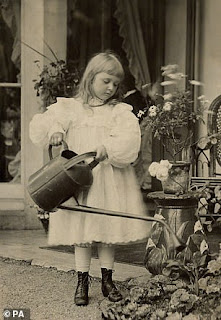
🧡 Agatha first ever
story-telling in childhood was when her friend Margaret lost her front teeth
and made her speech incomprehensible. Agatha daren't say she didn't understand
what she said, but didn't want to not having conversation either, so she
invented a story about fairy. Later, when Agatha didn't have friend at same
age, she invented imagery friends and instilled different personalities into
each. She would chat with them while playing outside. And that's how the seeds
of a novelist was sown, I believe.
🧡 Agatha first wrote a
detective story (
The Mysterious Affair at Styles) was due to her sister's
challenge. But later after her father's death and financial problem, she began
to write as a profession (though 'till the end she never embraced her status as
a succesful author). But, as we all know, monetizing hobby could be an
unwholesome job. To divert from this, Agatha loved writing plays, and do it
wholeheartedly.
🧡 Besides writing, her
other passions were travelling, archeology, and houses. Agatha is one of the
most adventurous persons I've ever known. She always tried to do new things,
and almost always found them interesting. Either it be her work at the
dispensary during War (where she got to know several poisons for her murder cases),
or being assistant to her second husband Max Mallowan during their excavation
gigs.
 |
| Max Mallowan & Agatha Christie during excavation gig at Ur, 1931 |
🧡 Speaking of husband...
I hate Agatha's first husband: Archie Christie! When her mother died, Archie
didn't accompany his wife during her grief because he couldn't stand sorrows
and miseries. He then returned to their home asking for divorce because he's in
love with another woman, who was there for him during his wife's absent.
Dude,
she was grieving her mother's death! How do you expect her to amuse you? It's
you who should've been there to support your wife in those difficult times.
Didn't like funerals? Nobody did! But that's life. Are you human or not?!
Actually I didn't like him from the first. He seemed to be egotistical person.
And it turned out he was.
🧡 Though I enjoyed every
second of my listening to this book (I listened to audiobook), as a reader, my
favorite part is when Agatha's taking about her favorite books, her writing and
publishing books I've read, and various inspirations of them. Agatha's favorite
character from Dickens'
Nicholas Nickleby was the man who courted Mrs. Nickleby
by throwing vegetable marrow. Did this where Poirot's throwing vegetable marrow
in
The Murder of Roger Ackroyd came from? (She said "maybe", but I'm
certain it did!)
🧡 Many of her unique
novels were mostly inspired (or persuaded) by her acquaintances.
The Pale
Horse, for instance, was inspired by a chemist (Agatha's instructor during
war).
Death Comes at the End was the result of Agatha's friend' persuasion that
she need to write a murder story set in ancient Egypt. A colonel (Archie's
boss) 'asked' her to put him as character in her novel -
The Man in the Brown Suit was the result. It's fascinated to learn this backstory of her many
novels!
🧡 Of Agatha's own
favorite writers and books: her Walter Scott's favorite was
The Talisman
(didn't surprise me considering her fascination of the Middle East), while
Bleak House was crowned as her favorite Dickens. She also loved Dumas (my face
too!), especially 1st volume of
The Count of Monte Cristo. But her most
favorite author was perhaps May Sinclair.
🧡 I listened to this
audiobook almost every day for about 6 or 8 weeks, and those were happy days! I
loved Judith Boyd narration, though her "excitement squeals" were
rather unpleasant. But overall, it's been entertaining as well as inspiring.
Agatha lived her life the fullest, and she always found joy in everything she
did. My readings of Agatha's books will forever change after this! What a life,
and what an autobiography!
Rating: 4,5 / 5




.jpeg)
.jpeg)

