Showing posts with label Biography. Show all posts

Sunday, May 2, 2021

A Biography of Émile Zola by Alan Schom

This is the second Zola's biography I've ever read - the first being F.W.J. Hemmings's The Life and Times of Émile Zola - and I'm glad I had picked it. I found it more comprehensive, that, after finishing the book, I felt like I knew Zola more intimately than I've ever had. While quite familiar with his history (his genius civil engineer father's death when Zola was 7 y.o., the family's poverty and struggle in Paris, Zola's failure in Baccalaureate test, etc) from Hemmings', and his involvement (and even exile) in the Dreyfus Affair from Michael Rosen's The Disappeaance of Émile Zola, I've never been intimately "acquainted" with him, in terms of his personal character, his views, or love life, which this book amply provides. Here are some interesting bits I've gathered along the reading:

✔ François Zola (Zola's father) has been involved in "temporary disappearance of 1500 francs of regimental funds" while serving with the Foreign Legion in Algeria. The incident was later brought by Zola's enemies in Dreyfus Affair, in order to defame him. However, Schom argued that it is more likely that the money fraud was caused by François Zola's careless bookkeeping, instead of intentionally. Nonetheless, it's one of the many causes of Zola's depressions during the Affair.

✔ The 19 year Zola dreamed of finding a true love with a "good angel" - tender, kind, loving woman - and worried that he'd never find one. However, his first and only marriage with Alexandrine (neé Gabrielle) was loveless, and only out of convenience. Zola needed a practical woman to support him as writer, while Alexandrine needed security and honorable position. Only in his later life, did Zola meet his true love and his dream woman in Jeanne Rozerot, who gave him two children and the comfort of family life to the middle agwd and lonesome Zola.

✔ Zola was a hardworking man. Though he was forced to take a clerical job for a living in his early 20s, he still managed to write. Then, a small inheritance from a deceased grandfather helped him to choose journalism as his main job, paving his way to financial freedom to pursue his dream of writing fiction. And after he became a successful writer, Zola still worked hard, often working on more than one task at a time, that he sometimes must engage his friends to do researches for him, so that Zola later could use their notes as his writing material.

✔ Do you know that Zola was quite a successful librettist? His earlier career as playwright might be quite disastrous, but later on his L'Assommoir has been staged as a successful play. But his best achievement in theater was perhaps his collaboration with Alfret Bruneau, the French composer. Zola provided some of his works for Bruneau's operas, and he even acted as librettist for at least two operas: Messidor (1897) and L'Ouragan (1901).

✔ I'm familiar with the fact that L'Assommoir was Zola's first successful book, that launched his career as a respected writer in France. But La Debacle was in fact his most successful and best selling book. Even Nana has surpassed L'Assommoir in sales number!

✔ As a human being, Zola is actually a sensitif, patient, loyal, persistent, and generous man. He strongly held on his principles (truth and justice), never hesitate to sacrifice his comfort to fight injustice. But he could also be indecisive, especially when it comes to his marriage. Schom criticized Zola for never divorcing Alexandrine and marrying Jeanne, as the triangle love later proved to bring sorrow for all parties. But I think Zola was too kind and loyal to leave Alexandrine, who has supported him through their ups and downs, though he could hardly stand Alexandrine's emotional temper and headstrong. He also proved to be loyal to his whiny and parasitic friend: Henry Céard. But only in Alfred Bruneau, I guess, that Zola found a true friend with mutual affection and respect.

✔ From Zola's portrayal of the Jews in L'Argent (Money), Schom concluded that Zola was anti-semitic, though later he would change his views while defending Alfred Dreyfus (why, though? This isn't in accordance with his consistency). I personally didn't see Zola as particularly anti-semitic. His portrayal is only describing characteristic of Jews as he might have seen or known, just like in his portrayal of priests in The Sin of Abbé Mouret. Did he hate priests or Jews in particular? Not necessarily, he's just presenting the facts - whether he liked it or not.

There are still a lot of small bits about Zola which I could not write all here. You simply must read the book to understand more about Zola as a person. Had I lived in 19th century France, I would have honoured to be one of his friends, or better still, his protegés (for he's so generous towards them, always encourage them to be successful). All in all, Émile Zola is an amiable human being, when he's not depressed or indecisive. And I'm so grateful to Alan Schom to have written this biography in so intimate and personal way.

As a bonus, here's from Denise's memory (Zola's daughter) - the last time Jeanne and the children were to see Zola alive - and it's so heartbreaking!

"On 27 September, he [Zola] came to Verneuil to kiss us goodbye, and we were all to return [separately] to Paris the following day. I no longer remember why, but we did not accompany him, as we usually did, to within a few hundred feet of his house, going via the village streets where, so often during the [Dreyfus] Affair, women would throw their dirty dish water over us as we were passing. Now, instead, we stood at the front door, watching him walk away, turning to look at us once more, and then continuing, finally disappearing round the corner."

Rating: 5 / 5

Wednesday, May 8, 2019

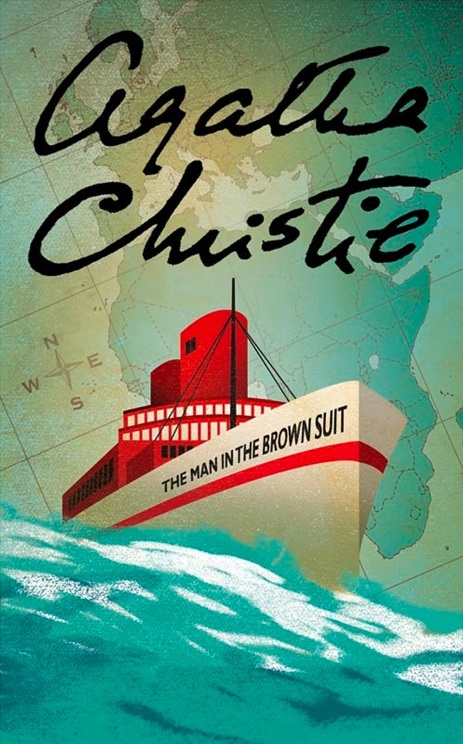
Black Count and The Man in the Brown Suit [Mini Reviews]


Black Count by Tom Reiss


The subtitle of this biography of General Dumas (Alexandre Dumas's father): Glory, Revolution, Betrayal, and the Real Count of Monte Cristo, tells you exactly what this book, written by Tom Reiss, is about.

General Thomas-Alexandre Dumas was a son of a renegade nobleman: Marquis de la Pailletarie and his slave: Marie-Cessete Dumas. He was born in 1762 in French sugar colony: Saint Domingue. Sold by his own father as slave when he was 14 y.o., he was educated as aristocrat after later being bought back by his father.

Alex Dumas was extraordinary because he was the first man of color with highest rank in Europe. His bright career from soldier, officer, to General-in-chief in a short time, along with his heroic bravery actions and his passionate love for his country, should have placed him a special account in French history. Instead, but from this biography, his traces seemed to be vanished from history and memories. Why? Blame it on Napoleon Bonaparte! Don't believe any novel about Napoleon, however sweet he was pictured in it; the real one was ten times more evil and disgusting! I seriously hated him with all my heart throughout this book! Have you read Alexandre Dumas' The Count of Monte Cristo? Of how Edmond Dantes was unjustly imprisoned? It's inspired - not loosely - by the real event where Napoleon set up General Dumas for criticizing his (cruel, racist) policy.

On the whole, it was not an enjoyable read. But if you like French history, this book will interest you. But most of all, this book will be interesting for those who love Alexandre Dumas’ novels, as now we know the origin of those heroic passages in most of his famous novels, especially The Count of Monte Cristo and The Three Musketeers. I loved especially the deep love and admiration Dumas showed to his father in everything he later wrote (diary and novels). I’d feel the same too if I have had a father like the honorable General Dumas!

Score: 4,5 / 5


The Man in the Brown Suit by Agatha Christie


This fourth novel of Agatha Christie introduces us to Colonel Race, though his involvement in the crime is very vague, at one point, I even suspected him as the villain. Instead, this story, again, was dominated by a woman. Anne Beddingfield is a restless young woman longing for adventure, and...bam! An adventure met her on the next corner. She coincidentally witnessed an accident, which turned out to be a murder, and the next instant found a piece of paper a man has unconsciously dropped. Then she entered a house where another murder has been committed, and when casually rummaging inside a closet, coincidentally found a canister of undeveloped film, which, of course, turned out to be another clue.

There are too many coincidences in this story to my taste, it often felt "staged". I could not relate with Anne, the amateur detective, and certainly was not impressed by her "romance with a mysterious guy on a deserted island". It was really the most un-Christie-ish I've read so far. Perhaps it's because at that stage, Christie was still searching for the best style she wanted to adopt for her future books.

The most positive from this one is the hilarious Sir Eustace Peddler, from whose witty and sarcastic diary accounts, along with Anne's account, we were told of this story.

It's clearly not my favorite, perhaps my least favorite of Christie's four early novels. 

Score: 3 / 5


Friday, April 12, 2019

Zola: Photographer


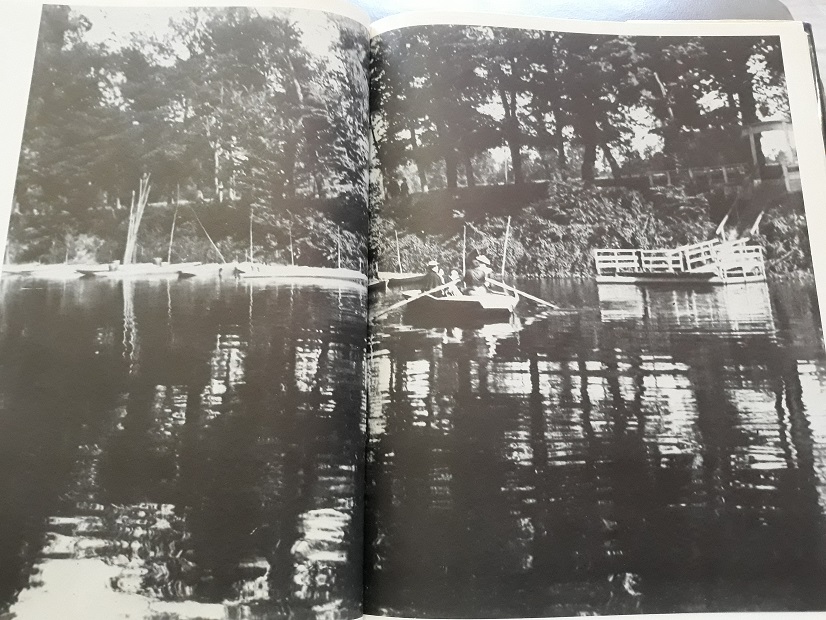
Near the end of his life, Émile Zola became a passionate photographer. He learned the subject from his journalist friends, and along the way he even perfected a shutter release system that allowed him to take a selfie – sorry, the word hasn't even been invented that time :P – I mean to photograph himself. Like his writing, Zola always worked wholeheartedly. This book is a compilation of 208 photos, diary entries, and letters collection, selected and compiled by François Émile Zola (Zola's grandson) and Massin (French art director and book designer). It contains photos taken by Zola, as well as family photos taken by others, divided into seven categories:

Life in Médan
Point of interest: photos of Zola's house. You might be interested to learn that Zola named the left tower "Nana", while the right (square) one was "Germinal" - do you think it's each book's revenue that paid for the tower building?

Zola'h house in Medan
View from Zola's house - no wonder he pictured the trains so vividly in La Bete Humaine, eh?
The little island near Zola's house - Loved the play of lights on the water! Zola would have had a long paragraph describing it in a novel, I bet!


A Second Family
Point of interest: ALL of Jeanne Rozerot's (Zola's mistress) and the children’s. It provides many detailed aspects of Zola's triangle marriage with Alexandrine (first wife) and Jeanne Rozerot (ex Madame Zola's seamstress). I have always wondered, at what stage of their household lives it was, when Jeanne "entered the scene". This book provides the answer: it was a couple of months after the family's holiday in Royan, of which Jeanne was taken along by Alexandrine (Madame Zola). Alexandrine's health (she was often “indisposed”) prevented her to accompany Zola on his outgoing walks, and so she arranged Jeanne to walk with him. That was, I think, how it all began.

From the photographs, I assumed that Jeanne was tender and caring, the exact opposite of the strong, businesslike Alexandrine. But maybe, most importantly, Jeanne has given Zola the children, of which Alexandrine has failed, despite her great household management. Zola adored children, and I guess family gave Zola the peaceful mind he needed to produce his masterpieces.

Tea Time a Verneuil house

I loved especially these three "Teatime" photographs; you can feel the peaceful and calm atmosphere when the family gathered around a small table out in the garden, under the shades of a tree, enjoying a cup of hot tea and biscuits. These were taken from the Zolas' garden in Verneuil, to where Zola would walk from his house in Médan (where he stayed with Alexandrine) every afternoon to have tea with his second family.

Another tea time - I love Jeanne's natural pose!

By the way, they were three different photos of different occasions – do you notice the piles of biscuits on two plates in the second photo, which was different in the first (it looks like cakes?), and they wore different clothes too. I loved Denise's dress and hat in #2. And the Zolas have a cat too! Is it the real inspiration of Minouche-the cat in The Bright Side of Life? :) What I love most of all of these photos, is their natural pose. I believe 19th century people didn't use to capture their daily lives with camera; it only showed that Jeanne and the children were so used to it that they could act that normal – thanks to Zola's passion in photography.

See the abandoned teacup with teaspoon in it in Tea Time #1? It must have been Jeanne's. As if, after serving tea, maybe after one or two sips, Jeanne would get up and say: "Wait, a couple of photos first!", just like what we do nowadays, the difference is only that we would instantly post it in Instagram, while theirs would have stayed in the film, to be professed later by Zola in his darkroom.

Tea time under the trees

I can look at these photos forever, devouring every little details, such as the teapot (I liked its 'twirling' shape), the floral tablecloth with fringes, and the way the little family sipped the hot tea from their teaspoons; exactly my habit of drinking tea. By the way, what's your habit – do you sip directly from your cup, sip it from teaspoon, or from the saucer? (My dad used to do the later to drink his coffee.) Do you see the chair cushion lying on the stool on the left in photo #3? Who do you think have abandoned it - Zola, perhaps? And who took this photo? Could it possibly be Jacques (Zola's youngest boy)? Do you think Zola has taught him to use the camera at very young age? Well... I can go on and on with my imagination, but these photos really made me feel like I was there too with the Zolas! One more thing, I loved how, maybe after tea, the Zolas stayed there to relax; Denise would be reading, Jacques doing homework under guidance of Zola? – loved Zola's chequered bowtie, by the way! ;), while Jeanne was crocheting. So peaceful...It's indeed a family goal!

Relaxing after tea?


The Trip to Italy
Zola made a trip to Italy on 1894, staying for six weeks. As you might have guessed, he was preparing materials for his second installment of Three Cities: Rome. It was during this visit that Alfred Dreyfus was arrested as a German spy.
Point of interest: none, as there's only several random photos.

Exile in England
Point of interest: almost everything, especially views from his hotel rooms, and a street scene near Crystal Palace. He took tons of wonderful pictures here, perhaps because he was alone, boring, distressed; and needed some action to focus his energy upon.

View outside Zola's hotel in London


A street in London


Zola's Paris
You could feel Zola's love for Paris from pictures he took, which are all gorgeous, every single one of them. I loved especially some of the place Clichy, and the swan lake in Bois the Boulogne (with Denise and Jacques feeding the swans).

Place Clichy after rain


Denise & Jacques feeding swans, supervised by Jeanne


The World's Fair of 1900
Point of interest: although perhaps not the best pictures he had taken, I admired Zola’s night shots, especially on Eiffel. People didn’t risk taking night photos at that time due to bad results, but Zola, of course, took no heed on it, and did his best to capture these:

A night photo in the turn of the century

Eiffel during 1900 World's Fair


Portraits and Still Lives
The last part consisted personal, as well as group, photos of the Zolas. Most of them were Jeanne’s (she’s quite photogenic for a 19th century woman!) One of it shows Jeanne smiled and tilted her head, which I think is quite unusual pose one took at that time for photograph. The point of interest of this collection is perhaps Zola’s portraits sans glasses – which is a rare sight. He looks a little different, don’t you think? I think his vigorous look comes from his glasses… :) And from this collection, you can also get a rare clear picture of Alexandrine.


Like I said, I have enjoyed very much reading through this book. If you want to get to know Zola as the man behind his pen, this book is a treasure! On the other hand, I think we readers would always be indebted to both Alexandrine and Jeanne, for without them, we might never read masterpieces from Zola. Alexandrine, particularly, has suffered the most from the triangular love; making peace with Zola and Jeanne and putting up with their peculiar relationships, and even going as far as ensuring Zola’s children got what they deserved after their mother’s death. It only proved her to be a great woman of strong courage and generous heart. And I was a bit relieved that Zola at least has never left or abndoned Alexandrine. 

Score: 5 / 5


Tuesday, July 24, 2018

The Disappearance of Émile Zola by Michael Rosen


Alfred Dreyfus was a Jewish army officer who was falsely accused of treason (passing secrets to Germany). Perhaps it was the fact that he was a Jewish, that blew out the case into anti-semitic issue, which then torn France into two bitter sides.

At that time, Zola has established himself as a successful writer, having just finished his ambitious literary project: the Rougon-Macquart series. He could have stayed at home with families, enjoying his wealth and comfort while, perhaps, preparing for his new novel. But no, Zola, who was not a politician, plunged himself into the war with his open letter: J'accuse!, defending the innocent Dreyfus. Then Zola—who loved his country, and has put huge efforts in creating the Rougon-Macquart for the sake of his beloved France, and even risked his life and reputation by taking side with a Jewish—was now found guilty of libel. His friends decided that he must flee from Paris.

Michael Rosen compiled old notes, journals, letters, and newspapers on the events around Zola's exile, and then recreated them into this interesting story. This book does not only record the whole episode from the night Zola fled to England to after his death, but also reveals a different side of Zola's personal life which was rarely exposed: his intimate life with his wife and his mistress. Let's unwrap it all here...

Zola's English was zero, and he was 'forced' to leave France at night by train, bringing only a pack of nightshirt and a piece of paper with the name of the hotel written in it. Imagine... forced to leave your beloved country, snatched from the warmth of family and loved ones, and arrive in a foreign country where you couldn't speak the language; alone, wretched, and abandoned. No wonder that Zola suffered at least two nervous breakdowns during the exile.

There are several new and interesting facts around Zola's exile I got from this book. First is his intricate love life. I already knew about Zola's childless marriage with Alexandrine, and about his much younger mistress: Jeanne Rozerot, who gave him two children: Jacques and Denise. But that Alexandrine, when she learned about the affair, rushed to Jeanne's house with rage; or how the two families always stayed not far from each other (either in Paris, or Zola's house in Médan, or in Verneuil); that Jeanne and the children always stayed nearby—that, I had no idea. And from this account, I suddenly had a high admiration for Madame Zola. That, I thought, is the true wonder woman. It was not uncommon in 19th century for a gentleman to have mistress(es), but it was usually kept discreet. That the wife accepted the mistress into the family (though lived separately) and 'shared' the husband (stayed with the wife in the nights and the mistress in the afternoons)—that was really unconventional.

left: Mme. Zola, right: Zola with Jeanne Rozerot
and the children: Jacques & Denise

I began to imagine Alexandrine—strong willed and respectable woman, but with tender heart too. She must have lived desperately through rage, shame, and jealousy, but she loved her husband so much (otherwise she wouldn't sacrifice that much) and knew that she must save his reputation; that he needed peace and comfort of a home and surrounded with hid children to produce his masterpieces, so that in the end she finally accepted the bizarre arrangement. I imagined it was she who has found a small quiet house round the corner for Jeanne and the children, and she perhaps also managed to provide household needs for the 'other' house, all for the convenience of dear Zola. How she endured questions from the neighbors? Or maybe it was so common that people didn't talk about it? How she must have felt when Zola went there? Knowing that Zola felt more at home there than at her own house? That Zola did not love her as a woman (I think he respected her and treated her like a best friend—someone that always understood him), and how he always looked happier when he was there. Well... it must have been terribly hard to endure!

But I was rambling here... Another interesting point I have also learned from this book is 'Zolaism'. Around that time, writers who dared to write about sex scenes or other vulgarities were accused of Zolaism. Zola's influence was widespread later and can be found in the works of Henry James, Thomas Hardy, George Bernard Shaw, and many more. But before, his books were banned and rejected. His translator and publisher Henry Vizetelly was imprisoned and fined for translating and publishing Zola's La Terre, and finally died following his ruin. Why La Terre? Only if you have read it, you would know why. But the funny thing is, they particularly questioned the passage where a farm girl (I forgot her name) assists, with her hands, her bull to mate with a cow. That passage they found vulgar, but not the rape scene?? Strange…

There is also Zola's photography. I came to know in detail how Zola was obsessed with his new hobby. I haven't related it with his extraordinary writing method at first, but this passage intrigued me:


In relation to his writing, Zola claimed that his visual memory was equipped with an ‘extraordinary vividness’ and that he could evoke objects he had seen in ways that meant he could see them again as they really were. Photography supplemented and enlarged this for him and is linked to what he thought of as the scientific approach to writing.

Remarkable, is he not? It made me quite interested in his photographer side now. In fact, I have ordered a book on it: Zola - Photographer (edited by Massin), a compilation of about 200 photographs by Zola.

In his later work: Travail, and in educating his children, Zola interestingly viewed work as something pleasant, satisfying, and the source of happiness, instead of as obligation or labour. Travail is the third of the Gospels series. I loved this part because it reflected my personal view. Work has become my second hobby, besides reading (obviously), and my life feels complete only when these two fields are balanced.

There are so many things you might find in this book that I can’t share here lest this post becomes tedious (and I have not yet talked much about his disappearance!). Anyway, my admiration grew higher still for Zola, after reading this book. He is not only a great author, but also a very brave man to stand (almost alone but a few supporters) against injustice and to fight for the truth, by sacrificing a lot in the process (his career, his happiness, and almost certainly, his life—it’s never officially approved, but I’m almost sure that he was really poisoned to death by his opponents)! To me, he is a hero.

Rosen has done his job very well, but for inserting his own short story in the end. What was the purpose? It really ruined his efforts in bringing the inside story of one of the greatest authors that France (if not the world) has owned. Therefore…

4 / 5 is my final verdict.


Paris, look what I’ve done for you! And yet this is how you treat me!” ~ Émile Zola


Wednesday, April 29, 2015

The Life and Times of Émile Zola by F.W.J. Hemmings

Shame on me, really, for after three years having been Émile Zola’s hardcore fan, I have never read any of his biographies! So in Zoladdiction 2015 I would not read any Zola’s novels (only Germinal rereading), to make room for his biography by F.W.J. Hemmings.

Hemmings covered his investigation from the beginning of 19th century. Zola’s mother was a humble-birth young girl of a glazier family, who could not have afforded her dowry if a forty four year old Francesco Zola—a son of a distinguished military family of Republic of Venice—has never been attracted to her. Zola’s father was a genius in constructive business, but never succeeded until his death when Zola was only seven years old. After paying off the debts, the Zolas must leave Aix-en-Provence to live very humbly in Paris with the aids of some friends. It was perhaps his memory of Aix’ country landscape which inspired Zola to write beautiful narration about nature in his novels.

Émile Zola arrived in Paris in 1851, the era when Baron Haussmann was renovating Paris into modern industrial city. If you are reading (or have read) Zola’s The Rougon Macquart series, this theme would not be unfamiliar to you. The world was changing, and so was Paris. Zola’s interest, besides in literature, laid in art, especially paintings. It was the era when young Impressionists strove to reform the old Romantic style, and to get their paintings recognized and exhibited in The Académie des Beaux-Arts. Zola fought for them through his journals, and by hosting meetings in his place, just as Pierre Sandoz did in The Masterpiece. And indeed, most of his novels were inspired by real facts or things he witnessed from his life; including some of his female characters.

Through this book you will get to know the real Émile Zola, with all his struggles in life and in writing. Yes, in writing. Reading his books, you will notice that he was not a writer who would sit on his desk and pour out his imagination on paper just like that. No, he would think of the theme first, then creating the structure, breaking it down into parts or even chapters, studying (from books or observing) the objects he would write about, and finally filling it with his narration. He was not an impulsive person; but rather a genius who would calculate everything beforehand to ensure that he would come up with the desired result. That is Zola.

I think in a way Zola and I have something in common; we both don’t belong to the majority, and often felt lonely because we were different, for it’s hard to find friends who share our ideas. Once we have an opinion (and we always know we are right), we don’t like to deny it just because our lot don’t approve of it. What I admire in him mostly is his brave act of attacking the wrong accusation of Alfred Dreyfus. And he did it not for fame or image building, but because he always fight for the truth; dared to take risk for something he believed was right.

In short, this will tell you the real personalities of a Zola, and it helps a lot to relate with his novels when we are reading it.

Four stars for The Life and Times of Émile Zola

~~~~~~~~~~~

I read Bloomsbury reader paperback

This book is counted for:


Saturday, June 9, 2012

Charles Dickens: Dickens’ Bicentenary 1812 – 2012


[conclusion in English is in the bottom of this post]

Dalam rangka perayaan 200 tahun kelahiran Charles Dickens 7 Februari tahun ini, Lucinda Dickens Hawksley—seorang keturunan Dickens—bekerja sama dengan Charles Dickens Museum, London, menerbitkan sebuah biografi sang penulis besar Inggris ini. Jika sebelumnya telah banyak biografi Dickens yang telah diterbitkan, apa yang membuat biografi yang satu ini berbeda? Tak lain dan tak bukan adalah ciri khasnya yang menjadikannya layak (atau ‘wajib’) dimiliki para Dickensian (penggemar dan pecinta Dickens) di seluruh dunia. Biografi ini bukan hanya mengisahkan kehidupan sang penulis, namun juga karya-karyanya, bagaimana mereka ditulis, dan apa yang melatarbelakangi tema mereka, juga bagaimana kondisi psikologis Dickens saat itu memberikan pengaruh pada novel yang ditulisnya.

Namun yang paling menarik, mungkin, adalah koleksi imitasi relik-relik yang berhubungan dengan kehidupan Dickens dan karya-karyanya yang disisipkan dalam buku ini. Aku sudah pernah memamerkan’ isi buku ini sebelumnya, dan kurasa relik-relik itulah yang membuatku bertekad memiliki (dan membaca) buku ini.

Biografinya sendiri diawali dengan kelahiran Dickens serta sedikit latar belakang kedua orang tuanya, John dan Elizabeth Dickens, dalam chapter Early Years. Kemudian sedikit demi sedikit alurnya maju ke masa kecil Dickens yang pahit saat bekerja sebagai child laborer di blacking factory, cinta pertama Dickens, perkawinannya, dan seterusnya hingga ke saat kematian Dickens. Selain itu, buku ini juga mencantumkan kisah singkat ke-sepuluh anak-anak Dickens. Dan di sela-sela kronologis kehidupan Dickens itu, terselip kisah tentang novel-novel Dickens sesuai dengan waktu penulisannya. Dengan demikian kita jadi mengetahui pada tahap mana dari kehidupan Dickens sebuah novel ditulis, sehingga kita akan memahami latar belakang penulisan dan temanya. Bagian tentang novel-novel ini mengungkap banyak hal menarik yang akan membantu kita memahami kisah dalam novel-novel itu. Maka, biografi ini perlu dibaca untuk melengkapi pemahaman anda akan novel-novel Dickens, apa yang ingin dikatakan Dickens di dalamnya.

Bagian yang paling menarik bagiku, selain tentang karyanya, adalah tentang Ellen Ternan—kekasih Dickens selama 13 tahun terakhir kehidupannya, dan pengalaman Dickens dalam kecelakaan kereta api yang mengubah lima tahun terakhir hidupnya. Dari cerita tentang perceraiannya dengan istrinya Catherine, membuatku mengenal sisi lain kepribadian Dickens yang negatif. Memiliki affair dengan wanita lain mungkin tak mengherankan bagi sosok se-populer Dickens, namun sikapnya yang mencampakkan Catherine begitu saja memang sulit untuk dimaafkan. Bagaimana pun juga, Dickens tetaplah seorang manusia yang memiliki kekurangan, dan hal ini tak menyurutkan kekagumanku pada kejeniusan Dickens dalam menulis, dan perhatiannya yang besar terhadap ketidakadilan di dunia yang ia tuangkan dalam tulisan-tulisannya.

Conclusion:

This is not an ordinary biography. Like all biographies, you will find the complete story of Dickens’ life—from his early years, child laboring, first love, children, marriage, love affair, his fond of theatre, his journeys to other countries, to his final years and at last..his death. But besides that, this book also contains facsimile items from Dickens personal clippings, from his handwriting in manuscripts, his marriage certificate, his photographs, to the newspapers which Dickens edited. These items are attached within the pages, and would certainly become valuable collectible items for all Dickensians. Through these items, I feel very close to Dickens himself, as if I was visiting him in his writing room, where he’d showed me his clipping. Looking at the facsimile item of Oliver Twist reading material, for instance, I feel like Dickens was showing me how to read it, adding scribble notes in the margin to emphasize certain parts, and then asked me to read it loud for him (which I actually did! J).

This book is written in a chronological style, including the writing process of his novels. From this part, I get to learn how much Dickens’ personal life affected his writings. As I planned to read all Dickens novels, this book provides me a study of theme and background of each novel, which gives me a better understanding for my readings. I found several interesting facts about his novels, for instance, the ending alteration of Great Expectations. How many of you know, that the first edition of Great Expectation had a different ending than what we read now? It was Dickens’ fellow novelist Edward Bulwer Lytton who had persuaded Dickens to change it to be more acceptable to the readers.

Other interesting fact I find in this book is about Dickens’ love life. Dickens ended his marriage with Catherine soon after he fell in love with Ellen Ternan—who become Dickens’ lover in his last thirteen years of life. One of Dickens’ negative personal characters is, perhaps, his selfish idea about women’s youthfulness. One of the reasons Dickens dump his wife was because Catherine become fat and lazy after giving birth to ten children. The same feeling Dickens had for his first lover, Maria Beadnell. After finding out that Maria wasn’t as pretty and slim-waisted as he remembered from her youth, Dickens dumped her. No wonder, that Dickens’ female main characters in most of his books are always young, tender, and beautiful. More about his separation with Catherine, I don’t agree with his abandoning Catherine after their separation. He didn’t even consult Catherine when their boys were planned to study abroad. I think it’s rather funny, that Dickens had big concerns on child and women injustice, but he just dumped his own wife who—as a woman—didn’t have any power to fight at that time.

Anyway, I realized that Dickens is only a human—an eccentric one perhaps—however his writings and legacies keep inspiring us today and many years ahead. There are still many other interesting aspects of Dickens, including his journey to America, France and Italy, as well as his connection to many famous artists and writers (do you know that Wilkie Collins, Elizabeth Gaskell, George Elliot and William Makepeace Thackeray had appeared as debutants in Dickens’ magazine: ‘All The Year Round’?). All I can say is, that this book would be a perfect companion for your Dickens reading.

To close this review, I will quote an article of Charles Eliot Norton, an American academic and writer, about Dickens (published on 1868):

No one thinks first of Mr. Dickens as a writer. He is at once, through his books, a friend. He belongs among the intimates of every pleasant-tempered and large-hearted person. He is not so much the guest as the intimate of our houses. He…helps us to celebrate Christmas with heartier cheer, he shares at every New Year in our good wishes: for, indeed, it is not in his purely literary character that he has done most for us, it is as a man of the largest humanity, who has simply used literature as the means by which to bring himself into relations with his fellow men.

Note:
This review is published for memorizing the death of Charles Dickens, 142 years ago, on 9th of June 1870.