Showing posts with label History. Show all posts

Wednesday, May 8, 2019

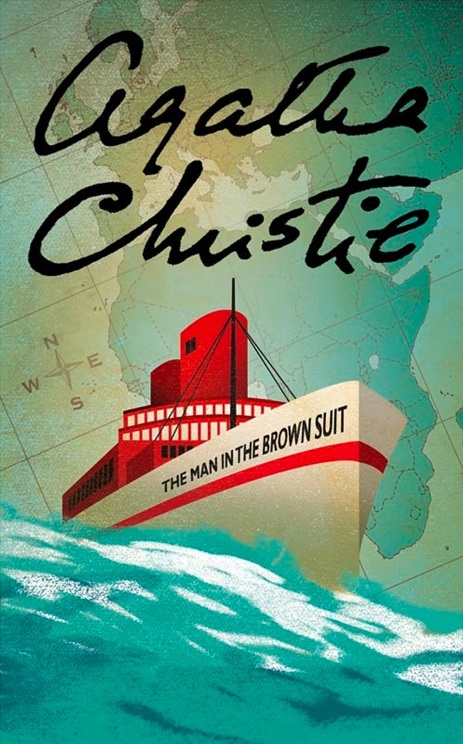
Black Count and The Man in the Brown Suit [Mini Reviews]


Black Count by Tom Reiss


The subtitle of this biography of General Dumas (Alexandre Dumas's father): Glory, Revolution, Betrayal, and the Real Count of Monte Cristo, tells you exactly what this book, written by Tom Reiss, is about.

General Thomas-Alexandre Dumas was a son of a renegade nobleman: Marquis de la Pailletarie and his slave: Marie-Cessete Dumas. He was born in 1762 in French sugar colony: Saint Domingue. Sold by his own father as slave when he was 14 y.o., he was educated as aristocrat after later being bought back by his father.

Alex Dumas was extraordinary because he was the first man of color with highest rank in Europe. His bright career from soldier, officer, to General-in-chief in a short time, along with his heroic bravery actions and his passionate love for his country, should have placed him a special account in French history. Instead, but from this biography, his traces seemed to be vanished from history and memories. Why? Blame it on Napoleon Bonaparte! Don't believe any novel about Napoleon, however sweet he was pictured in it; the real one was ten times more evil and disgusting! I seriously hated him with all my heart throughout this book! Have you read Alexandre Dumas' The Count of Monte Cristo? Of how Edmond Dantes was unjustly imprisoned? It's inspired - not loosely - by the real event where Napoleon set up General Dumas for criticizing his (cruel, racist) policy.

On the whole, it was not an enjoyable read. But if you like French history, this book will interest you. But most of all, this book will be interesting for those who love Alexandre Dumas’ novels, as now we know the origin of those heroic passages in most of his famous novels, especially The Count of Monte Cristo and The Three Musketeers. I loved especially the deep love and admiration Dumas showed to his father in everything he later wrote (diary and novels). I’d feel the same too if I have had a father like the honorable General Dumas!

Score: 4,5 / 5


The Man in the Brown Suit by Agatha Christie


This fourth novel of Agatha Christie introduces us to Colonel Race, though his involvement in the crime is very vague, at one point, I even suspected him as the villain. Instead, this story, again, was dominated by a woman. Anne Beddingfield is a restless young woman longing for adventure, and...bam! An adventure met her on the next corner. She coincidentally witnessed an accident, which turned out to be a murder, and the next instant found a piece of paper a man has unconsciously dropped. Then she entered a house where another murder has been committed, and when casually rummaging inside a closet, coincidentally found a canister of undeveloped film, which, of course, turned out to be another clue.

There are too many coincidences in this story to my taste, it often felt "staged". I could not relate with Anne, the amateur detective, and certainly was not impressed by her "romance with a mysterious guy on a deserted island". It was really the most un-Christie-ish I've read so far. Perhaps it's because at that stage, Christie was still searching for the best style she wanted to adopt for her future books.

The most positive from this one is the hilarious Sir Eustace Peddler, from whose witty and sarcastic diary accounts, along with Anne's account, we were told of this story.

It's clearly not my favorite, perhaps my least favorite of Christie's four early novels. 

Score: 3 / 5


Tuesday, July 24, 2018

The Disappearance of Émile Zola by Michael Rosen


Alfred Dreyfus was a Jewish army officer who was falsely accused of treason (passing secrets to Germany). Perhaps it was the fact that he was a Jewish, that blew out the case into anti-semitic issue, which then torn France into two bitter sides.

At that time, Zola has established himself as a successful writer, having just finished his ambitious literary project: the Rougon-Macquart series. He could have stayed at home with families, enjoying his wealth and comfort while, perhaps, preparing for his new novel. But no, Zola, who was not a politician, plunged himself into the war with his open letter: J'accuse!, defending the innocent Dreyfus. Then Zola—who loved his country, and has put huge efforts in creating the Rougon-Macquart for the sake of his beloved France, and even risked his life and reputation by taking side with a Jewish—was now found guilty of libel. His friends decided that he must flee from Paris.

Michael Rosen compiled old notes, journals, letters, and newspapers on the events around Zola's exile, and then recreated them into this interesting story. This book does not only record the whole episode from the night Zola fled to England to after his death, but also reveals a different side of Zola's personal life which was rarely exposed: his intimate life with his wife and his mistress. Let's unwrap it all here...

Zola's English was zero, and he was 'forced' to leave France at night by train, bringing only a pack of nightshirt and a piece of paper with the name of the hotel written in it. Imagine... forced to leave your beloved country, snatched from the warmth of family and loved ones, and arrive in a foreign country where you couldn't speak the language; alone, wretched, and abandoned. No wonder that Zola suffered at least two nervous breakdowns during the exile.

There are several new and interesting facts around Zola's exile I got from this book. First is his intricate love life. I already knew about Zola's childless marriage with Alexandrine, and about his much younger mistress: Jeanne Rozerot, who gave him two children: Jacques and Denise. But that Alexandrine, when she learned about the affair, rushed to Jeanne's house with rage; or how the two families always stayed not far from each other (either in Paris, or Zola's house in Médan, or in Verneuil); that Jeanne and the children always stayed nearby—that, I had no idea. And from this account, I suddenly had a high admiration for Madame Zola. That, I thought, is the true wonder woman. It was not uncommon in 19th century for a gentleman to have mistress(es), but it was usually kept discreet. That the wife accepted the mistress into the family (though lived separately) and 'shared' the husband (stayed with the wife in the nights and the mistress in the afternoons)—that was really unconventional.

left: Mme. Zola, right: Zola with Jeanne Rozerot
and the children: Jacques & Denise

I began to imagine Alexandrine—strong willed and respectable woman, but with tender heart too. She must have lived desperately through rage, shame, and jealousy, but she loved her husband so much (otherwise she wouldn't sacrifice that much) and knew that she must save his reputation; that he needed peace and comfort of a home and surrounded with hid children to produce his masterpieces, so that in the end she finally accepted the bizarre arrangement. I imagined it was she who has found a small quiet house round the corner for Jeanne and the children, and she perhaps also managed to provide household needs for the 'other' house, all for the convenience of dear Zola. How she endured questions from the neighbors? Or maybe it was so common that people didn't talk about it? How she must have felt when Zola went there? Knowing that Zola felt more at home there than at her own house? That Zola did not love her as a woman (I think he respected her and treated her like a best friend—someone that always understood him), and how he always looked happier when he was there. Well... it must have been terribly hard to endure!

But I was rambling here... Another interesting point I have also learned from this book is 'Zolaism'. Around that time, writers who dared to write about sex scenes or other vulgarities were accused of Zolaism. Zola's influence was widespread later and can be found in the works of Henry James, Thomas Hardy, George Bernard Shaw, and many more. But before, his books were banned and rejected. His translator and publisher Henry Vizetelly was imprisoned and fined for translating and publishing Zola's La Terre, and finally died following his ruin. Why La Terre? Only if you have read it, you would know why. But the funny thing is, they particularly questioned the passage where a farm girl (I forgot her name) assists, with her hands, her bull to mate with a cow. That passage they found vulgar, but not the rape scene?? Strange…

There is also Zola's photography. I came to know in detail how Zola was obsessed with his new hobby. I haven't related it with his extraordinary writing method at first, but this passage intrigued me:


In relation to his writing, Zola claimed that his visual memory was equipped with an ‘extraordinary vividness’ and that he could evoke objects he had seen in ways that meant he could see them again as they really were. Photography supplemented and enlarged this for him and is linked to what he thought of as the scientific approach to writing.

Remarkable, is he not? It made me quite interested in his photographer side now. In fact, I have ordered a book on it: Zola - Photographer (edited by Massin), a compilation of about 200 photographs by Zola.

In his later work: Travail, and in educating his children, Zola interestingly viewed work as something pleasant, satisfying, and the source of happiness, instead of as obligation or labour. Travail is the third of the Gospels series. I loved this part because it reflected my personal view. Work has become my second hobby, besides reading (obviously), and my life feels complete only when these two fields are balanced.

There are so many things you might find in this book that I can’t share here lest this post becomes tedious (and I have not yet talked much about his disappearance!). Anyway, my admiration grew higher still for Zola, after reading this book. He is not only a great author, but also a very brave man to stand (almost alone but a few supporters) against injustice and to fight for the truth, by sacrificing a lot in the process (his career, his happiness, and almost certainly, his life—it’s never officially approved, but I’m almost sure that he was really poisoned to death by his opponents)! To me, he is a hero.

Rosen has done his job very well, but for inserting his own short story in the end. What was the purpose? It really ruined his efforts in bringing the inside story of one of the greatest authors that France (if not the world) has owned. Therefore…

4 / 5 is my final verdict.


Paris, look what I’ve done for you! And yet this is how you treat me!” ~ Émile Zola


Friday, July 25, 2014

The History of the Decline and Fall of the Roman Empire: Final Review

As I have always been fascinated by the Ancient Rome, The History of the Decline and Fall of the Roman Empire seems to be a required reading for me. And indeed, I have always been curious about the cause of Roman’s fall. It is tragic to think that the most civilized portion of mankind could possibly end in such a great ruin. It would be interesting to know, in what point exactly the decline began. Gibbon’s history on this subject has been published in three volumes for thirteen years, but the copy I read for History Reading Challenge 2014 is the abridged version. And now I’m so glad I have picked it in the first place!

Gibbon opened the story with Pax Romana (an era of stability and prosperity of the Empire) which was brought firstly by Augustus. Augustus’ reign was the beginning of Roman Empire, after 500 years of being a Republic. He set the Principate, the ideological foundation of the Empire (strengthening civic life, economic, cultural, legal, and religions). During the first two centuries Roman people lived in peace and prosperity, until the reign of the Antonines. Commodus could perhaps be pointed out as the culprit of Roman’s descent due to his capricious character. Later on Severus conversed from the Principate to military monarchy, a first sign, I think, of the end of the stability era.

After that Diocletian appointed Maximian as co-emperor and two others as junior co-emperors; thus shared the Empire in a tetrarchy. It was the first version of Western-Eastern division of Rome. Constantine then moved the capital of Rome to the east, Constantinopel. He was also the first Emperor who converted to Christian, and thus the vast establishment of Christianity. But it was Theodosius who later made Christian as official state religion. The definitive separation of Roman Empire took place during Valentinian’s reign. He retained the Western Rome, and trusted the Eastern to his brother Valens. The Western Rome fell completely after series of attacks from the Barbarians in 476 AD, during the reign of Agustulus.

The most famous emperor of the Byzantine Empire (the Eastern Rome) was Justinian, who shared his throne with his wife Theodora. He tried to renew the Roman Empire with several conquests, but it appeared to weaken it instead. In the meantime, and along the slow descent of the great empire, there were the rises of some sects (Paulicians and Manichean); Mahomet with his new religion (Islam); the increasing power of the Ottoman Empire (the Turks); and at last the Crusades and the besiege of Constantinopel. Finally, 1453 AD marked the fall of Byzantine Empire, the last remnant of once the greatest civilization ever existed on earth.

To me, this book is a very long journey, and sometimes it felt too tedious (and this is the abridged version, don’t forget!) Maybe it’s just me who is not familiar with history, but I think Gibbon has often painstakingly overstretched the history coverage. For instance, he wrote very detailed story about Christianity as religion, or the character of Mahomet as a prophet. I mean, this is about Rome, and although I know that Christianity and Mahomet both had great influence in the decline and fall of Rome, we didn’t need to learn about them so deeply it made you sometimes think you are studying a history of the Church.

But apart from that, I loved Gibbon’s beautiful poetic style to write this history, making the serious topic became quite entertaining. Although I think Gibbon had skepticism with him when Christianity was concerned, while I believe a historian should be neutral. In the end Gibbon concluded that the decline and fall of Roman Empire was influenced by so many different circumstances. First, it was the weakness of her own (Roman) Emperors; then the rise and establishment of Christian and Islam; the Crusades; and the rise of the Barbarians, the Saracens, and the Turks.

After reading this, I still believe that Rome should stick on being Republic instead of becoming Monarchy. The disadvantage of Monarchy is the entire kingdom is in one’s hand. And quite often the Emperor is not capable to handle it. Especially for Rome which was at the time Augustus ruled has been too large. By being Republic, at least the Consul did not rule by himself, there are the Senate and the Tribune. Of course there are several weaknesses in Roman Republic as I have learned from Cicero’s biography by Antony Everitt, and even with ambitious men like Julius Caesar every now and then, I think Roman Republic is still better than Monarchy, as long as they did not fall into the hand of a dictator or tyrant. By the way, I still also think that Julius Caesar is the culmination point of Roman’s greatness. Yes, Roman would see a Pax Romana later, but Caesar’s reign was the crucial point; it was him who opened the way of a Monarchy.

Anyway, as Gibbon has said: “Instead of inquiring why the Roman empire was destroyed, we should rather be surprised that it had subsisted so long.” And that is so true. The fall of Roman, after so long of dominating the world, would have come in any time anyway. The world needs a revolution from ancient to modern, and I think Roman—Republic and Empire—have provided us with valuable legacy on almost every aspects of life.

Three and a half stars for The History of the Decline and Fall of the Roman Empire!

~~~~~~~~~~

I read Penguin Classics edition

This book is counted as:


Wednesday, May 21, 2014

The Prince by Niccolò Machiavelli: Final Review

Everytime I heard (or read) the word ‘Machiavellianism’, my mind would involuntarily relate it with cunning aspects. That’s why I had a doubt while deciding to add The Prince into my reading list. But, I was so curious about this book, and so I braced myself to pick it for my History Reading Challenge. I am glad I did it, because it turned out to be interesting; it widened my perspective of state’s ruler and power.

Machiavelli wrote The Prince to Lorenzo Di Medici as a guidebook for a prudent prince to keep his state prosperous.

“…for in the same way that landscape painters station themselves in the valleys in order to draw mountains or high ground, and ascend an eminence in order to get a good view of the plains, so it is necessary to be a prince to know thoroughly the nature of the people, and one of the populace to know the nature of princes.”

Although Machiavelli wrote especially of monarchy, most of his guides also benefit modern republican states. I have made a diagram of monarchy models, how to achieve and maintain it. But what I like most is his guides for being a prince, or a ruler. Some of his ideas are too unconventional and even cynical, that people put negative labels to Machiavelli. But I think we ought to separate our ideal with the prosperity of a country or state. I believe that stability is the key to prosperity, as without it, any rulers—competent though he was—would have difficulty to do anything. So, I agree with Machiavelli, that to be feared is more important for a ruler than to be loved; to be slightly miserly is better than to be overly generous. Because people, who love you in better times, could easily become your haters when things gone badly, and who knows….what would happen then? Whereas if you are feared, you can put stability over your state more easily, while at the same time you are trying to bring prosperity to your people.

In conveying his principles, Machiavelli seemed to be lack of consciences or morality. He advised us to always be good, but must be able to do evil when necessary—to be fox and lion at the same time. But, again, I think it is reasonable. To deal with vast multitude in a country is not a simple task; stability is always the key. Thanks to Machiavelli, now I understand these things; that seeking the right ruler is far different from having an ideal patron. Here are more of his analysis.

The Prince is not purely a history. Although Machiavelli used actual histories—mainly Italian rulers, but also other European ones, and even Greek and Roman’s leader—this book is more focusing on politics and power guide book and philosophy. Machiavelli’s analysis is thorough and sharp, and his writing is brave and blunt. But that makes this book more interesting…and classics!

Three and a half stars for The Prince.

~~~~~~~~~~

I read the Signet Classics paperback edition

This book is counted as:


3rd book for Back To The Classics 2014 (A Classic by an Author Who Is New To You)
17th book for WEM Self Project


Friday, February 7, 2014

Roman Lives: Final Review

Roman Lives is Plutarch’ depiction of eight of Roman great rulers: Cato the Elder, Aemillius Paulus, the Gracchi (Tiberius & Gaius Gracchus), Marius, Sulla, Pompey, Caesar, and Antony. As these consuls ruled simultaneously one after another, we could see at once, the personal characters and moral behaviors of these consuls, as well as how Rome was dynamically shaped during their ruling. They might not be the greatest, but Plutarch picked them particularly as a mean of mirroring.

I treat the narrative as a kind of mirror and try to find a way to arrange my life and assimilate it to the virtues of my subjects. (…) I receive and welcome each of them in turn as my guest, so to speak, observe ‘his stature and his qualities’, and choose from his achievements those which it is particularly important and valuable for me to know. ‘And oh, what greater delight could one find than this?’ ~Plutarch

All of the consuls—succeed or failed—have brought great influences over Roman at that era, and by that, means, over the whole world. Plutarch brings us to learn how their personal characters and decisions influenced their successes and failures, and with that, all of us could learn from the greatnesses and the mistakes.

I have written brief description for each consul in my grammar-stage reading post, and from that we could get a glimpse of their achievements. Of the eight, Aemilius Paullus is my most favorite one—and I think Plutarch has placed him as the major model for an ideal great leader. Frankly speaking, this is the first time I’ve ever heard about him—and I believe he is not very popular—but it doesn’t mean he is not great. In short, I think Aemilius Paullus is what a leader should be. He was well bred, and was descended from Pythagoras the philosopher. He ruled with virtues. Unlike many young men born from noble families, who pursued as higher glory as possible in young age, Aemilius focused on his courage, fairness and integrity. This brought respect from both his friends and the people. He was very attentive in doing his jobs and guarding the traditions—he brought the same discipline while he was priest as well as military commander.

He was lenient to Roman enemies. He never enriched himself from the defeated provinces or towns, but instead, he left them united in peace, and even restored their settlements. This brought respect from his enemies, as well as his troops, for he was generous to them. When King Perseus of Macedonia troubled Rome, the people chose Aemilius to fight the enemy. He accepted it so nobly, and people were so proud, that Plutarch described it as…”this shows how the Roman people subjected themselves to virtue and goodness in order to gain power and dominion over the rest of the world.”

Aemilius’ remarkable virtue was how he regarded fortunes. He believed that after a great fortune, we must be brave and ready to accept any misfortunes that would surely come after it. One of my favorite quotes from Aemilius’ speech is after he lost his son right on his triumph after defeating Perseus. The other is his scolding Perseus for being so cowardly in accepting his misfortunes:

Courage in those who meet with misfortunes goes a long way towards enabling them to win the respect even of their enemies, but for Romans there is nothing more dishonourable than cowardice, even if the coward prospers.”

Speaking of great men of Rome, we could not overlook Pompey—The Great, and Julius Caesar. However, I see their greatnesses are mostly in their military and political achievements. They were not so great as persons. Caesar was too ambitious; all his generosities did not come from his nobleness, but because he wanted to buy people’s affection. He might have succeeded in winning people’s heart—thanks to those generous gifts—but his greediness was not left unnoticed by the Senate. Pompey, on the other hand, was loved by everyone—the Senate and the people. However, he lacked the strong principle which we often see in great men, such as Aemilius Paullus. Pompey was too susceptible and was easily spoilt by flatters. Even Caesar deplored how easily Pompey was defeated by him; that he did not show his greatness in his—probably—most important battle against Caesar. I think Pompey is glorious and was called ‘Great’, firstly, because people praised him, rather than his genuine personality.

After the best, came the worst. I still cannot decide which one of the eight is the worst consul. Is it Marius or Sulla, who made Rome lost its grandeur by their brutality? Or Antony, with his greatest flaw—his passion towards Cleopatra? I exclude the Gracchus here because I see that they were actually right by bringing reformation to support plebeian, but they did not have genius minds to cautiously execute it. They made the same mistake as Caesar, they focused too much on the people, while ignoring the Senate’s strength.

Back to the worst trio… Although I was terribly disgusted by Marius and Sulla—they do not deserve to be called ‘great’, by the way—I am mostly disappointed by Antony. He was well bred too, like Aemilius. He was loved by his colleagues and the people. Caesar even regarded him highly, and Antony became one of Caesar’s best friends. However, he could not control his passion. Antony was a great military commander; he had talent and skill. He was good in war strategy, and he was loved by his army. Their loyalty towards him, even when he abandoned them for Cleopatra, was remarkable. But again, is it worth to risk so much for only a woman—though she was as attractive as Cleopatra? Antony could have been so great, but instead he ended so low. Oh Cleopatra…..! And so, from the eight consuls in this Lives, I think Antony is the most undeserved to be called great!

This is my first history reading—yes, I have never read any history work before, shame on me!—and I’m glad I had picked Plutarch for the start. His way of telling the history is compelling, especially the battles, he told it with great details in very lively style; although he could sometimes be widely out of context while telling the historical facts. No wonder Shakespeare could be so detailed in writing Julius Caesar and Antony and Cleopatra, because he used very much the sources from Plutarch’ Lives.

Four stars for Roman Lives.

~~~~~~~~~~

I read Oxford World’s Classics paperback

This book is counted as: