Showing posts with label Agatha Christie Perpetual Reading Challenge. Show all posts

Monday, June 22, 2026

They Do It with Mirrors (1952) by Agatha Christie: A Re-read


🔫 This is the fifth Miss Marple mystery novel from the series that I have re-read for my Agatha Christie Perpetual Challenge. The main idea is to perpetually reading Agatha Christie's sixty eight novels. If I can read about three or four novels per year (my current "speed"), I would be rereading each title in every seventeen years - how about that, eh? Anyway, what I don't quite like from Miss Marple mysteries, is that she is usually too "fluffy" and insignificant, despite the fact that she is the main character - the amateur sleuth. This book, though, I happily announce, is an exception. 

🔫 The story begins when Miss Marple was visiting her school friend Ruth, who asked her to check on their mutual friend, Carrie Louise Serrocold, who lives in a mansion house called Stonygates, with her third husband Lewis, her widowed daughter Mildred, and her companion/housekeeper Juliette. Part of the house had been turned into an institution for juvenile delinquent boys. The institution was originally founded by Carrie Louise's second husband - deceased - and is now managed by the current husband Lewis. Ruth had been feeling something was "wrong" when she visited Carrie Louise, and Miss Marple is about to find out the truth behind it. At first things seem normal, but there has been a bit awkward incident with one of the institution boys, a seemingly "not right in the head" young man who believes he's the son of some famous men (when he's actually an illegitimate one). His name is Edgar Lawson. 🔫 Among the visiting guests are Carrie-Louise step granddaughter, her American husband, Carrie Louise' step son (from her second husband), and two nephews (or step sons? I lost counting of whos' who). Then one night, two things happened at the same time. Edgar Lawson took it into his head that Lewis Serrocold is his real father. They quarreled in heated debate in the library; Edward making ruckus by shooting a revolver (but not at Lewis Serrocold, fortunately). All the while, the others were in the living room, listening with apprehension to almost everything happening inside. Everyone, excepting Christian, Carrie Louise's step son. How they were surprised then, to find out later that Christian had been shot when the ruckus in the library was happening. Why Christian, though? Is it because he had found out that someone has been poisoning Carrie Louise? In the end, it is up to Miss Marple to find out what had really occurred. It has something to do with the theatrical system, the murderer is like a conjurer, who do it with mirrors... 🔫 Like I said before, I liked it that Miss Marple is more actively involved in this case. This time, she acted as Carrie Louise's protector because she loves her friend. Her deceiving 'fluffiness' makes her a confidant to some of the suspects, they could pour out their heart honestly to her - an outsider. The plot itself is not one of Christie's bests - I guessed the murderer right away. Whether it's because I have read Christie for so long to suspect little discrepancies, or because the "hole" is too obvious to be missed, I don't really know. While I love murder in close-knitted family house, the premise is rather quirky. Top it off with rather lose plot, this one is not among my favorites.
Rating: ⭐⭐⭐1/2

Monday, July 3, 2023

Evil Under the Sun by Agatha Christie: A Re-read


⛱ Poirot is having a holiday at a beach side hotel in Devon. Among his fellow guests, is Arlena Marshall, the kind of beautiful flirtatious woman, to whom men usually drawn to, just like moth to light. She stays at the hotel with her husband, Captain Marshal, and her step daughter, Linda Marshall.

It's no secret to everyone (including Captain Marshall) that Patrick Redfern is Arlena's current "victim". Though he is staying with his wife Christine, he is clearly infatuated with Arlena. Another guest, a Reverend, tells Poirot that he can strongly feels that evil is in the air - evil under the sun.

It's no surprise to anyone, really, when one day Arlena is found dead, strangled. She was having a secret rendezvous at Pixy Cove that morning, and never returns. There's no doubt that she was murdered by one of her fellow hotel guests - a man (due to the strangulation), but the question is, which one?

Along the investigation run by Inspector Colgate and Poirot, it is soon revealed that the case isn't quite straightforward as they've been expecting. Both the husband and the lover (the immediate suspects) had a cast iron alibi. Moreover, there are also other possibilities of motive: drug smuggling is one of them.

Once again, Hercule Poirot triumphantly solved the mystery, thanks to his attention to tiny little - seemingly - irrelevant details; such as a bottle tossed out of a window, or water running while no one was having a bath. I loved his method of collecting these inexplicable things as pieces of puzzle, and when one of them is answered, he sees then in his head how the pieces of the puzzle placed snugly one by one to its correct place, revealing to him the complete image of what had been happening.

Evil Under the Sun is just another of Christie's satisfying whodunnit crime novel. It has the summer holiday vibe, red herrings, and mathematically precision of the murder, great deduction from Poirot, and unexpected solution. All of the reasons why we keep reading the Golden Age crime fiction!

Rating: 4,5 / 5


For Bingo Card: Set on an Island
For Monthly Theme: Favorite Detective: Hercule Poirot

Friday, January 15, 2021

Death in the Clouds by Agatha Christie


Poirot is travelling alone, again, when a murder committed. This time he travels from Paris, back to London, by plane. There are twelve passengers in that flight, and what a group of people they are! - a mystery writer, two archeologists, a dentist, a hairdresser, a doctor, a Countess, a moneylender woman, a businessman, and of course... a famous detective!

When the plane is about to land, the steward found one passenger - Madame Giselle, the famous moneylender - is dead, apparently by a sting in her neck. Several passengers remember of seeing a wasp flying around while the last meal is served. Then Poirot found a poisonous dart - the one used by primitive savages - under the victim's seat. Later on an empty blow pipe, from which the dart has been blown, was found.... under Poirot's seat!

It is perhaps one of the boldest murders ever performed in Christie's books. Imagine! In a confined space of an aircraft, where everyone could have noticed someone blowing a dart, not mentioning the trained eyes of Hercule Poirot- oh wait...! The irony is, Poirot was asleep during most of the flight due to his blasted airsickness! The murderer even had the audacity to place the blow pipe under HIS seat. It must have been a mockery to the famous detective.

The first thing acted on is, of course, to search the passenger's baggages. Of this, Poirot has found some intriguing objects, from which he begins to build his hypothesis - which, as usual, he kept to himself. Poirot was assisted by Chief Inspector Japp and Jane Grey, the hairdresser, in this investigation.

The tone of this case is the boldness of the murderer - and the person is very lucky that the greatest detective who would normally have had him under suspicion, must fall asleep while the murderer performed it. There is a plot twist in the end, and once again, Poirot acted as a matchmaker for two of the passengers.

Once again, a very entertaining crime story from our beloved Dame.

Rating: 4 / 5

Thursday, August 13, 2020

Three Act Tragedy by Agatha Christie

Three Act Tragedy aka Murder in Three Acts is one of the collaborations of Hercule Poirot and Mr. Sathertwaite. The latter first appeared in The Mysterious Mr. Quinn, a very interesting mystery short stories collection from Christie. This time, however, Poirot acts only as a counselor, although he did attended Sir Charles Cartwright's dinner party, where Mr. Babbington, an old reverend, died suddenly after sipping his cocktail. There's no poison found in his glass, so most of the guests thought he died a natural death.

Sir Charles Cartwright is a middle aged well known actor who is infatuated with a twenty year old Hermione "Egg" Lyton Gore, who also attended the dinner party. Besides her, there are eleven other guests, including Poirot, Mr. Satterthwaite (a socialite and observant of human psychology), Oliver Manders (a young man who's in love with "Egg" Lyton Gore), and an old friend of Sir Charles: Doctor Bartholomew Strange (a neurologist). Not long after the dinner party, Doctor Strange held another party with similar guests. This time the host himself died on nicotine poisoning after drinking a glass of port wine.

Doctor Strange's enigmatic butler is missing the day after police investigation, and this made him the main suspect. However, Sir Charles, Mr. Sattherthwaite, and Egg feel that there must be a connection between the poisoning of Babbington and Doctor Strange. They run a joint investigation, but incapable of revealing anything, they seek Poirot's councel.

On the same day Dr. Strange died, he received a patient at his sanatorium called Mrs. De Rushbridger. She sent a telegram to Poirot, mentioning that she knew something about Dr. Strange's death, but when Poirot and Mr. Sathertwaite arrived, the woman has also died from poisoning.

This is not one of my favorites, and, to be honest, I've guessed the murderer from very early chapters. It has a rather poor plot, and the story is easily forgotten. It is also one of the titles which give you some hints about the 'whodunit'. If you have read a lot of Christie's, you'd notice that this one has a slight similarity with The Murder of Roger Ackroyd and Peril at End House. On the whole, it doesn't have the usual charm you'd find in Poirot's or Christie's.

Rating: 3 / 5

Tuesday, July 28, 2020

Murder on the Orient Express by Agatha Christie


This book has appeared in many lists of Agatha Christie's top novels - from The Guardian's "The Top 10 Agatha Christie Mysteries" in 2009, Entertainment Weekly's "The Nine Great Christie" in 2014, to Barnes and Noble's 10 Absolutely Essential Agatha Christie Novels on 2017. It's also one of the most famous Christie's books-made-into-movies. But for me, this is the most hideous, brutal case, and one of my least favorites of all.

Hercule Poirot is in Istanbul after solving a case in the Middle East, when he is summoned back immediately to England. By the help of M. Bouc, fellow Belgian who is the director of Compagnie Internationale des Wagons-Lits, Poirot obtains a second class berth in the elegant Orient Express. He actually intended to have a first class one, but it's apparently unavailable - which is unusual during the winter seasons. On board the train are also thirteen other passengers from multi-dimensional backgrounds. One of them, an unpleasant, harsh man named Mr. Ratchett, tries to hire Poirot because his life is in danger. But Poirot, disliking him, rejects the proposal. On the first night the train is unexpectedly stopped, stuck in a snowbank. In the morning, Mr. Ratchett is found dead, with twelve random stab wounds. A charred piece of paper with "Armstrong" written in it is found in his cabin, gives Poirot the valuable key to solve the mystery.

Armstrong refers to Daisy Armstrong, a 3 year old child who was kidnapped and murdered by a man called Cassetti - a tragedy that triggered some further tragedy in the family. Poirot concludes that Ratchett is actually Casetti, and that the motive of his murder is vengeance. So, the strong point of this story is more on the method, rather than motive. Without the presence of the police, it leaves to Poirot, M. Bouc, and Doctor Constantine (why a doctor should almost always present near the murder cases?...) to find from the passengers, one or more people who are connected to the Armstrongs, as the murderer.

This is one of the "easy" cases, the "I-should-have-noticed-it-from-the-first-but-it-seemed-impossible" ones. I can't explain more, as it would spoil the whole mystery. It's sufficient to say that if you do the math, you'd probably guess the murderer. This is also one of the greatest deduction works of Poirot, using his thorough methodical grey cells to seek the truth from the labyrinth of cross alibis and clues.

What makes me dislike this novel, is the baseness of the murder, and immorality of the conclusion. As I didn't find any other way of explaining my points without scattering clues, I must warn you at this point to...

**Spoiler alert - Please skip this paragraph if you haven't read the book.**

1st point: hideous crime. There's too much blood for my taste. I much prefer the more subtle ones - murder with poison, for example. If it must include stabbing, at least done by cold headed murderer, not vengeful random stabs - and twelve times too... ugh!! With the motive as the strong point, at least we'd have also the psychological aspect through the investigation (the humane side). This one is mainly clues, alibi, methods, and eventually, the animal passion. No, I can't imagine how a governess, for example, who, despite loving the child so much, could stab a knife into a man's body just like that. I mean, I understand how she might have hated that man, cursed him a lot, wished him to be dead in horrible ways. But to do a journey to stab him... at least, didn't she waver a little at the critical moment? And what about the other eleven/twelve people, were they just driven by the same animal instinct to kill the prey? That's what I see in this book, a group of animal hunting a prey.

2nd point : unbelievable conclusion. I was truly disgusted at how those criminals were let free by "the judges". I know Rachett is a rascal, and the Armstrongs' history is so tragic, but letting them do a brutal crime just like that? Not even a single punishment?

** Spoiler ends **  

If I had a book I wish Agatha Christie has never written, this is the one.

It could have been an interesting case, but like I said, it's too hideous and disgusting crime for me.

Rating: 2,5 / 5

Friday, July 10, 2020

Lord Edgware Dies by Agatha Christie

Hercule Poirot and Arthur Hastings are in London, attending the show of an American Impressionist: Carlotta Adams. One of her sketches that night is impersonating a famous actress: Jane Wilkinson, who also attends the show, and is apparently quite amused by Adams' performances. After the show, Poirot and Hastings have supper at the Savoy, and there they see Jane Wilkinson and her theater peers in the next table, while Carlotta Adams is in another.

Jane Wilkinson has married Lord Edgware, a tyranical, strict man, a wealthy English Baron. Being herself a terribly egotistical and amoral woman, it's no wonder that the marriage fails, and now Lady Edgware hires Poirot to plea a divorce from her husband, because she is "in love" with the Duke of Merton. She has tried few times before to speak about it herself, but the Baron refused to release her. Poirot agrees to help her, but on meeting the Baron, is astonished to hear from him that he HAS actually sent Lady Edgware a letter confirming his consent, which Lady Edgware claims she never receives.

Then the incident which inspires the title takes place; Lord Edgware dies, having been stabbed in his neck. On the same night, Carlotta Adams is being poisoned with Veronal, and dies in her sleep. Before the murder, a woman is seen to enter Lord Edgware's study by two witnesses: the butler, who later mysteriously disappeared, and the secretary, who despised Lady Edgware. Both acknowledge the woman as Lady Edgware. Chief Inspector Japp from Scotland Yard takes charge of the investigation, "assisted" of course, by the inimitable Hercule Poirot.

Jane Wilkinson is, of course, the main suspect. She has the undeniable motif: to marry Duke of Merton - a Catholic man who would never marry a lawful wife of another man. But Jane has also an undisputable alibi; she spent the evening in a party, which the other guests confirm. Second suspect is Ronald Marsh, Lord Edgware's nephew, whose allowances has been cut off by his uncle few months since, and happens to be in the scene of crime in a suspicious manner. So, who's dunn it?

The moment Jane Wilkinson takes interest in Carlotta Adam's imitation of her and takes her aside during the dinner, I immediately smell something fishy. This gotta be related to Lord Edgware's future murder (because it's clear from the beginning that he will be the murdered victim, right?) So, when Ronald Marsh is put under scrutiny, I said to myself: nah, he's not the murderer. It's either Carlotta (throwing the blame to Jane) or Jane herself (making Carlotta her alibi).

I was glad that it's another of Christie's "simple" cases. The question is whether the murderer is the obvious suspect with genius touch or the most unsuspected person with simple explanation. That's what I love most in crime/detective stories. And in that quarter, Lord Edgware Dies is very satisfying.

Rating: 4 / 5

Saturday, May 23, 2020

[Mini Reviews] Big 4, Blue Train, 7 Dials, and The Murder at the Vicarage

It is one long sentence for a title, and this post is indeed consisting of (very) late reviews of four Agatha Christie's I've read last years (about 6-7 months ago). All of the four were not my favorites (maybe THAT's why I kept putting off writing the reviews). Well, let's have it done in this one post!

The Big Four


This one is perhaps my least favorite from Poirot-Hastings stories. It's also one of my least favorite theme of Christie's: the secret-society-wants-to-dominate-the-world. Shortly, it's about an international crime cartel of four prominent people in the world: The Big Four.
1. Li Chang Yen - Chinese political mastermind (the brain)
2. Abe Ryland - American wealthiest man (the money)
3. Madame Olivier - French genius scientist (the technology)
4. An elusive man who did all the dirty jobs called The Destroyer.

Hastings arrived in England from Argentine (following his marriage) to visit his dear friend, Hercule Poirot. An injured Sectet Service man forced his entrance to Poirot's flat, and told them the most fantastic story about a mysterious but dangerous society of Big Four. Poirot and Hastings then travelled across continents, picking warm bodies of No. 4's victims each time, and even eluded some deadly danger themselves, to unfold little by little the mysterious cartel, and finally destroyed it. As usual, the story is full of (too many) actions, red herrings, disguises, that if you don't read this book in one sitting, or at least in one or two days, you'd get lost of what's going on. I've even lost count of how many murders there are. And there is no mystery, because you know from the beginning that it has got to do the the Big Four.

Nevertheless, it's not all bad. I remembered at least two interesting things in this book.
First, the first appearance of Countess Vera Rossakoff, who *cough*... will have not a small influence over Poirot further on next stories.

Second, the sweet affectionate friendship between Hastings and Poirot. It is when one is on deadly peril, that one can judge who's one's true and loyal friend. Hastings is never brilliant, but he is a loyal friend.

Rating: 3/5


The Mystery of the Blue Train


The first of many novels with train setting from Dame Agatha Christie. Hercule Poirot presided again as the detective, as he was traveling by the Blue Train, where Ruth Kettering, the daughter of the richest man in America, was killed. She was bringing with her a famous ruby called "Heart of Fire", which her daddy has purchased in a shady deal, to give her as gift.

Of course the diamond was missing, and you could not but suspect that the diamond has to be the main motive. But of whom? This is where Christie geniusly weaved a second complication: Ruth's unhappy marriage with a scoundrel Derek Kettering, and her love affair with Comte de la Roche. And guess what: both men are broke! So, it's between pure jewel robbery or love triangle murder.

While Hastings are away in Argentine, having a reunion with his lovely wife after his dangerous adventure in The Big Four, Poirot found an accomplice in Katherine Grey, an ex-companion of a wealthy widow, who inherited money, and travelled on the same Blue Train, having been (supposedly) the last person who talked to Ruth before she was strangled. She is an intelligent, reserved, independent girl; and it was sweet of Christie in giving her a slight love story - no doubt to add more spice and complication too!

Not a very remarkable story, one that you might easily forget after a while, but, still, as with most of Christie's, it's quite engaging and entertaining.

Rating: 3,5/5


The Seven Dials Mystery


When Superintendent Battle is teaming up again with Lady Eileen "Bundle" Brent, you know that there'd be some cheerful notes accompanying a (or some) murder. This will be a greatly entertaining and fast-paced story! And I'm not wrong. Actually, I rather liked this slightly better than The Secret of Chimneys (where Superintendent Battle and Bundle first made appearances). At least, here, its cheerful note supersided my dislike of international conspiracy theme.

The Cootes is the current tenant of The Chimneys (house of Lord Caterham and his daughter Bundle), and they invite a gang of young people to stay and cheer them up: Gerry Wade, Jimmy Thesiger, Ronny Deveraux, and Bill Eversleigh (who we already know from The Secret of Chimneys). Gerry is a late waker, so his friends set a prank. They placed eight alarm clock besides Gerry's bed, and set the alarm to ring loudly one after another next morning to wake him up. The clocks rang, waking everyone up, but not Gerry. Not because he's a severe oversleeping person, but because he's dead!

I always remark this story as a "prank gone wrong". Even after the murder, there's a youthful atmosphere enveloped the whole story as Bundle, Jimmy, Bill, and the gang takes over the adventure, while Superintendent Battle investigating the case. It consists of as many red herrings and disguise as you can imagine, and.... a "naughty" plot twist from Christie in the end.

I was a bit surprised that many people dislike this book, lamenting that Christie "took a different line from her usual approach". I think, on the contrary, it's the different note that lent this story its attraction - at least that's how it works for me. It's cheerful, funny, light, fast-paced, entertaining piece!

Rating: 4/5


The Murder at the Vicarage


After international espionage, train traveling, and mysterious secret society, now Christie is back on track to the village - St. Mary Mead. Yes, this is the first appearance of Christie's second detective: Miss Jane Marple, a quiet, witty, very intelligent spinster, who - I read many times - was Christie's own favorite. Mine is still Poirot; I always find Marple's a bit boring. :)

Colonel Protheroe is the wealthy church warden - an unsympathetic man with unbearable personality. Disliked by most if the villagers, but most of all, by his family: Anne Protheroe (his young second wife), and Lettice Protheroe (teenage daughter from first marriage). The later, at least, had been heard publicly wishing for his father to die. The same wish had even heard of from the Vicar: Leonard Clement, who is also the narrator of this story. Moreover, Anne Protheroe, the unhappy wife, is having an affair with Lawrence Redding - an artist who uses a room within the vicarage building as his study. We have here at least four close suspects, not mentioning others who hated the Colonel.

Typical problem for the police in a village murder case is lack of accessibility. And so, an attentive spinster who spends most of her time gardening such as Miss Marple is a valuable asset for them.

This story is the kind I should have liked, but I don't know, I found it a bit flat, and certainly easy to forget. I even forgot the murderer identity while writing this review, and must consult Wikipedia to fresh my memory.

Rating: 3,5/5

Thursday, February 6, 2020

Peril at End House by Agatha Christie


Poirot reunites with Hastings after their last adventure The Big Four (review to be following). They are enjoying a peaceful holiday in a Cornish resort (or so they thought), and Poirot is (again) on a sabbatical phase - declaring that his latest case would be his last, and to rouse his interest would be impossible (he acted this in a couple of times in the past, and this one isn't the last!) When mocked by Hastings, he then admitted that if a bullet should struck the wall near them, then it would be difficult to say no, as he's still a human being after all. Curiously, just then a pebble struck the terrace where they are sitting.

Nick Buckley, a young girl who lives in a house nearby, called End House, walked in and joined them, and found that there's a hole in her hat. You would, no doubt, guess what has really occurred - that the pebble is in fact a bullet, and that someone has shot Nick, but missed only an inch of her head. And so, this case was opened, quite unusually, without a corpse.

Nick's life is clearly in danger. But surprisingly, the missing shot was not the only attempt made against her. She has escaped three accidents before, each of which would have killed her. This news alerted Poirot, and he acted immediately to save Mademoiselle and to solve the case. His first instruction is that Nick (who lives alone in the house, being an orphan) should invite her cousin Maggie to stay with her. Poirot then runs his usual investigating method - talking with all the suspects (Nick's friends, cousin, neighbors, and household), checking on alibis. But from the beginning one thing is missing: the motive! There seems no apparent motive of killing Nick. Poirot employed his grey cells to produce a list of all "participant" involved in the case, but there's always a missing link.

In the meantime, another attempt was made, and this time one life has been sacrificed - Maggie's, not Nick's! Poirot bitterly cursed and blamed himself of his impotence to avoid death, and still... he failed to complete the puzzle. He evacuated Nick to a hospital, and cut off communication from anyone, and yet, Nick got poisoned from eating a chocolate. So, Poirot took an unprecedented step. He falsely pronounced that Nick is dead. Now that the murderer thinks he/she has achieved his/her goal, something is bound to come up to light, which would reveal something about the murderer.

And, yes! The X factor finally became clear - but not before a dramatic "play" produced by Poirot (a stan which he would use in latter cases), a deception, and one of the best plot twists from Agatha Christie, after the one in The Murder of Roger of Ackroyd.

Compared to many of Christie's works, Peril at End House is unique in some ways. It begins without a murder, only an attempt. Thus the detective could interview not only the suspects, but also the "victim". People involved in the case are not of a family, but mostly young people of Nick's circle, and Nick's cousin. So there's a youthful freshness about the scenes that reminds you that it happens in the jazz age. And it often made Poirot and Hastings felt old! :) Lastly, there is only one murder, yet five attempts have been made to one person without avail. Five!

This was certainly a reread for me, because I vaguely remember about the hole in the hat thing, however I was surprised that this has not been one of my favorite from Agatha Christie! The plot is interesting, yes, and if you are clever enough, you might have suspected something fishy from my last sentence on previous paragraph! However what interested me more is the psychological aspect. Poirot observed that since the crime has been committed very boldly, the motives must be unobvious. This is a conclusion from someone who understands much of crime psychology. It would be very interesting to analyze how the murderer must have thought and felt - before making the decision and on executing it.

In short, it's a unique story from Christie, and I loved it!

Rating: 5 to 5


Tuesday, January 7, 2020

The Sittaford Mystery by Agatha Christie


Another non-detective crime story from our beloved Dame; and again, this one picks an intelligent, strong, determined young woman to be the leading heroine: Emily Trefusis. The collaboration between the police (Inspector Narracot) and young sleuths (Emily and a journalist named Charles Enderby)  might remind us much to Inspector Battle and Bundle's relationship in The Secret of Chimneys and Seven Dials Mystery. But Emily's character here is much more prominent than Bundle's mere function to add a youthful vigor into the story.

It all begins with a séance, or table-turning, which was originally done casually to cheer a cold winter afternoon. A group of people sat at a table, and began to play, what they thought was at that time, a foolish game. However, it quickly turned to worse, when the "spirit" revealed the death of a prominent character: Captain Trevelyan, at an exact hour: five and twenty minutes to five.

Major Burnaby, a retired army, is a close friend to Captain Trevelyan. Friday is his day of visiting his friend, but that day the snow was so thick, the road was impassable. However, feeling uneasy, Burnaby insisted on walking through the terrible blizzards to "check on" Trevelyan. And of course, Trevelyan was found dead, sandbagged at the head.

A nephew, a "weak" young man called James ‘Jim’ Pearson was arrested by the police, as he was near Exhampton (place of the crime) at the time of the crime, without proper alibi, and he has just borrowed money from his uncle (and was refused). Jim was engaged to Emily, and so that's how the girl got involved with the case (to prove the innocence of her beloved fiancée), helped by the journalist, who, soon, was also smitten by her.

Overall, Sittaford Mystery is a light, funny (at times), and enjoyable crime story with a romance touch. This is another typical "inside" murder - small rural village, retired army men, widows, boring existence with gossips as the center entertainment. Then add restless and reckless young people, bad financial investment which accumulates to debt, and, of course, a wealthy miser, and voila, that's it!

One element I loved the most, is the psychological aspect of the romance, which is rarely exposed in Christie's. Emily is loved by two men; in the end, which one will she choose? Along the story we got to know Charles as a cheerful, energetic, intelligent man. His keen journalistic instinct would be perfect when combined with Emily's logic and deduction skill. Partnered, they would be another Tommy and Tuppence! Everyone said it will be a perfect match. But, is it really? Like Tuppence, Emily is a domineering woman, the leader in a marriage. Charles knew this, but I think he won't feel happy to be under his wife's lead all the time. He is a dedicated professional, and he would love to strive farther in his career. No, as foolish as it seems, the ‘poor fool’ Jim is the most suitable husband for Emily, because they'd fit perfectly. The one needs to lead, the other needs to be led.

My final rate: 4 to 5

Wednesday, July 31, 2019

The Murder of Roger Ackroyd by Agatha Christie


This was my third read of Agatha Christie #7: The Murder of Roger Ackroyd, which I think deserves to be labeled her masterpiece, and I tell you, I loved it even more than my precious two reads! But before I tell you more, I must warn you that this post contains HIGH LEVEL SPOILER! Do not continue reading if you haven't read it before – the spoiler might even start in the next paragraph! – as even tiny spoiler would ruin your reading forever; it will never be the same, trust me! So I have warned you!

I have not placed The Murder of Roger Ackroyd on top of my Agatha Christie favorites for no reason. To me, it's not a mere detective 'whodunit' story. There's something much deeper than that - a thorough analysis of human nature, and a great case of psychology. 

As I have been familiar with the plot and all surprises on the first and second reads, this time I dedicated my reading solely focusing on Dr. Sheppard's feeling and mental conditions - or you can call it the murderer-psychological-mapping. I have been wondering how an ordinary person could turn into a murderer. What the process looks like, at which point he decides to commit the murder, and what triggers him. And more importantly perhaps, what quality he possesses (or lacks of) which prompts him to it.

But I would like to say first, that this third reading made me realize that Christie has in fact sprinkled bits of clues all throughout the story from the very beginning - yes, even from the opening of chapter one. But, and here's where her genius lays, how are we supposed to have suspicion right in the beginning, through the words of the narrator? And, as it was only the beginning, we would just swallow everything as we still don't know for sure what's going on. Clever! Then, it gets even clearer when Doctor Sheppard got his "first foreboding": the tete-à-tete of Ralph Paton and Mrs. Ferrars. But then, we might assume that he has his concerns for Ralph – again who would suspect that a narrator would be the antagonist?

More about Doctor Sheppard; Caroline (his sister) once scowled James of being weak – and I remember he wondered why she said that. That line has particularly struck me. There lays the answer to my question: James – as are Ralph and Flora (see Poirot's speech) – is morally weak. These three lack the courage to do the right thing when under pressure. They tend to choose the easiest way, despite of everything. In James' case, I think Caroline's strong character and sharp tongue 'helps' turning his weakness into worse. The only way out he could see is money. Money can buy him freedom to go as far away as possible from Caroline (Argentine is his choice). And when Mr. Ferrar died, he saw the possibility only too clearly. Now, we all have been presented with temptation, on certain degree in our lives. What has made us choose the right way, though the others looks much better? I believe it's character strength – the courage to strive in bad condition in order to obey our conscience. James' worst choice is when Ackroyd summoned him. He should have confessed to Ackroyd about the bribery. Ackroyd trusts James, and I think the worst possibility is Ackroyd would scold him, won't trust him anymore, but in any case won't tell the police. But James perhaps couldn't take it that, of all person, Caroline – and maybe Ackroyd too – would have seen him as a crooked all his life. So, Ackroyd must be muted. There's no other way.

As I have said, this book is a great study of human nature. Sometimes, unconsciously, we help a man turned into bad. Sometimes it's the society, but it is also possible that we invented these murderers from our own small community, or even, our family. Crime and murder can be gory and scary. But I believe the scariest thing is the fact that anyone of us can become a murderer. We need only to make the choice.


What a rereading this has been for me! And I think I will keep reading this book in future, no matter how familiar I am with the plot. Just to remind myself of always taking the right choice in difficult times, not the easiest!

5 / 5

Wednesday, June 12, 2019

The Secret of Chimneys and Camino Island [Mini Reviews]


The Secret of Chimneys by Agatha Christie


It is almost impossible to write a proper summary for this 6th novel of Agatha Christie. It's a very fast-paced crime story with abundant characters; contains of a balanced dose of murder, stolen document, treasure hunt, and international political-economical scheme of a Balkan state: Herzoslovakia (restoring monarchy vs oil concession - which, naturally, involves British government and oil syndicates). In short, it's a confusing thriller from the start!

Superintendent Battle is supposed to be the detective from Scotland Yard - this is our first introduction, he will appear in several future books - but the main male character is in fact an attractive-dark-skinned adventurer with shady past called Anthony Cade. We would be led to suspicion whether he was the good or the bad guy. It applies also to the main female character Virginia Revel (it involves some romance too, ahem!) We were also introduced to an elusive jewelry thief "King Victor" (reminded you of Mr. Brown and ..., eh?) and his female accomplice, who later becomes the queen of Herzoslovakia. Confused already? Add that with a lot of false identities, and you'll get a high crime thriller which is good when you're reading it straight, but right after you finish and want to look back, you'll forget the whole plot.

Chimneys feels really like a blend of The Man in the Brown Suite and Murder on the Links. Again, not of my favorites, but a highly entertaining novel to be read when you are feeling lazy or still in hangover after an intense read, or are in holiday mood - just like me! And that's why I rated this book:

3,5 / 5


Camino Island by John Grisham


I normally don't review popular fiction in this blog, however, this Grisham's particular novel talks a lot about books - especially 20th century classics novels and authors - as well as bookstores, and writers, that I decided to publish the review here.

Five original manuscripts of F. Scott Fitzgerald (This Side of Paradise, The Beautiful and Dammed, Tender is the Night, The Great Gatsby, and The Last Tycoon) were stolen from Princeton University Library on a heist plotted by five ex convicts. It should have been a perfect crime, if one of the thefts hasn't scratched his wrist and left his blood stain to be found and traced by the FBI. Two of them were immediately captured, so the others quickly brought the manuscripts away and threw them to black market, with the intention to retrieve them after the case cools off.

Bruce Cable is a self-made independent bookstore owner in Camino Island, after he inherited large sum of money AND found some rare books from his father's book shelf. He loves books, and collects a lot of rare first editions of twentieth century books. He possesses a vault in his basement, and is good in handling and preserving old books. Not only that, he also loves to support new aspiring writers. He arranges book tours for them, mobilizes his writers circle and friends to attend their book signings, inviting them to dinners, connecting them to other literary people, in short being a friend and mentor to them. However, Bruce has his dark side too. His love of rare books plunges him to the black market and all its shady businesses, though he admits he always reports the income and pays the taxes. It's quite interesting to follow his career.

The insurance company, whose client is Princeton, suspected that Bruce might have gotten the manuscripts, so they hired a struggling writer: Mercer Hann to spy on him, infiltrate his bookstore, and if possible, enter his vault. Mercer is another interesting character to follow; broken home, choked by student loan debt, and her books failed. She found peace, affectionate friends, and consolation in Camino Island, staying in the cabin who belonged to her deceased grandmother, apparently the only person in the world who has really loved her.

So, Camino Island is one of Grisham's where the line between good and bad is blurred. I know that making money over stolen goods is wrong, but still I loathed the FBI gangs and hoped that Bruce succeeded. Well...

4 / 5 for this entertaining piece!


Wednesday, May 8, 2019

Black Count and The Man in the Brown Suit [Mini Reviews]


Black Count by Tom Reiss


The subtitle of this biography of General Dumas (Alexandre Dumas's father): Glory, Revolution, Betrayal, and the Real Count of Monte Cristo, tells you exactly what this book, written by Tom Reiss, is about.

General Thomas-Alexandre Dumas was a son of a renegade nobleman: Marquis de la Pailletarie and his slave: Marie-Cessete Dumas. He was born in 1762 in French sugar colony: Saint Domingue. Sold by his own father as slave when he was 14 y.o., he was educated as aristocrat after later being bought back by his father.

Alex Dumas was extraordinary because he was the first man of color with highest rank in Europe. His bright career from soldier, officer, to General-in-chief in a short time, along with his heroic bravery actions and his passionate love for his country, should have placed him a special account in French history. Instead, but from this biography, his traces seemed to be vanished from history and memories. Why? Blame it on Napoleon Bonaparte! Don't believe any novel about Napoleon, however sweet he was pictured in it; the real one was ten times more evil and disgusting! I seriously hated him with all my heart throughout this book! Have you read Alexandre Dumas' The Count of Monte Cristo? Of how Edmond Dantes was unjustly imprisoned? It's inspired - not loosely - by the real event where Napoleon set up General Dumas for criticizing his (cruel, racist) policy.

On the whole, it was not an enjoyable read. But if you like French history, this book will interest you. But most of all, this book will be interesting for those who love Alexandre Dumas’ novels, as now we know the origin of those heroic passages in most of his famous novels, especially The Count of Monte Cristo and The Three Musketeers. I loved especially the deep love and admiration Dumas showed to his father in everything he later wrote (diary and novels). I’d feel the same too if I have had a father like the honorable General Dumas!

Score: 4,5 / 5


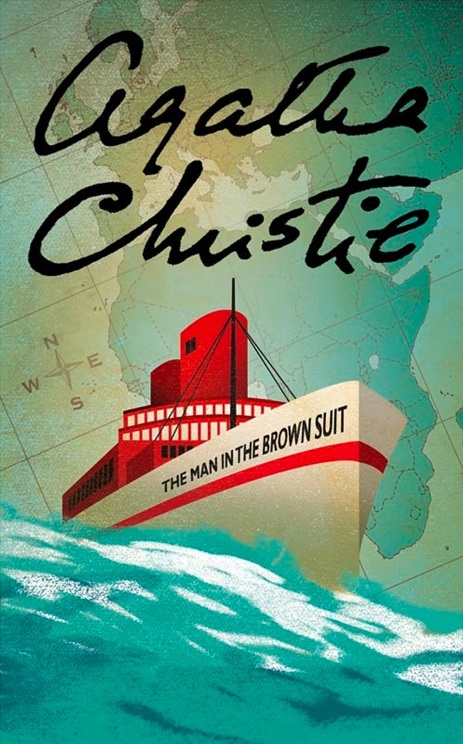
The Man in the Brown Suit by Agatha Christie


This fourth novel of Agatha Christie introduces us to Colonel Race, though his involvement in the crime is very vague, at one point, I even suspected him as the villain. Instead, this story, again, was dominated by a woman. Anne Beddingfield is a restless young woman longing for adventure, and...bam! An adventure met her on the next corner. She coincidentally witnessed an accident, which turned out to be a murder, and the next instant found a piece of paper a man has unconsciously dropped. Then she entered a house where another murder has been committed, and when casually rummaging inside a closet, coincidentally found a canister of undeveloped film, which, of course, turned out to be another clue.

There are too many coincidences in this story to my taste, it often felt "staged". I could not relate with Anne, the amateur detective, and certainly was not impressed by her "romance with a mysterious guy on a deserted island". It was really the most un-Christie-ish I've read so far. Perhaps it's because at that stage, Christie was still searching for the best style she wanted to adopt for her future books.

The most positive from this one is the hilarious Sir Eustace Peddler, from whose witty and sarcastic diary accounts, along with Anne's account, we were told of this story.

It's clearly not my favorite, perhaps my least favorite of Christie's four early novels. 

Score: 3 / 5


Wednesday, March 13, 2019

The Murder on the Links by Agatha Christie


The third published detective novel of Dame Agatha Christie brings us to Northern France, to a village called Merlinville-sur-Mer. Hercule Poirot has been enjoying a successful career of a private detective since his triumph in Styles case. He is now sharing a room in London with his companion-sidekick: Captain Arthur Hastings, who would take again his role as narrator for this story.

It all begins when Hastings met a French girl on the train to London. She's anything but a lady: bold, independent, temperamental; type of girl the old-fashioned Hastings dislikes. But he was somehow smitten by this girl, who gave her name as "Cinderella" before she left Hastings at the end of the journey. The next morning Poirot received a letter from a French millionaire Paul Renauld, urging Poirot to come to his residence Villa Genevieve, because he feels his life is in danger. Intrigued, Poirot and Hastings departed in no time, only to find out on their arrival, that Renauld has been murdered the night before.

Now, this story is the exact opposite of The Mysterious Affair at Styles (Hercule Poirot #1). Styles is a very simple case; so simple that it looks—but in the eyes of Hercule Poirot—like a household accident. But The Murder on the Links is full of extravagant clues and evidences. First of all, the body was found in a newly dug grave on a golf course (hence the 'Links' on the title) behind Villa Genevieve. M. Renauld was stabbed in the back with a tailor-made letter opener knife, souvenir of war from Jack Renauld, his son. Madame Renauld was bound and gagged by two masked foreign men, who forced Paul to hand them a "secret". The day before, Jack Renauld and Paul's chauffer was sent away from the vicinity. Their neighbor, a mysterious lady who lives with her beautiful daughter, Madame Daubreuil, was known to have deposited a large amount of money into her bank account for the last months. There was also some mention about Santiago-South America, where Paul Renauld had had some business. Then a second corpse was found inside a shed, with an identical letter opener stabbed into his chest! The last piece of the riddle is a love letter inside Paul Renauld's coat pocket, which was signed by Bella Duveen, the search of whom led our detectives to a couple of acrobatic actresses: The Dulcibella Sisters, one of whom was none other than Hastings' love interest: Cinderella!

Can you imagine a fast paced investigation, with a handful of plot twist and deceit, and a romantic love story (in Hastings' part)? You guess correctly. Add a snob Sûreté detective, who mocked and insulted Poirot's style, and then on became Poirot’s nemesis into the scene, and you'll find a hugely entertaining novel!

Of Poirot-Hastings cases, I have always a soft spot for this one. I loved Poirot's fatherly feelings for Hastings, their relationship changed from mere detective-sidekick to a more affectionate term. I loved their bantering over Hastings' romantic-sentimental view on the case investigations (especially when involving young beautiful women, LOL!). But I loved specially how Hastings represents common people, aka the readers; who are often deceived by sentimentality and action in crime cases, and rarely using—as Poirot often stressed it—‘our little gray cells'; who, when falling in love, would recklessly commit foolish things, or even attack our master if we thought he would put danger to our beloved. Hercule Poirot is always a kind demi-god, almost supernatural human, but Hastings is... well... just one of us!

Last thing… Of the three books I have read so far, I perceived something which I have missed on my first reading, which is the shifting women role in the world after World War I. I first noticed this from Hastings' surprise that a decent girl (Cinderella) could have had interests in a gory murder scene; that, and Cinderella's raw language, and her boldness. Then I also remembered Tuppence in The Secret Adversary. There also seems to be a pattern here (Secret Adversary and Murder on the Links); old fashioned men attracted to modern women. Moreover the center figures of the three books are always women: Mrs. Ingelthorp and Evelyn Howard in Styles, Jane Finn and Tuppence in Secret Adversary, and most distinguished is Murder on the Links which are full of strong and brave women: Mrs. Renauld, Bella, Madame Dabreuil, and Marthe Dabreuil, even Cinderella; and Christie really made a significant contrast here between the men and the women.

Considering all this, 5 / 5 is a fair credit.


Wednesday, February 27, 2019

The Secret Adversary by Agatha Christie


On Friday, 7 May 1915, during World War I, RMS Lusitania was torpedoed by the German, and sank down the sea near Ireland. On board was a young British intelligent officer who was carrying a secret document. Seeing that the women had bigger chance to be rescued (because of 'women and children first'), he trusted the oil skin packet containing the document to an American girl.

Fast forward to 1919, when the war was over, two childhood friends met: Tommy Beresford and Tuppence Cowley. They were jobless, broke, but also restless. I guess there were many young people felt the same at that time. Tommy was a demobilized soldier, and Tuppence was ex war-volunteer. Jobs were scarce, and they were penniless. In the meeting, Tommy casually told Tuppence an interesting conversation he overheard on the street about a girl called Jane Finn. This particular passage was actually inspired by Christie's own experience; she overheard two women speaking about a Jane Fish – ‘what an extraordinary name!', thought she. Christie then used it, after changing the last name from Fish to Finn. Tommy and Tuppence concluded their meeting with a decision to form a joint-venture business: the "Young Adventurers, Ltd", planning to take any job they happened to encounter. A Mr. Whittington overheard their conversation, and interviewed Tuppence with the aim to recruit the young partners to do a secret job. When being asked to introduce herself, Tuppence didn't want to give her real name, and instead blurted out the first name popped in her head: Jane Finn! How Mr. Whittington was enraged and shocked on hearing it, and literally sent her away.

Intrigued by that event, Young Adventurers decided to publish advertisement, requiring any information about Jane Finn. They got two replies. One from a Mr. Carter, an intelligent leader, who explained that Jane Finn was the young girl who was trusted the secret document onboard Lusitania; that she has survived, but then gone missing for years. Mr. Carter recruited Tommy and Tuppence to locate the girl and get the document, which was now more dangerous than ever, as it will compromise the Government if it fell in the hand of a powerful enemy, who was now emerging. At the same time Mr. Carter warned them of a mysterious and dangerous 'Mr. Brown', the powerful mastermind behind the enemy whom no one has ever seen.

The second reply of the advertisement was from Julius Hersheimmer, a young American millionaire, who claimed to be Jane Finn's cousin. Without hesitation he was willing to fund the Young Adventurers to find his cousin. Tommy and Tuppence set at once to work, amused at first at their ability to secure their first job so fast and easily. But then, things began to unfold. They were forced to go separate ways, following different trails, entering dangerous zones, and always... shadowed by the presence of the elusive Mr. Brown.

The Secret Adversary is Christie's second detective novel, but it was already very different from her first: The Mysterious Affair at Styles. While Styles was narrower in scope - a murder in a close family, Secret Adversary took a national crisis, intelligent service, and a coup-d'état attempt. In Styles we met a retired crippled detective Hercule Poirot; here a vigorous young amateur couple. The slow pace in Styles is the exact opposite of fast-paced Secret Adversary. Personally, I much prefer the family or small-country-murder cases, one thing which set Agatha Christie apart from most of her contemporaries. However, I  liked Tommy-Tuppence's chemistry - not mentioning their cute, shy romancing throughout their first (of four) adventures (I liked the later less, due to the lack of this aspect). I also enjoyed following their warm and witty interactions, and loved how the sensibility and calmness in Tommy worked perfectly well with the intuitive and imaginative qualities in Tuppence. As Mr. Carter said, their differences complete each other.

In the end, the suspects for Mr. Brown were narrowing down to the three men  the young adventurers have trusted and involved in the adventure. As usual, the culprit is always the one we least suspected. I have been 'deceived' in my first reading about thirty years ago; but I also vaguely remembered the happy ending of the girl who suffered most in this story, which helped me to remove a certain man from the suspects list. This is the disadvantage of rereading mystery/detective novels; the surprise gets less and less with each reread.

Anyway, it was a thrilling and enjoyable suspense, worth of rereads (but only every ten years or so when you have forgotten most of the plot, ha!)

Final score: 4 of 5


Tuesday, January 29, 2019

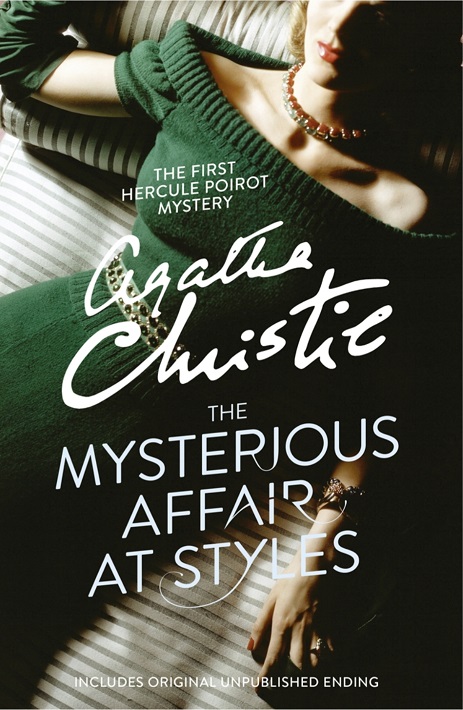
The Mysterious Affair at Styles by Agatha Christie


"I bet you can't write a good detective story," that was how it all started. Mary Westmacott (Agatha Christie's real name) was challenged by her sister Madge (herself was a detective story at that time). With her professional knowledge of poisons, which she possessed from working at the dispensary at local hospital; and with many Belgian refugees from World War I entering her village, Mary Wesmacott wrote her first detective story: The Mysterious Affair at Styles

This book introduced us to one of the most famous fictional detectives in the world: the genius, charismatic, and flamboyant Hercule Poirot. It also marked the first appearance of Captain Arthur Hastings, Poirot's dearest sidekick. Interestingly, Christie would later couple them again in Poirot's last case: Curtain.

As a first work, The Mysterious Affair at Styles struck me with it's beautiful writing and simplicity. The murder is far from gory or violent; it feels more clever and scientific, and... so simple. Indeed, in her later works, simplicity is most oftenly becomes the tone.

Mrs. Emily Cavendish was an old wealthy widow who remarried Alfred Ingelthorp (a total stranger), and became Mrs. Ingelthorp. Although fair and generous, Mrs. Ingelthorp always expected people whom she helped to be dependent on her. She provided her two sons: John (with his wife Mary) and Lawrence Cavendish with luxury and comfort, and also handsome allowances. She even took her orphaned relative Cynthia Murdoch, and the old spinster Evelyn Howard (Alfred Ingelthorp's cousin) into her care. But they were all dependent on her, and never had freedom.

One night she died of poisoning; and there's no doubt that someone inside the family circle has deliberately killed her. Hastings was at that time being invited to stay at the house by John, and he brought Poirot to investigate the case to avoid any scandal, which would have been the case if the police was being involved. 

The rest is typically the same as most detective stories: interviews, proof searches, cross examinations to find alibis, 'misleading red herring' (usually using the side kicks, who'd lead us to believe the suspect was A, while it turned out to be B), and finally: plot twist. But again, Styles is unique for its combination of Christie's particular knowledge of poisons and simplicity. It reminded me again, that murder is more about chance and decision. Anyone can do it, you don't need sophisticated weapons. When you find the extraordinary chance is presented to you by itself, all you need to do is to decide. To kill or not to kill, that's the question.

This was my second read (the first was perhaps more than 30 years ago), and I'm lucky to have read the e-book version I bought from Google Playbooks. It has John Curran's introduction, and includes the original unpublished ending. As you may have been familiar with Poirot's conclusion or revelation method; he always holds a mini conference with everyone involved, then presented his chronological investigations dramatically, and finally 'pointed his finger' to the murderer. However, in the original script Christie wrote the scene as court investigation before the judge and jurors. Luckily her editor asked her to change that, and after that Christie always used the mini conference as her trademark revelation scene, as we know now.

This is my first entry for Agatha Christie Perpetual Challenge. This time I will read chronologically from publication date list. What a perfect start I have had for this fun perpetual journey! 

4 to 5


Tuesday, January 15, 2019

Agatha Christie Perpetual Reading Challenge


Agatha Christie is one of the most influential authors in my life. She is the first author of adult book I read through when I was a teenager (yeah, I leapt straight from children books to adult’s – we didn’t have Young Adult’s back then). Christie is also that author, whose books have transported me from fairy tales to reality. She has struck me with the notion that EVERY single person can commit murder – it’s not about criminals or gangster, it’s about us. Killing another human being is just a decision – it’s as simple, for example, as deciding to shop or not to shop today. If you think it’s possible, and if you really need to buy something, then you just go on. Just like that. And that is horrifying for my younger self!


Because of that influence, Agatha Christie becomes a very important literary figure of me. I have read a lot of her books – all of Hercule Poirot’s and most of the others – during my youth. Actually I never keep track of which books I have read and which I have not; and I have forgotten most of the stories. So, when I found this Agatha Christie Perpetual Reading Challenge at Robin @ Read 52 Books in 52 Weeks, I thought: Why, this is a clear sign that I must reread all her books (and read ones I haven’t)! There is no time limit, so no pressure. Indeed, if I read, let’s say, three or four books a year, with her almost 100 books, I’ll need 30 years to read all! Whew… it’s perpetual indeed!

This is the complete list in publishing time order (which I intend to read through), but I think I will skip some of the short stories collections:

  1. The Mysterious Affair at Styles - 1920 (Hercule Poirot & Hastings)
  2. The Secret Adversary  - 1922 (Tommy and Tuppence)
  3. Murder on the Links  - 1923 (Hercule Poirot & Hastings)
  4. The Man in the Brown Suit - 1924 (Colonel Race)
  5. Poirot Investigates - 1924 (Poirot short story collection) X
  6. The Secret of Chimneys - 1925 (Superintendent Battle)
  7. The Murder of Roger Akroyd  - 1926 (Hercule Poirot)
  8. The Big Four - 1927  (Hercule Poirot & Hastings)
  9. The Mystery of the Blue Train - 1928  (Hercule Poirot)
  10. The Seven Dials Mystery - 1929 (Superintendent Battle)
  11. Partners in Crime  - 1929 (Tommy and Tuppence short story collection)
  12. The Mysterious Mr. Quin  - 1930 (Harley Quin short story collection) X
  13. Giant's Bread (Published under pseudonym  -  Mary Westmacott)
  14. The Murder at the Vicarage  - 1930 (Miss Marple)
  15. The Sittaford Mystery - 1931
  16. Peril at End House  - 1932  (Hercule Poirot)
  17. The Thirteen Problems - 1932 (Miss Marple short story collection) X
  18. The Floating Admiral   (Detection Club collaboration)
  19. Lord Edgware Dies - 1933 (Hercule Poirot & Hastings)
  20. The Hound of Death  - 1933 (Macabre short story collection)
  21. Ask a Policeman (Detection Club collaboration)
  22. Murder on the Orient Express - 1934  (Hercule Poirot)
  23. The Listerdale Mysteries - 1934 (Short story collection)
  24. Why didn't they ask Evans? - 1934
  25. Parker Pyne Investigates - 1934 (Parker Pyne short story collection)
  26. Three Act Tragedy - 1934  (Hercule Poirot)
  27. Unfinished Portrait  (Published under pseudonym  -  Mary Westmacott)
  28. Death in the Clouds  - 1935 (Hercule Poirot)
  29. Murder in Mesopotamia - 1936 (Hercule Poirot)
  30. The ABC Murders  - 1936 (Hercule Poirot)
  31. Cards on the Table  - 1936  (Hercule Poirot)
  32. Six Against the Yard (Detection Club collaboration)
  33. Dumb Witness - 1937  (Hercule Poirot)
  34. Death on the Nile - 1937  (Hercule Poirot)
  35. Murder in the Mews - 1937 (Poirot short story collection)
  36. Appointment with Death  - 1938 (Hercule Poirot)
  37. Incredible Theft (Hercule Poirot)
  38. Hercule Poirot's Christmas - 1938  (Hercule Poirot)
  39. Murder is Easy - 1938
  40. And Then There Were None - 1939
  41. The Witness for the Prosecution - 1939 (Short story collection)
  42. Sad Cypress - 1940   (Hercule Poirot)
  43. One, Two, Buckle My Shoe - 1940  (Hercule Poirot)
  44. Evil Under the Sun  - 1941 (Hercule Poirot) 
  45. N or M?  - 1941 (Tommy and Tuppence)
  46. The Body in the Library - 1942  (Miss Marple)
  47. Five Little Pigs - 1942  (Hercule Poirot)
  48. The Moving Finger - 1942  (Miss Marple)
  49. Towards Zero - 1944
  50. Absent in the Spring  (Published under pseudonym  -  Mary Westmacott)
  51. Death Comes as the End - 1944
  52. Sparkling Cyanide - 1945
  53. The Hollow - 1946  (Hercule Poirot)
  54. The Labours of Hercules - 1947 (Short Story collection)
  55. The Rose and the Yew Tree  (Published under pseudonym  -  Mary Westmacott)
  56. Taken at the Flood  - 1948 (Hercule Poirot)
  57. The Witness for the Prosecution - 1948 (Short Story collection)
  58. Crooked House - 1949
  59. A Murder is Announced  - 1950 (Miss Marple)
  60. Three Blind Mice - 1950 (Short story collection)
  61. They Came to Baghdad - 1951
  62. The Underdog  - 1951 (Hercule Poirot)(Short story collection)
  63. They Do It With Mirrors  - 1952 (Miss Marple)
  64. A Daughter's A Daughter (Published under pseudonym  -  Mary Westmacott)
  65. Mrs McGinty's Dead   - 1952 (Hercule Poirot)
  66. After the Funeral - 1953 (Hercule Poirot)
  67. A Pocket Full of Rye - 1953  (Miss Marple)
  68. Destination Unknown - 1954
  69. Hercule Poirot and the Greenshore Folly (Hercule Poirot)
  70. Hickory Dickory Dock - 1955 (Hercule Poirot)
  71. The Burden   (Published under pseudonym  -  Mary Westmacott)
  72. Dean Man's Folly - 1958 (Hercule Poirot)
  73. 4.50 from Paddington - 1957  (Miss Marple)
  74. Ordeal by Innocence - 1958
  75. Cat Among the Pigeons - 1959  (Hercule Poirot)
  76. Adventure of the Christmas Pudding- 1960  (Short Story collection)
  77. The Pale Horse - 1961
  78. Double Sin - 1961 (Short Story Collection)
  79. The Mirror Crack'd from Side to Side - 1962 (Miss Marple)
  80. The Clocks - 1963  (Hercule Poirot)
  81. A Caribbean Mystery - 1964  (Miss Marple)
  82. At Bertram’s Hotel - 1965  (Miss Marple)
  83. Third Girl  - 1966 (Hercule Poirot)
  84. Endless Night - 1967
  85. By the Pricking of my Thumbs - 1968 (Tommy and Tuppence)
  86. Hallowe'en Party - 1969  (Hercule Poirot)
  87. Passenger to Frankfurt - 1970
  88. Nemesis - 1971  (Miss Marple)
  89. Golden Ball and other Stories - 1971 (US short story collection)
  90. Elephants Can Remember  -1972 (Hercule Poirot)
  91. Postern of Fate - 1973 (Tummy and Tuppence)
  92. Poirot's Early Cases -1974 (18 story collection)
  93. Curtain: Poirot’s Last Case -1975 (Hercule Poirot & Hastings)
  94. Sleeping Murder - 1976 (Miss Marple)
  95. Miss Marples Final Cases - 1979  (8 story anthology)
  96. Problem at Pollensa Bay - 1991 (Short story collection)
  97. Harlequin Tea Set - 1997 (Short story collection)


Are you Agatha Christie’s fan too? Have you read a lot of her books?