Showing posts with label Twenty Years After. Show all posts

Monday, December 31, 2012

Book Kaleidoscope: My Top Five Most Favorite Books & Farewell 2012!


And here we are…on the last day of this year. 2012 has been my most important year in term of reading. This year (on March) I joined The Classics Club and it really helps me to delve deeper into classics works. In fact, most of my readings of this year were dominated by classics, most of my blog posts were in this blog (Fanda Classiclit). For 2013 I’m planning to start reading books from 1001 Books You Must Read Before You Die list; the works will be slightly mixed between classics and non classics.

After discussing my Top Five Book Boy Friends and Top Five Best Book Covers of books I've read on 2012, now the Book Kaleidoscope will rewind the most important aspect in reading: the book itself. 

Speaking of my readings of 2012 (I have read around 37 books), I have found a lot of great books and/or authors that for years I have only seen the title/the name, but now I am proud to say that I have read several of them. It’s been difficult to rank only five of my favorites, but I finally came to this composition…


5. Beloved


This was one of the strongest books I’ve ever read in my life, depicted a black woman’s struggle to protect her children. Beloved was quite difficult to read, as the story flowed forward and backward without clear signs, and only after reading few chapters I could be more familiar with it. And this book is not a nice reading too, although it makes us deeply touched. Therefore, fifth place is fair enough for Beloved.


4. Twenty Years After


Not known as much as The Three Musketeers, this second sequel is much better than the first. As its title, Twenty Years After was a reunion of the four friends when they were older and wiser. This is one of the books which I fully enjoyed the reading, every page of it, even every word.


3. L’Assommoir


I remember that I was shocked after finishing this book. Unlike any other books I have read, this one is very honest—extremely honest. Then I just knew what ‘naturalism’ in literature meant, that I instantly fell in love with Zola! I think my first strong impression of this book that makes L’Assommoir becomes one of my favorite books of all time, at least until now.


2. Great Expectations


Great Expectations is almost perfect as a reading companion. Dickens has been famous for writing entertaining tales, that although his wordings are often tedious, we can’t help to keep reading to know what will happen next to our favorite characters. I enjoyed every word of this book, and rewarded also with the moral value of this bildungsroman.


1. Germinal

Have I mentioned that I’m a big fan of Emile Zola? Well, it’s not surprising then, that I granted the most exclusive place in this Book Kaleidoscope to Germinal. Sharp as it always is, Germinal also offers variety of amusements in the story—romances, fights of the poor against the have, and a bigger hope that the oppressed could get a better future. I always like stories about hope! And that makes Germinal to be…


FANDA'S MOST FAVORITE
BOOK OF 2012!

And this post would also be my last post to close this remarkable year of 2012. Thank you for all of you who has been joining me in this 2012 Book Kaleidoscope yearly meme. I had actually created it to amuse myself, and I'm so surprised that there were a lot of you who'd joined in. It had been wonderful because I could find new blogs and new books (although I'd never read them, but at least I know about them), and I'll positively host another Book Kaleidoscope for next year.

I would like also to thank all my followers, most of you followed me around this year. I hope you'd been enjoying my posts. I'm sorry if I could not return all your visits and comments, as I must keep the balance between reading, posts writing, events hosting, and blog walking. I wish I could be interacting with you more often next year. Meanwhile.....I wish you a Happy New Year of 2013! ...and I just can't wait for starting  reading my 2013 piles of books!

Thursday, August 2, 2012

Aramis on Twenty Years After: Character Thursday (22)


For me, Aramis is always the most intriguing character among the four musketeers. It’s not easy to describe his personal character; if you were asked, what kind of man Aramis is, well…it’s quite difficult to answer in one short sentence. May I just say that Aramis has a flamboyant character? Nevertheless, I am trying to describe him as best as I could, from what I have learned from Twenty Years After and The Man In The Iron Mask (I did not mention Three Musketeers because I did not find the characters being much revealed in that book).

Aramis was described by d’Artagnan as an elegant man with beautiful black hair, elegant figure and lady’s hands. I wonder..has he a handsome and attractive face too? Certainly, for if not, how can all the women got attracted to him easily? :) I noticed in this book, that Aramis often produce that mysterious smile of him, that I suspected to be his main weapon to steal women’s heart….

Do you find Luke Evans to well represent Aramis?


Unlike d’Artagnan, Aramis’ service for the Kingdom was not pure devotion. He is an ambitious man with his own purposes. We can say Aramis has a high ego, and always act for his own interest. However, his true ambition is not quite clear either; it seems that Aramis was always torn between his desire to serve the Church, and to become a chevalier. It’s interesting to look upon d’Artagnan’s comment about his friend:

I am thinking, my dear fellow, that when you were a musketeer you were forever becoming the abbé, and now you are an abbé you appear to me to have a strong leaning to the musketeers.

And what was Aramis’ answer to that?

That is true. Man is a strange creature, made up of contrasts. Since I have been an abbé I dream only of battles.”

But the contrast—as he said himself—is not only that. No matter how often he was called as the Abbé D’Herblay, I can never picture him as an abbé. On the contrary, I always see Aramis as a womanizer. He has made a lot of affair with charming duchess and noble ladies (even when he was already an abbé!). -Also, I have never seen him in any occasion act as an abbé, there is no preaching-like in his words; in short…there is not any indication that can lead us to imagine Aramis as an abbé. His lifestyle, for example, is far from the humble qualities we usually find in God’s servant.

Here’s d’Artagnan observation on Aramis’ bedroom,

He (d’Artagnan) had never seen a room at the same time more warlike and more elegant. At each corner were trophies of arms… It is true that in addition there was nothing to indicate the abode of an abbé; the hangings were damask, the carpets came from Alençon, and the bed especially seemed more fit for an elegant lady, with its lace hangings and its counterpane, than for a man who had taken a vow to gain heaven by abstinence and hardship.


Aramis is a man of contradictory and he has a quality of kept hiding his interests in a mask of calm and noble man that he often wears. I remember from The Man In The Iron Mask, d’Artagnan felt that Aramis must have been planning something big, but he could never guessed anything. When Aramis said anything, I can’t but thinking, does he really mean that? Or what he’s really up to?

Although he has a noble taste, but his heart is far from being noble. Aramis is an ambitious man, who always thinks of himself and his interest. How he could always keep his friendship with the three other musketeers, I can’t imagine. Among the bound of their friendship, I think, Aramis’s part is the weakest.

One interesting thing from The Three Musketeers, is the love affair Aramis had with Madame de Chevreuse. Later in the Twenty Years After, I learned that Madame de Chevreuse, in her exile, has had a one-night love affair with Athos. This is one thing Aramis never knew about his former lover, ah yes…in Twenty Years After he has found a new lover, Madame de Longueville :). Can you imagine what he would think or say, if he gets to reveal who Raoul’s mother is?....


That is my Character Thursday of this week, an analysis of book character of my choice, who is yours?... Just put your post URL in the linky below. Do you like to join us in discussing characters from books you read? See the details of Character Thursday first.

Tuesday, July 31, 2012

Twenty Years After


[conclusion in English is at the bottom of this post]

Pertengahan abad 17 tercatat dalam sejarah Prancis sebagai tahun-tahun penuh pergolakan. Saat itu masih bergolak Franco-Spanish War (1635-1659), perang yang dicanangkan Cardinal Richelieu terhadap Spanyol yang dianggap membahayakan teritorial Prancis. Di tengah-tengah perang itu, pecah pula perang saudara di dalam negeri Prancis sendiri. Saat itu Cardinal Richelieu telah meninggal dan digantikan Cardinal Mazarin yang dekat dengan Ratu Anne of Austria, yang saat itu memerintah Prancis karena sang Raja—putranya—Louis XIV masih kanak-kanak. Mazarin, dalam upaya memperlambat ledakan populasi saat itu, mengeluarkan kebijakan menaikkan pajak yang membuat rakyat marah, dan akhirnya membentuk pergerakan yang dikenal dengan The Fronde. Sementara itu, para bangsawan dan parlemen juga berselisih, ada yang memihak kerajaan, ada yang memihak The Fronde. Di tengah kemelut inilah Alexandre Dumas merajut kisah keempat musketeers yang pernah berjaya di masa King Louis XIII: Athos, Porthos, Aramis dan D’Artagnan.

Dua puluh tahun berlalu, hanya D’Artagnan yang masih mengabdi pada kerajaan sebagai Letnan Musketeers, sementara ketiga mantan rekannya sudah pensiun. Athos (Comte de la Fère) menikmati perannya sebagai seorang ayah dan pelindung bagi Raoul, pemuda berusia 15 tahun. Porthos (Monsieur du Vallon) menikah dengan janda dan memiliki tiga rumah besar. Aramis mengabdikan diri pada Gereja dengan menjadi imam, dan dikenal sebagai Abbé d’Herblay. D’Artagnan dipanggil bertugas oleh Mazarin (yang tidak disukai semua pihak kecuali Ratu Anne yang—menurut gossip—menikah dengannya), dan harus membujuk ketiga mantan rekannya untuk bergabung. Mulailah D’Artagnan yang telah berpisah selama 20 tahun, bergerilya mencari ketiga rekannya untuk kembali mengulang kejayaan mereka masa lalu. Hanya Porthos yang bersedia bergabung, dengan iming-iming dianugerahi status Baron, sementara Athos dan Aramis menolak dengan alasan tak berminat.

Padahal sesungguhnya Athos dan Aramis telah merancang rencana sendiri untuk membebaskan seorang bangsawan yang telah dipenjara oleh Ratu Anne dan Mazarin karena menolak perintah. Di sini jelaslah bahwa meski keempat sahabat sehidup semati yang dahulu pernah mengucap sumpah: “All for one and one for all” itu semuanya telah ‘turun gunung’ untuk berjuang, mereka berada di dua kubu yang bermusuhan. Athos dan Aramis di kubu Fronde, D’Artagnan dan Porthos di kubu kerajaan/Mazarin. Bagaimana mereka dapat tetap memegang prinsip mereka tanpa mengorbankan persahabatan? Inilah aspek yang paling menarik di buku ini, yang dapat anda baca di refleksiku tentang Twenty Years After.

Twenty Years After, sebagai sekuel langsung dari The Three Musketeers, ternyata jauh lebih bagus daripada pendahulunya yang—herannya—justru lebih terkenal. Karakter para musketeers di sini lebih menonjol dan lebih terasah; Dumas tak hanya mengandalkan sisi hiburannya saja lewat petualangan heroik mereka (dan kuakui petualangannya pun Three Musketeers kalah memikat dengan penerusnya), namun ia juga memasukkan nilai-nilai moral, terutama tentang prinsip keluhuran (nobleness), loyalitas dan persahabatan. Kalau di Three Musketeers, musuh abadi keempat sahabat adalah Milady, maka bersiap-siaplah bertemu dengan manusia yang kejamnya hamper sama dengan Milady yang sempat membuat para sahabat kita bergidik ngeri…

Apa yang mereka ucapkan tiap kali menetakkan pedang bersama di The Three Musketeers: “All for one and one for all” mungkin tak mereka ucapkan lagi di buku ini, namun semangat yang mereka bawa tetap hidup di hati mereka masing-masing. Meski berbeda pendapat, berbeda prinsip, berbeda kepentingan, aku senang melihat bagaimana Dumas mengumpulkan mereka—sekali-lagi—dalam petualangan demi petualangan menegangkan dengan selalu mempertahankan prinsip keluhuran.

Lima pedang untuk Twenty Years After!

Conclusion:

First of all, I am surprised that The Three Musketeers is more famous than the sequel, Twenty Years After. Personally I think Twenty Years After is much more entertaining and engaging. Being a direct sequel of Three Musketeers, Twenty Years After followed the story of D’Artagnan—now lieutenant of Musketeers, who were tracing his former three best friends: Athos, Porthos and Aramis, to re-enter the political whirl and intrigue during civil war when Queen Anne of Austria and Cardinal Mazarin ruled France. D’Artagnan and Porthos were on Mazarin’s and Queen’s party, while Athos and Aramis were on the Frondeur side. However, being on opposite sides, the four of them kept firm their friendship which they have had under the oath of “all for one, and one for all”, twenty years ago. For although they were each a different person now, with different interests and motifs, they still had one aspect in common, that is their noble hearts. Read my reflection about how the musketeers reconciled their dispute.

This book offers a high fast-paced adventures, heroic acts, historical events, as well as manifestation of nobility, loyalty and friendship. My favorite would always be D’Artagnan, for he was a brave, smart, honest, loyal, humorous, and witty man. Although I have before liked Athos, I change my mind now, for I found him here too absurd for a man. Athos seemed to live beyond his world. For a chevalier, he used his heart more often than his sense, that sometimes I would think it as cowardice, if I had not known his noble quality. One should follow strictly his principles, but on certain circumstances—especially when it was related to his friends’ life, one ought to make an exception. Here, again, I admire D’Artagnan to be someone of action; I can’t imagine how the musketeers would survive without D’Artagnan’s smart plans which often saved them all.

I declare, my friend, that you have no equal under heaven for nobleness and courage; while we were thinking you indifferent to our griefs, you alone found that we were vainly seeking. I repeat it, then, d’Artagnan, you are the best of us all; and I bless and love you, my dear son.” ~Athos

However, as a noble man, Athos was the noblest of them all. One thing that I admire from him was his principle to always serve the principle of monarchy, and not the throne sitter. It’s not the figure of King that he praised, but the noble principle that a King held. So, instead of serving the Queen and Mazarin, Athos decided (together with Aramis) to help King Charles I of England who was in desperate position in the English Civil War.

“…the most sacred cause in the world, that of misfortune, royalty and religion.” ~Athos

And what amazed me still is that D’Artagnan turned out to be a brilliant diplomat too. It is he who finally brought peace back to France, in his persuasion to the queen. Here in the last chapters we will see the nobleness quality of D’Artagnan. He pushed and cornered the queen to surrender her stubborn vanity over her people (with his diplomacy), but when the queen was weeping for her lost, D’Artagnan got down on his knees, bending to his Majesty and yielded to his own emotion. This was one of the most emotional parts in this book, which make me love it more.

Dumas has not only crafted France history in a wonderful adventurer fiction, but he also uphold nobility—one thing that has been slowly dissipating through centuries now—and reminded us of how important it always be for the world.  

Five stars for Twenty Years After.

Title: Twenty Years After
Author: Alexandre Dumas
Publisher: Wordsworth Classics
Published: 2009
Pages: 686

Friday, July 27, 2012

Twenty Years After - A Classic Challenge July: Lasting Impression


July prompt of A Classics Challenge is lasting impressionWhat is a moment, quote, or character that you feel will stay with you? Years from now, when some of the details have faded, that lasting impression the book has left you with... what is it?

I knew when I was in the middle of Twenty Years After (sequel of The Three Musketeers by Alexandre Dumas), that this is a book (or rather a series) that has a strongest impression on me.

I read The Three Musketeers for the first time when I’m in elementary school (around 6th grade), it was a graphic novel my father bought me, an abridged one of course, as it was intended for children’s reading. I remember how I enjoyed it then, though it’s most because of the friendship of the four musketeers and their heroic acts, rather than the political intrigue which I did not comprehend at that moment. Around two years ago I read the unabridged novel (finally), and this time I can say that I (still) really enjoyed it. And now, after just finishing Twenty Years After (review will be posted on 31st July), I enjoyed it more, that I think it begin to give me a lasting impression!

All for one and one for all - and everything around that oath will echo in my heart and mind (I hope) forever.


The oath itself (and the scene when the four musketeers were touching their swords while making the oath) has been buried in my mind since I first read the graphic novel. It’s been echoing ever since, until now when I read Twenty Years After. In fact Athos, Porthos, Aramis and d’Artagnan did not made their famous oath in this book, for most of the time they act separately or formed two different groups; however I feel that the oath has been transplanted into their heart and that the spirit of unity has always inspired them in every occasion. The oath has been transferred to their strong bound of friendship, that when being in danger, each of them rest assure knowing that the others would and could help him.


The personal character of each musketeer is also one of lasting impressions I got from the series. After The Three Musketeers, The Man In The Iron Mask and Twenty Years After, I feel I have been knowing the four musketeers myself, as if we were all old friends. Athos—the calm and brave man with his nobleness (that d’Artagnan said as a ‘demigod’), Porthos—the simple guy with his passion on fashion and food, Aramis—the mysterious man who are always torn between church and women (but often than not, he fell on the first), and of course…d’Artagnan—the bravest and smartest of the musketeers, with his wit and cynical humor and iron wrist. Now tell me, who can ever forget such characters as them?
 

Thursday, July 26, 2012

Athos on Twenty Years After: Character Thursday (21)


Since Twenty Years After is one sequel of a serialized novels under the title: The D’Artagnan Romances, I will analyze one of its numerous characters: Athos, not only from his appearance in this particular book, but I gather what I have learned from all The Three Musketeers, Twenty Years After and The Man In The Iron Mask—in which books I think the four musketeers had played their greater role.  

From the four musketeers—Athos, Porthos, Aramis, D’Artagnan—Athos is the eldest in age, the noblest in personage, and the mildest in heart. No wonder, he was considered the leader of this group of loyal friends. D’Artagnan always placed Athos as a father figure in his heart, and had always loved him the most, compared to the other two. Athos too, often called D’Artagnan as ‘my son’. I see Athos as a fatherly figure from how he felt about Raoul—the young man he had taken under his guard, but who has a perfect resemblance with him (he was actually Athos’ son). It is interesting that after twenty years of separation, D’Artagnan, at their first reunion, saw Athos with great surprise…

Strange thing! Athos had hardly aged at all…

And what do you think had caused this renewed life of Athos? It is love! Yes, his love for Raoul was so great that I wonder, could it be a father has such an emotional love that—I think—resembles a love of a mother to a son? And more than love, I can say that Athos adored his son. This, which I see more in The Man In The Iron Mask, I think, was the one of Athos’ weaknesses. In short, I think Athos has a tender heart, too tender sometimes, so that when he should act firmly, he failed to do so because of his tender heart, which might cause a bigger risk for him. This is revealed when Athos and Aramis met the son of Milady who wanted to take revenge. Aramis in his sharpness had prepared an ambush, but Athos forbade him to kill an innocent man, although later on he regretted his tender-hearted. For an ordinary man, of course the quality Athos had in him is the highest we can expect from a man, however if I put his tender heart in his chevalier context, then I think it could be a weakness.

Athos in The Man In The Iron Mask movie


If Athos has one weakness, he possessed a lot of strong personalities. He is the noblest man in the Kingdom, the bravest and one of the best swordsmanship. The Comte de la Fère—Athos’ real name—has a noble appearance in him, that everybody who looked at him would directly reckon that he was a nobleman. But the nobility he possessed was not only in his appearance, but more in his soul. Let’s take a look at one of Athos’ advice to Raoul…

Raoul, learn ever to separate the king and the principle of royalty; the king is but man; royalty is the spirit of God. When you are in doubt as to which you should serve, forsake the material appearance for the invisible principle, for this is everything. Only God has wished to render this principle palpable by incarnating it in a man.

Athos believed that he should serve the principle of royalty—which reflected the spirit of God—instead of the man who lead the royalty, who could have been corrupted in soul. It was perhaps the reason why he rejected D’Artagnan’s offer to serve Cardinal Mazarin.

Athos was also a loyal and trustful man who appraised friendship higher than anyone else. When there was a dispute between the four musketeers, it was Athos who stood up to save them from fighting each other. I can say that Athos was the key of their unity. You can read what he has said at the crucial moment in my former post.

Until now I always see Athos as a calm, serious man with self control, pure in heart, high in dignity, and always keep his own principle. However from Twenty Years After I began to know more of him. In The Man In The Iron Mask, I just found out that Athos has a son, and ever since I kept wondering, who might be Raoul’s mother. I never think it was Milady, but I have never read that Athos had another mistress. The answer revealed in this book. I will not spoil the truth to you J, but just want to say that…ehm…I have never thought Athos as a wild young man (he has always been a wise man, even when he was a young musketeer!), but..that’s the truth, and it only make me see Athos as a man J. Oh, and have I mentioned that Athos was the most handsome of the four musketeers? Here I give you the clue….

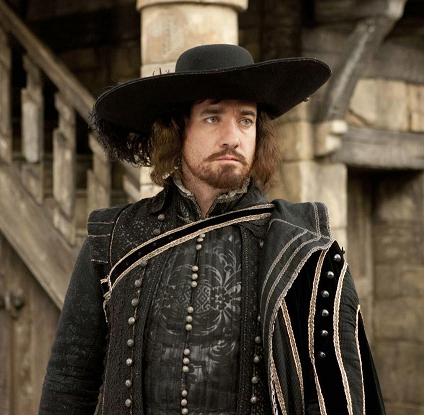
Matthew Macfadyen as Athos in the newest adaptation
of The Three Musketeers


In short, Athos was never my idol from the four musketeers, and the farther I read Twenty Years After, the more I see him getting weaker. Athos seemed to be indifferent to his surroundings, and just focused on his beloved son and his noble principles. I see him made blunders several times in the four musketeers’ adventures, that once made D’Artagnan and Aramis lost patience on him. He also became more ‘divine’ than ever, that a stabbing or a murder scene could trouble him. I mean…it’s perhaps good to be closer to God or to be ‘more Christian’ (even more than the Abbe D’Herblay! J), but come on Athos, you are a chevalier! While reading bible, I expect to read the deeds of saints, but this is a heroic-adventure novel, and I definitely hope for some more heroic actions! So, I’m sorry, I lost my respect to Athos here, maybe you’re just getting old for a chevalier!


I would like to thank all of you who have voted for one of the musketeers I am featuring in Character Thursday. The majority have chosen Athos (which I'm featuring today), and the rest voted for Aramis. Sorry for Porthos, he did not gain any interests from you... 

That is my Character Thursday of this week, an analysis of book character of my choice, who is yours?... Just put your post URL in the linky below. Do you like to join us in discussing characters from books you read? See the details of Character Thursday first.

Friday, July 20, 2012

The Dispute Of Four Old Friends: My Reflection on Twenty Years After


I have not even got into the middle of this book yet, but I have been quite moved by the friendship of these four noble men: Athos, Porthos, Aramis and D’Artagnan, twenty years after their golden era of King’s Musketeers. The slogan of “all for one and one for all” seems to stick forever in my heart.


Twenty Years After depicted these four men in their later lives after Cardinal Richelieu dead. D’Artagnan was still the lieutenant of King’s Musketeers, while Athos and Porthos have been enjoying their retirement and prosperity, and Aramis has been giving himself to serve the Chucrh as an abbé. Now the new cardinal wanted to use their service again, and instructed D’Artagnan to gather his three friends. In this task, D’Artagnan only succeeded to persuade Porthos, while Athos and Aramis both rejected to join. Not only that, it appeared latter that Athos and Aramis was working on something against the Cardinal, but they did not tell D’Artagnan about this.

These four inseparable friends were now worked for two opposite sides. To avoid from killing each other, they agreed to have a reconciliation meeting. This meeting turned out to be the most interesting scene so far (I’m on page 279). From this meeting, I realized why it is very easy to make friends when we are in our 20s, but very difficult to maintain it to get through when we are approaching our 40s (I proved it myself). One of the reasons was clearly reflected in what D’Artagnan said in the meeting…

"It is not civil wars which disunite us; it is that we are all twenty years older. The loyal outburst of youth have gone, and given place to the din of interests, the breath of ambition, and the counsels of egotism.” ~D’Artagnan.

And was confirmed by Aramis…

“Men are so constituted, and are not always twenty years old.” ~Aramis.

The fact is, when we reach the 30s, we used to pursue our own interests. Most of us have been married (or at least are thinking to have a family), that our career or business would be our priority. Idealism had been replaced with interest. In this story, D’Artagnan was all thinking about his career in the kingdom, Porthos was seeking his barony, something that he have not possessed yet, while Aramis has his own ambition to pursue a higher position in Church. Maybe it’s only Athos who did not have any strong interest, but his own principle.  

Back to the four friends’ dispute, the tender-hearted Athos could not accept that their meeting should be filled with suspicion, so when Aramis suggested him to bring his weapon for the meeting, the idea broke Athos’ heart…

“Oh, Aramis, upon my soul you make me feel very unhappy! You are disenchanting a heart not quite dead to friendship. I would almost prefer, I swear to you, that my heart should be plucked from my breast.” ~Athos.

Now, when I am analyzing the situation, it is difficult indeed to stay on either side. I am perhaps rather joining D’Artagnan’s (and Porthos) side, for at least he was openly telling the truth when he recruited Athos and Aramis. I agree what D’Artagnan said to Athos…

When I visited you at the Château de Bragelonne, I made you some propositions which you clearly understood, and instead of replying to me as to an old friend, you replied as to a child, and our friendship, of which you boast, was not broken yesterday by crossing swords, but by your dissimulation. ~D’Artagnan.

I am rather disappointed to know that Athos lied to D’Artagnan. With Aramis, I can understand, for he was always an opportunist, but Athos? Who—like D’Artagnan said—have always been praising their friendship…., how can he do it to D’Artagnan? Because he was afraid D’Artagnan would double-cross him by reporting to Cardinal? Oh come on Athos, you are a good diplomat; you know how to win D’Artagnan? Is it a sign that trustworthy had begun to disappear? See…how difficult it is to maintain your true friendship when you were overpowered by your own interests?

However, I am quite relieved that Dumas chose to reconcile those four friends through Athos, the leader and father of them all…

“We have lived together, hated and loved together, have spilt our blood, and perhaps, I will add also, there is between us a tie more powerful than that of friendship…” ~Athos.

And once again (I hope in the next chapters), four of them would fight again together for the sake of nothing-but-truth! Come on guys….you can do it!