Monday, February 28, 2022

February Read & An Exciting Buddy Read in March

I am now on the way of finishing my only read for this month: Martin Chuzzlewit - only 50-ish pages left to go. February has been a hectic month - as usual - but I'm beginning to be adapted to this new condition. I'm quite proud that in between chores and work, I can still squeeze 25 minutes of exercise and 60 to 90 minutes of reading every day. And these days, when everything looks gloomy, I feel that reading is getting more and more important to keep me peaceful and stay away from depression. (Painting: Woman Reading By A Window by Gari Melchers)


πŸ“š What I've Read in February

I've picked Martin Chuzzlewit to read for my #DickensInFebruary this year. And while I haven't entirely completed it, just considered it done, haha! At least, after reading quite many Dickenses, I think I can roughly guess what the ending will be, anyway.

I have to say, Martin Chuzzlewit isn't my favorite. The first two third is quite boring; the humours felt dry, and Dickens created too many trifle characters that I felt weren't necessary, except to prolong the story, rather than developing more of the main characters.

Statistics

πŸ“Š Total books read: 4
πŸ“Š Challenge progress:
* 2022 TBR Pile Challenge: 2
* Back to the Classics Challenge 2022: 3
* 2022 Chunkster Challenge: 1

And so, I am now ready to face the new month!

πŸ“š What I Will Read in March

March is promising to be an exciting reading month! My fellow Indonesian book, Melisa,  is hosting a buddy read of a short story collection from one of the most prominent Indonesian writers: Budi Darma. The book is: Orang-Orang Bloomington (or People from Bloomington in English).


It's exciting for me, not only because I haven't buddy-read with Melisa for years, but also because this book is being translated by Penguin Classics, and will be published next April, yay!

Excerpt from Penguin Classics:


An eerie, alienating, yet comic and profoundly sympathetic short story collection about Americans in America by one of Indonesia’s most prominent writers, now in an English translation for its fortieth anniversary, with a foreword by Intan Paramaditha.

In these seven stories of The People from Bloomington, our peculiar narrators find themselves in the most peculiar of circumstances and encounter the most peculiar of people. Set in Bloomington, Indiana, where the author lived as a graduate student in the 1970s, this is far from the idyllic portrait of small-town America. Rather, sectioned into apartment units and rented rooms, and gridded by long empty streets and distances traversable only by car, it’s a place where the solitary can all too easily remain solitary; where people can at once be obsessively curious about others, yet fail to form genuine connections with anyone. The characters feel their loneliness acutely and yet deliberately estrange others. Budi Darma paints a realist world portrayed through an absurdist frame, morbid and funny at the same time.

It promises to be an interesting read (I have tasted the 1st chapter, and really liked it), and it would be such an honor for me to read it to celebrate its forthcoming recognition as one of most important Indonesian canons.

Next book I plan to read next month:

Go Tell It on the Mountain by James Baldwin

I picked that up simply for Back to the Classics challenge, and it's in my 300 Books to Read list, so I have no expectation at all. Sometimes it might be good to start an unexpected journey, and to be a little surprised at what one might find from it. Let's hope it'll be a good one for me!

Saturday, February 12, 2022

A Bear Called Paddington by Michael Bond


🐻 This is my first read of Paddington (and certainly not the last!) It seems to me that the more you aged, the more you need children books for comfort reading. Do you think so too?

🐻 I loved Paddington instantly when the Browns met him for the first time at Paddington Station, sitting alone on his battered suitcase, with a note attached to his coat that reads "Please look after this bear. Thank you."

🐻 Paddington is a young spectacled bear, who's just arrived from Darkest Peru (where his species used to be found). After a huge earthquake killed both his parents, he was raised by his Aunt Lucy and Uncle Pastuzo. Before Aunt Lucy entered a retired home for bears, she sent Paddington in a lifeboat to London.


🐻 The Browns decided eventually to let the bear stay with them as a family member, and named him 'Paddington' from the station where they've found him.

🐻 I never like aggressive or mischievous children (both as a child and adult). That's why I'm very fond of Paddington, because he's wonderfully polite - rising his shabby hat (inherited from his Uncle Pastuzo) - when first greeting the Browns. He's also respectable and gentlemanly in manner and appearance.


🐻 But a very quiet bear is rather unappealing in a story, you might think. Don't worry! Besides his politeness, Paddington has another quality: a tendency to please others and right what he innocently thinks is wrong. And from this latter, came endless troubles and hilarious adventures; of which, somehow, Paddington seems to bring more good in the end for himself and for others.

🐻 I loved all the Brown family members, but especially Mrs. Brown and Judy Brown - the daughter. Mr. Brown was hesitate to have anything to do with a bear at first. Nevertheless, he's so sweet in buying the creamiest buns for Paddington, knowing how fond he is of marmelade, when they were waiting for others.

🐻 I also loved Paddington's best friend, Mr. Gruber, the owner of an antique shop on Portobello Road, who always treats him with nothing but respect, discussing serious things with him, and calls him Mr. Brown. Oh, how cute is that?


🐻 Paddington Bear is now a famous character from numerous novels (initially a compilation of several stories), picture books, and - later on - TV series and movies. You can even find his statues at Leicester Square, as well as at Paddington Station. And he truly deserves it. A smart talking bear with unique character and fine manner, with a hard stare that'll melt you when you say something disagreeable, how could one fail to love - and want to hug - him?

Rating: 4,5 / 5

Saturday, January 29, 2022

Appointment with Death by Agatha Christie

πŸ’‰ For the first time since I read my first Agatha Christie at the junior high school library, more than thirty years ago, I did not immersed myself into the most important aspect of every detective story: the crime itself, while reading Appointment with Death. Instead, I was mostly enjoying the more interesting psychological theory and discussions around the mentality of both victim and suspect-to-be. For that, I must applause Dame Agatha Christie: Bravo! In fact, I'd prefer to categorize this book under psychological thriller, rather than crime/detective.

πŸ’‰ Old Mrs. Boynton is a sadistic tyrant. She used to work as prison warden when she was young, because she likes to dominate others. Now, instead of the prisoners, she tortures and bullies her own family. Instead of the prison, she imprisons them in the family house. In short, she is an evil person. Her children hate her, but they cannot free themselves from her domineering power.

πŸ’‰ We get to learn these facts from the observations of two fellow travellers (a psychologist and a fresh graduate doctor) during vacations to Jerusalem and Petra which the Boyntons and several others are taking .

πŸ’‰ Along the way to the end of Part One - where the murder takes place - we can feel how the psychological tension is culminating. The atmosphere is ripen with a foreboding climax. And it's safe to say that nobody will have doubt that the victim would be Mrs. Boynton.

πŸ’‰ The most interesting part is that after Mrs. Boynton was found dead (weapon is poison through injection), all I can think of is not who did it, or whose alibi is false, and all the usual stuff related to murder mystery. No, I felt so happy and relieved that her children and daughter in law can now finally be free; that they are still young enough to have a happy normal life; that their "war" is over. I went even further to think what they each should do to start a new life. You know, I was so absorbed to their earlier afflictions, thanks to Christie's genius way of portraying their mental agony. It almost felt like reading Zola, but with modern setting!

πŸ’‰ Not that I didn't enjoy Poirot's investigation process- the usual talking and the grey cell working - I always like them! But it seems almost not important anymore, because their common "enemy" has been defeated. Who cares whodunit? Anyway, subconsciously (because I was not focusing my mind on the crime), I already knew who the murderer is before the revealing chapter. It's so obvious, I believe many mystery fans would be disappointed with this book.

πŸ’‰ Plot wise, it's not Christie's usual standard, but psychology wise, it's wonderful, and it easily becomes my new favorite!

Rating: ⭐⭐⭐⭐⭐

Saturday, January 22, 2022

January Reads & What's Coming in February


The first month of 2022 has been a productive one for me so far, reading wise. I have read 3 books, and will soon start the 4th. The above painting might perfectly reflect my reading mood right now. Not that I read a lot at the cafe - I love that, but since Covid-19 I can't do that anymore *sigh.. - but I often read while it's raining outside (my office, my apartment, my online car). I don't know, but the sound of raindrops is really soothing, and perfect for reading. It's monsoon season here in Indonesia, and I expect to do the reading-while-raining a lot during next month! - (painting: Alicia en el cafe, 2012 by Antonio Varas de La Rosa)

πŸ“š What I've Read in January

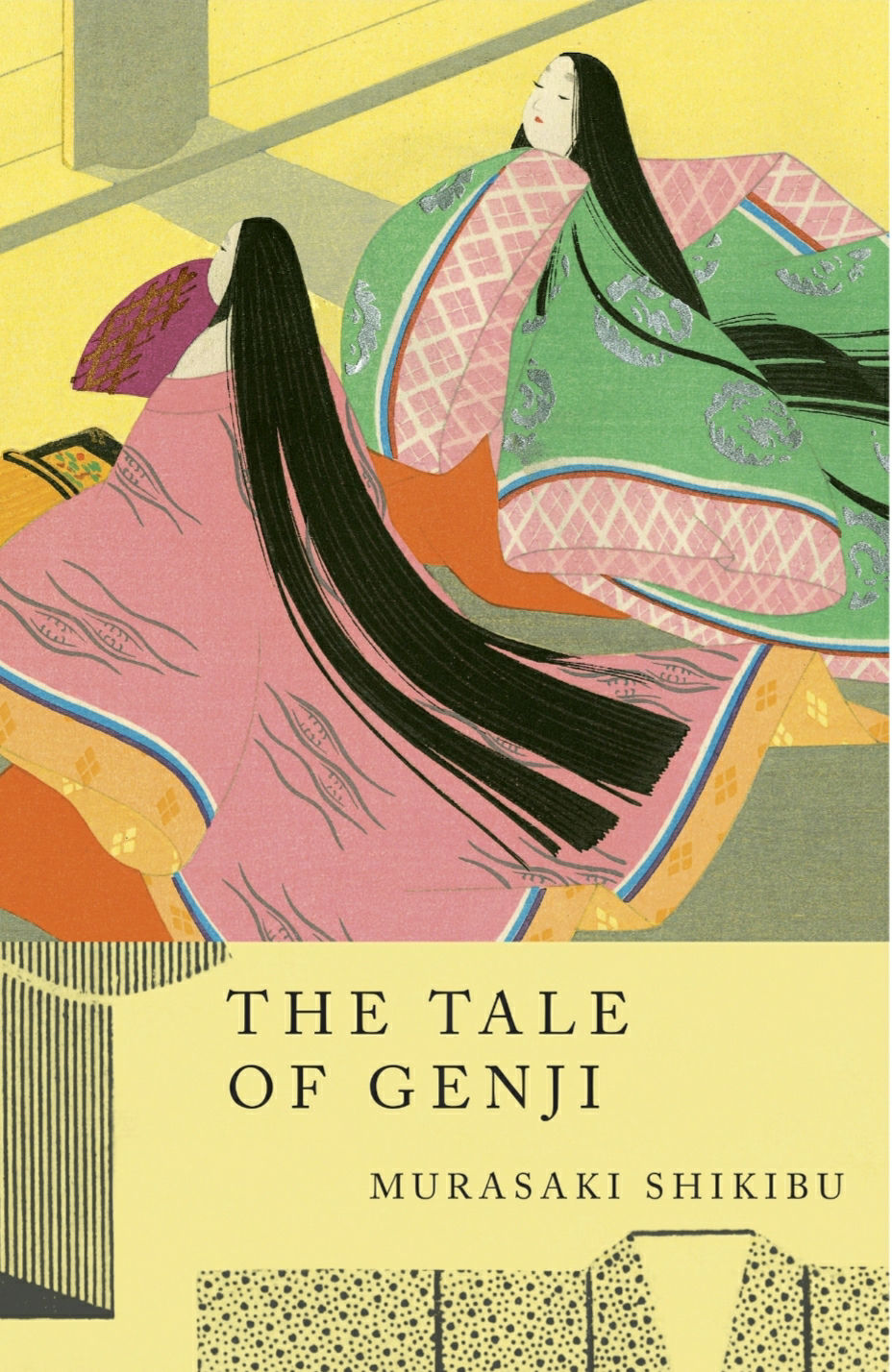
The Tale of Genji by Murasaki Shikibu - ⭐⭐⭐

Who would've guessed that the first novel ever written in the world was actually a work of a Japanese woman in 11th century? It's a romantic glimpse of court lives (and politics) in Heian period. My review will tell you more about this classic. It's my only entry for Japanese Literature Challenge # 15.

Appointment with Death by Agatha Christie - ⭐⭐⭐⭐⭐

Another gem I've rediscovered from Christie! It's more of a psychological thriller than a murder story. For once, I didn't even care of the whodunit! And the investigation seems only to make it eligible to be considered a crime story. Review will follow soon.

A Bear Called Paddington by Michael Bond - ⭐⭐⭐⭐

After a slow start with a an Asian classic, then followed by a psychological thriller, I naturally craved for a comfort reading. And what's better than a children classic? I've never read Paddington before, and was instantly hooked by the first chapter! It's funny and warm. I just finished it yesterday, review will be following.

Statistics

πŸ“Š Total books read: 3
πŸ“Š Challenge progress:
* 2022 TBR Pile Challenge: 1
* Back to the Classics Challenge 2022: 2
* 2022 Chunkster Challenge: 0

And so, I am now ready to face the new month!


πŸ“š What I Will Read in February

February is always special for me. No, it's not because of Valentine's and all the 'love is in the air' crap, no. See, my birthday is in February, and how cool is it that I get to share the same birth month with one of my favorite authors, Charles Dickens?

Therefore, every February I celebrate this special author's birthday with the coolest thing I can think of, that is, reading his book the whole month. And that's how #DickensInFebruary was born.

This year I will read Martin Chuzzlewit. That is one of the last two Dickens' I haven't yet read. Next year will be Barnaby Rudge's turn. After that, I plan to re-read Dickens novels every February.

My copy of Martin Chuzzlewit is of 762 pages, and I'm pretty sure I'd spend the whole month reading it... while raining. Jolly, isn't it?

Saturday, January 15, 2022

The Tale of Genji by Murashaki Shikibu

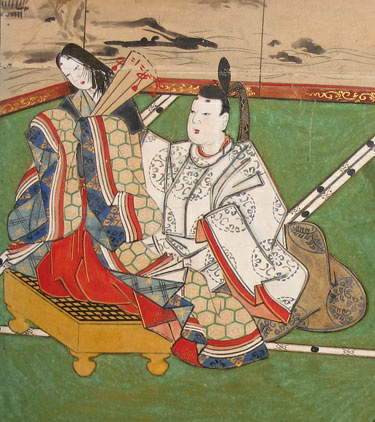
πŸ‘‘ Murasaki Shikibu was a lady-in-waiting (court lady) in the 11th century Imperial court on the Heian period. And Genji Monogatari (translated to The Tale of Genji) - which is written based on her service period in court - is considered one of the first novels which had ever written in the world.

πŸ‘‘ Genji is the Emperor Kiritsubo's son with his favorite but low ranking concubine from Pauliwnia Court, whom he loved more than the others, more, even, to his wife, Kokiden. The little son was a prodigy (handsome, intelligent, and very talented). And the Emperor would have liked to make him royal prince, but decided not to, because a boy without high rank maternal backing would be tortured by court political backlashes. That was exactly what his mother had experienced (and presumably the cause of her premature death, which caused sadness to the Emperor). Therefore he was brought up instead as a commoner, named Minamoto or Genji.

πŸ‘‘ I couldn't help thinking how lonesome it is being at the top. When one loves a person, the loved one would be hated by others, thus one just causes only grieves to the loved one. Then both would be unhappy.

"Happy are they whose place in the world puts them beneath such notice!
The great ones of the world live sadly constricted lives."


πŸ‘‘ Don't quite understand too why parents at that era (most often the father) thought that sending their daughters to the court would make them happy. But then, that's typical of Asian parents, apparently - telling their children to be so and so "because they know what would make the children happy", while ignoring what the children must have thought for themselves.

πŸ‘‘ And it's also typical of Asian children to obey their parents. Disobeying means disaster, but obeying often leads to another disaster. And it's amazing how generation after generation repeat the same thing, while they know the consequences.


πŸ‘‘ Anyway, a princess called Fujitsubo, whose resemblance with Genji's late mother is uncanny, was brought to the court and won the love of, not only the Emperor's, but also young Genji, despite of his (Genji's) recent marriage with the Minister's daughter (political marriage without consent of neither bride nor groom), right after his initiation as an adult.

πŸ‘‘ By the second chapter, it is clear that Genji is a womanizer, and that the whole story would center mainly on his numerous amorous adventures. His interests extend from young girls to older women, from high rank princess to girls from far lower rank. Of all his women, he respects his wife most, but there's not warm affection from both sides.

πŸ‘‘ Though disapproved of Genji's immorality, I was prepared to tolerate it, as it was the imperial's way of life at the 11th century. However, when he took a beautiful little girl of ten y.o. to "shape" her to resemble Fujitsubo (whose love he cannot have) and to be his future wife; well...I lost a little respect I've reserved for him. Even the little girl's people thought it inappropriate.

πŸ‘‘ I was relieved then, that he kept his promises, to treat Murasaki (the little girl) more like his protegΓ©. She continued to be his favorite lady, though it didn't prevent him from having an affair during his exile - which, by the way, was the result of his other scandalous affair with the Emperor's consort. In short, the tale is about Genji's love affairs, with a little glimpses of court politics at that period, composed neatly with lyrical poems and prose.

What I loved most about this book:

The Poems - I quote one here for you:

"The lady was sad, and more beautiful for the sadness, as she recited a poem:

'They say that it is dawn, that you grow weary.
I weep, my sorrows wrought by myself alone.'


(Genji) answered:

'You tell me that these sorrows must not cease?
My sorrows, my love will neither have an ending.
'”

The art of communications - carefully chosen paper colors and materials for letters, implying different meanings; the handwriting and gradations of ink, intensifying the writer's feeling. Sometimes they exchange fans with some handwriting on the corner.

The musics - They play koto (eight or thirteen strings instrument) and flute, and the best players often brought tears to the listeners. I could well imagine the beauty of such musics. The sounds of Japanese or Chinese Koto and Flute, or Indonesian gamelan, always bring peace into your soul.

πŸ‘‘ Tale of Genji's original manuscript actually composed of fifty four chapters. The one I read is the abridgment, of Edward G. Seidensticker's translation, containing twelve chapters. I've randomly chose this version, mainly because its availability on Google Playbooks. But after small researches through google, I'm glad I'd pick this up in the first place - it's considered quite following the original rather strictly, but not too scholarly to cause you headache. 386 pages of Genji is the perfect dose, I guess, and with all the beautiful poems along with prose, one can follow nicely the tale.

If you need more references to which translations to pick, check this blog's helpful and thorough comparation of half a dozen versions of Genji's.

πŸ‘‘ The only setback is its inconclusive ending. But again, I didn't feel like reading further of Genji, so I guess, this is it. It's worth to read for its literary value and classic beauty, but not more.

Rating : 3 / 5


Sunday, January 9, 2022

Back to the Classics Challenge 2022

I'm so glad that Karen have decided to host another Back to the Classics Challenge this year (it's the ninth!), since it's another of my most favorite reading challenges. Basically it challenges you to read classics for twelve categories. Here's my list (it may change along the way, according to my reading mood):

1. A 19th century classic:
Elizabeth and Her German Garden by Elizabeth von Arnim

2. A 20th century classic
My Cousin Rachel by Daphne du Maurier 

3. A classic by a woman author
A Lost Lady by Willa Cather

4. A classic in translation
And Then There Were None by Agatha Christie

5. A classic by BIPOC author
The Knight of Maison-Rouge by Alexandre Dumas

6. Mystery/Detective/Crime Classic
Appointment with Death by Agatha Christie

7. A Classic Short Story Collection
For a Night of Love by Emile Zola

8. Pre-1800 Classic
The Tale of Genji by Murasaki Shikibu

9. A Nonfiction Classic
84, Charing Cross Road by Helene Hanff

10. Classic That's Been on Your TBR List the Longest
Martin Chuzzlewit by Charles Dickens

11. Classic Set in a Place You'd Like to Visit
The Lark by E. Nesbit (English countryside)

12. Wild Card Classic
Evelina by Frances Burney (18th century classic)

Will you participate in this year's challenge too? Which books from my list interest/intrigue you most?

Tuesday, January 4, 2022

The 2022 TBR Pile Challenge


My first post of 2022 is for one of my most favorite reading challenges: TBR Pile Challenge, hosted by Adam @ Roof Beam Reader. For me personally, it's not really a challenge, since I rarely read newly published books (if any, it's not more than one or two a year), thus my reading plans are mostly based on books from my TBR pile.

The 2022 TBR Pile Challenge - the Master List

  1. The Tale of Genji by Murasaki Shikibu
  2. Orang-Orang Bloomington (People from Bloomington) by Budi Darma
  3. Evelina by Frances Burney
  4. Elizabeth and Her German Garden by Elizabeth von Arnim
  5. Mrs. Osmond by John Banville
  6. A Lost Lady by Willa Cather
  7. For A Night of Love by Γ‰mile Zola
  8. Flappers and Philosophers by F. Scott Fitzgerald
  9. Martin Chuzzlewit by Charles Dickens
  10. The Custom of the Country by Edith Wharton
  11. 84, Charing Cross Road by Helene Hanff
  12. My Cousin Rachel by Daphne du Maurier