Wednesday, July 31, 2019

The Murder of Roger Ackroyd by Agatha Christie


This was my third read of Agatha Christie #7: The Murder of Roger Ackroyd, which I think deserves to be labeled her masterpiece, and I tell you, I loved it even more than my precious two reads! But before I tell you more, I must warn you that this post contains HIGH LEVEL SPOILER! Do not continue reading if you haven't read it before – the spoiler might even start in the next paragraph! – as even tiny spoiler would ruin your reading forever; it will never be the same, trust me! So I have warned you!

I have not placed The Murder of Roger Ackroyd on top of my Agatha Christie favorites for no reason. To me, it's not a mere detective 'whodunit' story. There's something much deeper than that - a thorough analysis of human nature, and a great case of psychology. 

As I have been familiar with the plot and all surprises on the first and second reads, this time I dedicated my reading solely focusing on Dr. Sheppard's feeling and mental conditions - or you can call it the murderer-psychological-mapping. I have been wondering how an ordinary person could turn into a murderer. What the process looks like, at which point he decides to commit the murder, and what triggers him. And more importantly perhaps, what quality he possesses (or lacks of) which prompts him to it.

But I would like to say first, that this third reading made me realize that Christie has in fact sprinkled bits of clues all throughout the story from the very beginning - yes, even from the opening of chapter one. But, and here's where her genius lays, how are we supposed to have suspicion right in the beginning, through the words of the narrator? And, as it was only the beginning, we would just swallow everything as we still don't know for sure what's going on. Clever! Then, it gets even clearer when Doctor Sheppard got his "first foreboding": the tete-à-tete of Ralph Paton and Mrs. Ferrars. But then, we might assume that he has his concerns for Ralph – again who would suspect that a narrator would be the antagonist?

More about Doctor Sheppard; Caroline (his sister) once scowled James of being weak – and I remember he wondered why she said that. That line has particularly struck me. There lays the answer to my question: James – as are Ralph and Flora (see Poirot's speech) – is morally weak. These three lack the courage to do the right thing when under pressure. They tend to choose the easiest way, despite of everything. In James' case, I think Caroline's strong character and sharp tongue 'helps' turning his weakness into worse. The only way out he could see is money. Money can buy him freedom to go as far away as possible from Caroline (Argentine is his choice). And when Mr. Ferrar died, he saw the possibility only too clearly. Now, we all have been presented with temptation, on certain degree in our lives. What has made us choose the right way, though the others looks much better? I believe it's character strength – the courage to strive in bad condition in order to obey our conscience. James' worst choice is when Ackroyd summoned him. He should have confessed to Ackroyd about the bribery. Ackroyd trusts James, and I think the worst possibility is Ackroyd would scold him, won't trust him anymore, but in any case won't tell the police. But James perhaps couldn't take it that, of all person, Caroline – and maybe Ackroyd too – would have seen him as a crooked all his life. So, Ackroyd must be muted. There's no other way.

As I have said, this book is a great study of human nature. Sometimes, unconsciously, we help a man turned into bad. Sometimes it's the society, but it is also possible that we invented these murderers from our own small community, or even, our family. Crime and murder can be gory and scary. But I believe the scariest thing is the fact that anyone of us can become a murderer. We need only to make the choice.


What a rereading this has been for me! And I think I will keep reading this book in future, no matter how familiar I am with the plot. Just to remind myself of always taking the right choice in difficult times, not the easiest!

5 / 5

Wednesday, June 12, 2019

The Secret of Chimneys and Camino Island [Mini Reviews]


The Secret of Chimneys by Agatha Christie


It is almost impossible to write a proper summary for this 6th novel of Agatha Christie. It's a very fast-paced crime story with abundant characters; contains of a balanced dose of murder, stolen document, treasure hunt, and international political-economical scheme of a Balkan state: Herzoslovakia (restoring monarchy vs oil concession - which, naturally, involves British government and oil syndicates). In short, it's a confusing thriller from the start!

Superintendent Battle is supposed to be the detective from Scotland Yard - this is our first introduction, he will appear in several future books - but the main male character is in fact an attractive-dark-skinned adventurer with shady past called Anthony Cade. We would be led to suspicion whether he was the good or the bad guy. It applies also to the main female character Virginia Revel (it involves some romance too, ahem!) We were also introduced to an elusive jewelry thief "King Victor" (reminded you of Mr. Brown and ..., eh?) and his female accomplice, who later becomes the queen of Herzoslovakia. Confused already? Add that with a lot of false identities, and you'll get a high crime thriller which is good when you're reading it straight, but right after you finish and want to look back, you'll forget the whole plot.

Chimneys feels really like a blend of The Man in the Brown Suite and Murder on the Links. Again, not of my favorites, but a highly entertaining novel to be read when you are feeling lazy or still in hangover after an intense read, or are in holiday mood - just like me! And that's why I rated this book:

3,5 / 5


Camino Island by John Grisham


I normally don't review popular fiction in this blog, however, this Grisham's particular novel talks a lot about books - especially 20th century classics novels and authors - as well as bookstores, and writers, that I decided to publish the review here.

Five original manuscripts of F. Scott Fitzgerald (This Side of Paradise, The Beautiful and Dammed, Tender is the Night, The Great Gatsby, and The Last Tycoon) were stolen from Princeton University Library on a heist plotted by five ex convicts. It should have been a perfect crime, if one of the thefts hasn't scratched his wrist and left his blood stain to be found and traced by the FBI. Two of them were immediately captured, so the others quickly brought the manuscripts away and threw them to black market, with the intention to retrieve them after the case cools off.

Bruce Cable is a self-made independent bookstore owner in Camino Island, after he inherited large sum of money AND found some rare books from his father's book shelf. He loves books, and collects a lot of rare first editions of twentieth century books. He possesses a vault in his basement, and is good in handling and preserving old books. Not only that, he also loves to support new aspiring writers. He arranges book tours for them, mobilizes his writers circle and friends to attend their book signings, inviting them to dinners, connecting them to other literary people, in short being a friend and mentor to them. However, Bruce has his dark side too. His love of rare books plunges him to the black market and all its shady businesses, though he admits he always reports the income and pays the taxes. It's quite interesting to follow his career.

The insurance company, whose client is Princeton, suspected that Bruce might have gotten the manuscripts, so they hired a struggling writer: Mercer Hann to spy on him, infiltrate his bookstore, and if possible, enter his vault. Mercer is another interesting character to follow; broken home, choked by student loan debt, and her books failed. She found peace, affectionate friends, and consolation in Camino Island, staying in the cabin who belonged to her deceased grandmother, apparently the only person in the world who has really loved her.

So, Camino Island is one of Grisham's where the line between good and bad is blurred. I know that making money over stolen goods is wrong, but still I loathed the FBI gangs and hoped that Bruce succeeded. Well...

4 / 5 for this entertaining piece!


Friday, May 31, 2019

Cannery Row by John Steinbeck


After East of Eden last year, I didn't think I'd get to another masterpiece from Steinbeck so soon. Yet Cannery Row has got me stunned! It was really a diamond; short but full of hidden meaning, straightforward yet poetic, quiet and warm.

What is Cannery Row anyway? Steinbeck wrapped it up beautifully in his opening line:

“Cannery Row in Monterey in California is a poem, a stink, a grating noise, s quality of light, a tone, a habit, a nostalgia, a dream. Cannery Row is the gathered and scattered, tin and iron and rust and splintered wood, and chipped pavement and weedy lots and junk heaps, sardines canneries of corrugated iron, honky tonks, restaurants and whore houses, and little crowded groceries, and laboratories and flophouse. Its inhabitants are, as the man once said, "whores, pimps, gamblers, and sons of bitches," by which he meant Everybody. Had the man looked through another peephole he might have said, "Saints and angels and martyrs and holy men," and he would have meant the same thing. “

So Cannery Row is about a few blocks of fish canneries in the harbour city of Monterey, California, drawn from Steinbeck's memories when he stayed there. This is a tale about its remarkable inhabitants. Who are they? Mostly, a bunch of good-for-nothings. There's Mack and the boys, a gang of unemployed losers, whose only ambition was contentment without working. They occupy an empty building owned by a Chinese grocery store owner - whose 'wealth' mainly consists in the piles of tit bits in his shop, and in the debts of his customers - called Lee Chong. Mack and the boys named their 'house' the Palace Flophouse. Then there were Dora Flood who runs a bar and whorehouse called The Bear Flag. All these people were expelled from their families, works, and even society.

The Cannery Row nowadays


Then we meet our main protagonist: Doc, a marine biologist, whose character was borrowed from Steinbeck's real friend Ed Ricketts. Doc is a loner, collecting sea creatures from the coast to be sold to universities, museums, or laboratories. He preserves them in his laboratory. Doc is the smartest and the most kindhearted man in Cannery Row. People love him because, in contrast with the world's cold acceptance towards these people, Doc willingly bears with them, listens to them, treats them with dignity, never criticizes, but instead, imparts small wisdom to them. In short Doc accepts them as they are, for which, these people indebted to him, and always feel that they 'must do something for Doc'.

Mac and the boys got an idea, they’d throw a surprise party for Doc. But as Doc was coming home very late that day, they got drunk and eventually crashed his property while waiting for him. So instead of making him happy, they broke all his belongings, and made him miserable. I was literally crying when they were breaking Doc's treasured phonographs! I imagined Doc, after a day of serious working, the classical music is all he has to cheer him up, something to warm his lonely life, the way family does a man. And this only luxury he can afford was crashed by the guests! That punches Doc gave Mack are well deserved.

Ed Rickett's laboratory which is depicted as Doc's


Actually Cannery Row does not have much of a plot. It evolves around the Flophouse boys' efforts to give a nice present to Doc. After the first failure, they intended to do a better one. And along with it, Steinbeck unrolled the lives and struggles of each character, and some seemingly unrelated ones.

The most interesting of the later is Frankie, the 'unseen' boy - nobody seems to realize his quiet existence, and he is literally 'useless' - in Doc's phrase: "There wasn't a thing in the world he could do". When he single mindedly 'decided' to get a beautiful antique clock for Doc's birthday - by stealing it - and got caught, and when Doc asked him why he did it, Frankie looked a long time at him, and his earnest answer was: "I love you" which really broke my heart! Oh that boy... what would become of him when he's grown up? He might be good for nothing, but he is capable of loving... and abundantly too! And the only thing he needs in return is to be loved! Oh, if only we are not too much into ourselves, we will be able to realize of this gem of humanity!

Another sweet and sad story is of Mary Talbot, a loony - or I prefer to call her a 'dreamer'. She likes to throw parties, but instead, as her husband doesn't earn much, she encourages others to give parties, of which she can manage. Sometimes she even gives parties to cats, yes, cats! And she takes the business seriously. Let me show you one of the scenes:

“Kitty Randolph was sunning herself by the front fence. Mary said, “Miss Randolph – I’m having a few friends in to tea if you would care to come.” Kitty Randolph rolled over languorously on her back and stretched in the warm sun. “Don’t be later than four o’clock,” said Mary. “My husband and I are going to the Bloomer League Centennial Reception at the Hotel.”

I really thought at first that Mary was talking to another woman, but then at “Kitty Randolph rolled over languorously on her back and stretched in the warm sun” I realized it was cats she has talked to - LOL!  Some of the many funny bits you'd find in Cannery Row. Isn’t it sweet? And her husband is so sweet to go into her scenes.

On the whole, there's a quality of vagueness, dreamy, unreal in the existence of Cannery Row, but in fact it might be the truest of humanity. The most curious bit of it is the old Chinese man who is often seen flip-flapping on the street in the evening “just at dusk between sunset and the lighting of the street light” - Steinbeck called it the ‘small grey period’. I feel that it represents something which is floating over human existence, something which never changes, always there, a continuity. It’s on the other side of the society – it seems desolate, lonely, poor. But in fact, it is the truest, the fullest, the richest of humanity – it is where love and affection rules, instead of money and fame. It is where everyone is treated equally as a dignified human being. It is Cannery Row.

What a treasure! What a beautiful book! The most beautiful of the three I’ve read so far: this, Of Mice and Men, and East of Eden. Now I can’t wait to delve into the sequel: Sweet Thursday – is it going to be as sweet as Cannery Row? We’ll see!

Score: 5 / 5


Thursday, May 23, 2019

North and South by Elizabeth Gaskell


Margaret Hale has been living happy and peacefully in a Southern small village: Helstone, when suddenly her father - a parishioner - announced that he has decided to leave the Church due to his "miserable doubts". As it was disgraceful in 19th century, he must leave Helstone, and consequently with the whole family, to live in a Northern industrial (cotton manufacturing) city called Milton.

Like the two poles of earth, the North is completely different from the South. It's noisy, busy, harsh, ugly. But live there they must. Margaret was then introduced to the never ending conflicts between masters and workers. And to a handsome mill-owner, self-made entrepreneur called John Thornton.

This was my first Gaskell, and I'm slightly surprised to find that her writing was straightforward and bold, very unlike the flowery Dickens - who was her mentor when she first became author. Frankly speaking I personally didn't find Gaskell's writing very distinguishable, but her topic is very engaging - and bold for her time.

For 25 years I have been working as a business assistant in two different trading companies selling industrial parts to factories. So I am quite familiar with Gaskell's industrial topic: masters vs workers. In my opinion, the never ending conflicts will always be there, and will never end. What about Gaskell's ideal relationship of Mr. Thornton and Higgins, then? Wouldn't it possible to apply such mutual understanding atmosphere in real factories? My answer is: it's just a dream! I don't know how it goes in other countries, what I offer here is my personal insight from my own experience in Indonesia. There might be some factory owners like Thornton, who really care for their workers, and not merely about profit; who see the workers as assets, not machines. But seriously, if I were a master myself, and must continually be annoyed by strikes demanding unreasonable higher wages, I would do what Thornton or others did in this novel: punish the perpetrators and replace them with better ones. Or, just move the factory away.

But how about the workers' perpetual poverty? Don't the masters have consciences? More often than not (again, from what I see), it's the workers’ own foolishness. They keep demanding high wages, but work lazily. They spend more than their income, so they apply for credit to the masters. If the masters refused (because by and by they'll take it for granted), they'll say that the masters are bad, they don't care for them, and so on. Mr. Thornton makes a good example by approaching the workers and treating them kindly (eating lunch with them, for example). The reality is, no sooner than the masters allow himself to be placed almost equal with the workers, why, the workers won't pay any respect to them. They will get lazier and more demanding. No, I don't buy Gaskell's suggestion in this novel. Clearly she didn't understand industrial business. I understand that she wrote this to promote humanity, but then, the mill owners were businessmen, they just do what others do: to make a living. If the workers cannot cooperate, the company could not running well for both sides.

Apart from the industrial controversy, North and South is also about the struggle of its characters to face what life has in store for them. There's a bit of a Darwinian touch in it. Of the Hales, only Margaret was able to adapt to her new life, to make peace with the past (mistakes), and to welcome the future. And that's why she eventually meets a brighter one. Her mother is the opposite; she could never accept reality, kept going to the golden days of her past. The bitterness finally eroded her life. The same happened to Mr. Hale.

Speaking of Mr. Hale, I still don't get what his "miserable doubt" really was. Does it mean that he did sermons and other services for years, then one day did not really believe on what he's been preaching? He said it isn't religion, but then what? Of all characters, I hate him most, for being weak (vague), coward, and selfish.

Second of all, I hate Mrs. Hale too for being whiny, self-centered, irresponsible. How could she demand Frederick - the fugitive son - to come home while the risk was that big for the family? Being dying doesn't mean you can ask anything without thinking about the safety of others! And that was a foolish decision too from Margaret to grant it - unfortunately not the last either! She seems to always say or do things she shouldn't, and never do what she should.

John Thornton is my most favorite. He reminded me of my own boss - a self-made businessman, tough, fair, no nonsense, respectable, kind hearted but not sentimental. If his worker went to do riot against him like Boucher did in this novel, I'll gladly recommend him to be sacked!

All in all, I loved North and South. It offers a different but relevant and interesting topic compared to general Victorian novels. Not one of my most favorites perhaps, but it's been heart-warming and delicious. I'd certainly read more from Mrs. Gaskell!

Score: 4 / 5


Friday, May 10, 2019

Post Zoladdiction, and Some Future Reads


I may still be in a hangover from Zoladdiction - I just can’t take my brain off Zola! No, not reading more of his books – I think two books in a row is my limit – but I keep getting thirsty of Zola-ish things. The other day I spent my morning at work browsing Zola’s traces in modern France. Did you know that at least four cities in France have named their public squares or streets with Zola? One day I must go back there (I visited Paris in 2000, when I haven’t “found” Zola), and will certainly include Zola’s house in Médan (now it becomes Dreyfus Museum) on my itinerary!

But, back to earth… here’s some reading updates:


Books read January – April: 11 / 25


What’s next?


MAY
I am reading North and South - Elizabeth Gaskell right now for #elizabethgaskell2019 readalong on Instagram, hosted by Helena @reading.the.classics. From February to August we read different books, and Helena hosted an Instagram group discussion at the end of each month. I only participate for May’s, because North and South is the only Gaskell on my TBR. I love it so far, it’s a perfect read after Zoladdiction! And I would certainly read more of her – maybe Mary Barton next!

Next week I will finally delve into my #ccspin book: Cannery Row -John Steinbeck. Some say it’s hilarious and funny, let’s prove it! Actually these two were my most anticipated from my Classics Club list, so May would be a fun-filled month for me, reading-wise!

JUNE – JULY
I haven’t got any fixed plan yet, but, since I have only been tackling five books for Classics Club in 2019 by May, and as in August I will take a ‘journey to the sea’ (ehem…), I MUST slip 1-2 more books from list into these two months to catch up.

Also, I have Dante’s Purgatorio on my radar. Adam will be hosting a readalong (or something like it) by summer, but haven’t fixed on the date/month. Before that, I’m planning to read Vita Nuova, of which, the translator of my The Divine Comedy copy – John Ciardi – recommends to read before Purgatorio. And since I have read Purgatorio long ago – and have, alas, failed miserably! – I determined to do whatever it takes to succeed this second time. If Ciardi asks me to read Vita Nuova first, read it I will!

AUGUST
Brona has not posted it publicly, but yes… I am going to join her Moby Dick readalong in August! And knowing her, I suspect we’ll have a lot of fun during August. Very excited!

SEPTEMBER
Didn’t I say I’m still having a hangover from Zola? Actually I still have one unread book of the Rougon-Macquart: The Dream. I might read it after a train of readalongs. Then next year I’m going to start an ambitious project: reading all twenty novels in Rougon-Macquart cycle in chronological order – rereading all from the start!

And I might add another classic for Classics Club.

OCTOBER
It’s time to read some spooky books! So I picked two of my Classics Club list: Rebecca - Daphne du Maurier and We Have Always Lived in the Castle - Shirley Jackson. And if there’s enough time, I might be in for John Grisham’s Camino Island. It’s the first bookishly thriller from Mr. Grisham – about a lost manuscript of F. Scott Fitzgerald – and I think I’m about to love it!

NOVEMBER
This would be my last chance of completing my target of reading 12 books for Classics Club in 2019. Two last books from the list to close the year would be perfect.

DECEMBER
Time for some Christmas readings! I will read mostly from Christmas stories by Enid Blyton, Anthony Trollope, and, of course, Charles Dickens. Beyond that, I’ll read any book I’d fancy when the time comes!

And that will be my future reading life. What’s yours?


Wednesday, May 8, 2019

Black Count and The Man in the Brown Suit [Mini Reviews]


Black Count by Tom Reiss


The subtitle of this biography of General Dumas (Alexandre Dumas's father): Glory, Revolution, Betrayal, and the Real Count of Monte Cristo, tells you exactly what this book, written by Tom Reiss, is about.

General Thomas-Alexandre Dumas was a son of a renegade nobleman: Marquis de la Pailletarie and his slave: Marie-Cessete Dumas. He was born in 1762 in French sugar colony: Saint Domingue. Sold by his own father as slave when he was 14 y.o., he was educated as aristocrat after later being bought back by his father.

Alex Dumas was extraordinary because he was the first man of color with highest rank in Europe. His bright career from soldier, officer, to General-in-chief in a short time, along with his heroic bravery actions and his passionate love for his country, should have placed him a special account in French history. Instead, but from this biography, his traces seemed to be vanished from history and memories. Why? Blame it on Napoleon Bonaparte! Don't believe any novel about Napoleon, however sweet he was pictured in it; the real one was ten times more evil and disgusting! I seriously hated him with all my heart throughout this book! Have you read Alexandre Dumas' The Count of Monte Cristo? Of how Edmond Dantes was unjustly imprisoned? It's inspired - not loosely - by the real event where Napoleon set up General Dumas for criticizing his (cruel, racist) policy.

On the whole, it was not an enjoyable read. But if you like French history, this book will interest you. But most of all, this book will be interesting for those who love Alexandre Dumas’ novels, as now we know the origin of those heroic passages in most of his famous novels, especially The Count of Monte Cristo and The Three Musketeers. I loved especially the deep love and admiration Dumas showed to his father in everything he later wrote (diary and novels). I’d feel the same too if I have had a father like the honorable General Dumas!

Score: 4,5 / 5


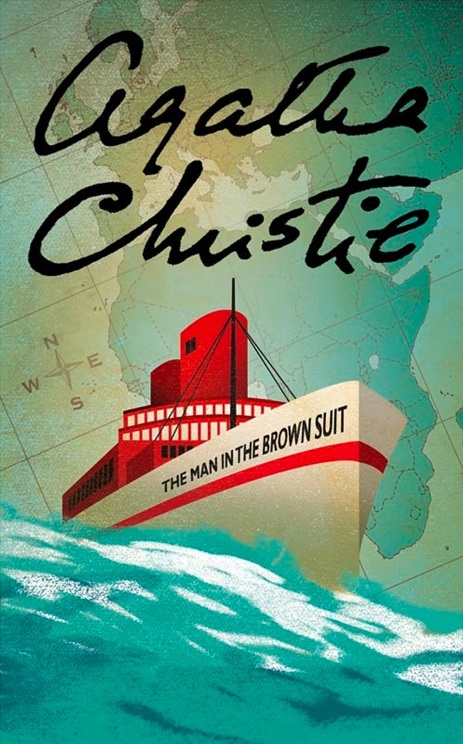
The Man in the Brown Suit by Agatha Christie


This fourth novel of Agatha Christie introduces us to Colonel Race, though his involvement in the crime is very vague, at one point, I even suspected him as the villain. Instead, this story, again, was dominated by a woman. Anne Beddingfield is a restless young woman longing for adventure, and...bam! An adventure met her on the next corner. She coincidentally witnessed an accident, which turned out to be a murder, and the next instant found a piece of paper a man has unconsciously dropped. Then she entered a house where another murder has been committed, and when casually rummaging inside a closet, coincidentally found a canister of undeveloped film, which, of course, turned out to be another clue.

There are too many coincidences in this story to my taste, it often felt "staged". I could not relate with Anne, the amateur detective, and certainly was not impressed by her "romance with a mysterious guy on a deserted island". It was really the most un-Christie-ish I've read so far. Perhaps it's because at that stage, Christie was still searching for the best style she wanted to adopt for her future books.

The most positive from this one is the hilarious Sir Eustace Peddler, from whose witty and sarcastic diary accounts, along with Anne's account, we were told of this story.

It's clearly not my favorite, perhaps my least favorite of Christie's four early novels. 

Score: 3 / 5


Monday, May 6, 2019

#Zoladdiction2019 Wrap Up


April has gone, and so has Zoladdiction 2019. For me, especially, it has been a thoroughly fun and inspiring. I dare say that #Zoladdiction2019 was the best I've ever hosted. Thirteen participants (the biggest number since I hosted it in 2011 for the first time) have decided to join in. We have talked about Zola's works, shared our posts as well as our reads. We have made new friends with some Zola’s fans, and even got a new Zoladdict! J One participant in Instagram even chatted with me (via Instachat) about our favorite Zolas, and he recommended some Zola movies I’m eager to watch. And I have also treated myself with two new Zolas: The Dream (which I plan to read this year), and OWC's edition of La Débâcle


In short, I've had a huge fun last month! How's yours?


Nevertheless, it must stop now. I only hope that you all have had as much fun as I did. And I do hope you will continue reading and loving Zola. Don't worry, next year Zoladdiction will be back!

Meanwhile, don't forget to link up your posts/reviews in the linky (if you haven't). It will be up until 15th May. Zoladdiction is over, but you can still post anything still left over your reads.

Lastly, thousands of thanks to you all, it has been awesome! Until next year!