Wednesday, May 31, 2023

Goodbye May!


A woman reading on her balcony (Oscar Coddron)


My reading life has slackened a bit this month, after April excitement subsided. Well, another "storm" hit our lives again, but like always, it, too, will pass. Meanwhile...


πŸ“š Books Read in May

Agatha Christie: An Autobiography
(started in March)
Read from: audiobook

The Professor's House by Willa Cather
Read from: printed book

Summer by Edith Wharton (not yet reviewed)
Read from: printed book

The Professor's Commencement by Willa Cather (short story)
Read from: e-book


πŸ“š 2023 Statistics

πŸ“Š Total books read so far: 22
πŸ“Š Total short stories read so far: 5
πŸ“Š Challenge progress:
* 2023 TBR Pile Challenge: 7
* 2023 Victorian Reading Challenge: 2
* 2023 Audiobook Challenge: 9


πŸ“š What's happening in June

πŸ”Έ️ For the first time, I'm joining #20BooksofSummer hosted by Cathy @ 746 Books. I opted for 10 Books. Here's the list of books I'd be reading.

πŸ”Έ️ Another fun event I'm joining is Reading the Meow hosted by Mallika @ Literary Potpourri


How about you, how has your May been?


Monday, May 29, 2023

Agatha Christie: An Autobiography | An Audiobook Review


"To be part of something one doesn't in the least understand is, I think, one of the most intriguing thing about life."


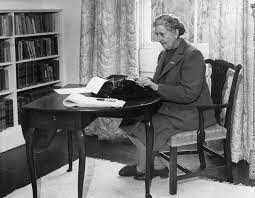
🧑 Dame Agatha Christie is one author whose books I continually read since I was 11 years old. Yet, I didn't really know much about the author herself. Until I read this book, her autobiography. From now on, I would call her Agatha - or Aunt Agatha - because that's how I felt about her after reading this Autobiography, as intimate as an aunt and her niece!

🧑 Agatha wrote this autobiography at the age of 75. It covers her life from childhood (about five y.o.) to the time she wrote this. It is by no means a chronological account of her life. Instead, she wrote from memory. Scattering bits and pieces of bygone events and perceptions which came to her memory as she's writing, she told it us; adding sometimes her views on certain subject, or comparison with her present situation.

🧑 Just imagine listening to your grandma telling you stories about her past: "I remember one day when I was about five or something..." - it's that kind of stuffs. But from these stories, and Agatha's comments on the events, we came to know much about her. Just like how you would've known your grandma more intimately after listening to her for half an hour every day during one summer holiday. You would feel you've known her all your life. And so, this review would also be bits and pieces of what has impressed me from this book.

🧑 Agatha's father was a caring, generous man with sense of humor, and liked by many people. Her mother was shy, impulsive, and melancholic. And she was a good story teller. Her stories was always different. One of them was The Curious Candle - a detective story! Her mother, however, didn't allow her children to read before age 8. Nevertheless, Agatha taught herself to read from story books. She could read at 5 y.o., and loved story books (and telling stories) ever since.
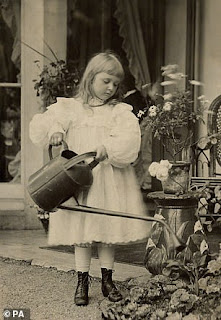


🧑 Agatha first ever story-telling in childhood was when her friend Margaret lost her front teeth and made her speech incomprehensible. Agatha daren't say she didn't understand what she said, but didn't want to not having conversation either, so she invented a story about fairy. Later, when Agatha didn't have friend at same age, she invented imagery friends and instilled different personalities into each. She would chat with them while playing outside. And that's how the seeds of a novelist was sown, I believe.

🧑 Agatha first wrote a detective story (The Mysterious Affair at Styles) was due to her sister's challenge. But later after her father's death and financial problem, she began to write as a profession (though 'till the end she never embraced her status as a succesful author). But, as we all know, monetizing hobby could be an unwholesome job. To divert from this, Agatha loved writing plays, and do it wholeheartedly.

🧑 Besides writing, her other passions were travelling, archeology, and houses. Agatha is one of the most adventurous persons I've ever known. She always tried to do new things, and almost always found them interesting. Either it be her work at the dispensary during War (where she got to know several poisons for her murder cases), or being assistant to her second husband Max Mallowan during their excavation gigs.


Max Mallowan & Agatha Christie during excavation gig at Ur, 1931


🧑 Speaking of husband... I hate Agatha's first husband: Archie Christie! When her mother died, Archie didn't accompany his wife during her grief because he couldn't stand sorrows and miseries. He then returned to their home asking for divorce because he's in love with another woman, who was there for him during his wife's absent. Dude, she was grieving her mother's death! How do you expect her to amuse you? It's you who should've been there to support your wife in those difficult times. Didn't like funerals? Nobody did! But that's life. Are you human or not?! Actually I didn't like him from the first. He seemed to be egotistical person. And it turned out he was.

🧑 Though I enjoyed every second of my listening to this book (I listened to audiobook), as a reader, my favorite part is when Agatha's taking about her favorite books, her writing and publishing books I've read, and various inspirations of them. Agatha's favorite character from Dickens' Nicholas Nickleby was the man who courted Mrs. Nickleby by throwing vegetable marrow. Did this where Poirot's throwing vegetable marrow in The Murder of Roger Ackroyd came from? (She said "maybe", but I'm certain it did!)


🧑 Many of her unique novels were mostly inspired (or persuaded) by her acquaintances. The Pale Horse, for instance, was inspired by a chemist (Agatha's instructor during war). Death Comes at the End was the result of Agatha's friend' persuasion that she need to write a murder story set in ancient Egypt. A colonel (Archie's boss) 'asked' her to put him as character in her novel -The Man in the Brown Suit was the result. It's fascinated to learn this backstory of her many novels!

🧑 Of Agatha's own favorite writers and books: her Walter Scott's favorite was The Talisman (didn't surprise me considering her fascination of the Middle East), while Bleak House was crowned as her favorite Dickens. She also loved Dumas (my face too!), especially 1st volume of The Count of Monte Cristo. But her most favorite author was perhaps May Sinclair.

🧑 I listened to this audiobook almost every day for about 6 or 8 weeks, and those were happy days! I loved Judith Boyd narration, though her "excitement squeals" were rather unpleasant. But overall, it's been entertaining as well as inspiring. Agatha lived her life the fullest, and she always found joy in everything she did. My readings of Agatha's books will forever change after this! What a life, and what an autobiography!

Rating: 4,5 / 5


Friday, May 26, 2023

The Professor's Commencement by Willa Cather: A Short Story #WCSSP2023


πŸ‘¨‍πŸŽ“ First of all, I had to google "commencement" before realizing the meaning of this academic term. It's good to have learned at least one word from a story, even if I didn't really enjoy it.

πŸ‘¨‍πŸŽ“ It is about Professor Emerson's last day of teaching in a high school before his retirement from thirty years of service. His sister, a widowed Agatha, laments his lack of ambition. The Professor himself is often disconcerted by massive industrialization of their society, which muted academic passions of his pupils.

πŸ‘¨‍πŸŽ“
On the night there is a retirement party, and the Professor, as a tradition, must give a speech. He decided, upon Agatha's advice, to read something which he had blundered years ago. Maybe this time, this last time, he could make up for his past humiliation?

πŸ‘¨‍πŸŽ“ No, he couldn't. He blundered again, but his sister consoled him, saying that "it's all right". Now the Professor is dejected and hopeless. He feels that he had achieved nothing. But had he?

πŸ‘¨‍πŸŽ“ Poor Professor Emerson is having a mid-life crisis. I pity him, not because he achieved nothing, but because even at his age (fifty), he still cannot accept himself as it is; he hasn't made peace with himself. So what if he's "just" a high school professor for thirty years, if he had given his best every day of it, and enjoying it all the while? A failure is he who possess much but does nothing; while a successful one is he who does all he could with what God has blessed him with.

πŸ‘¨‍πŸŽ“ All in all, though I felt this story rather boring (my least favorite of the year so far), at least it serves as a remembrance to always accept oneself as it is; make peace with one self; and be happy!

Rating: 3 / 5


Wednesday, May 24, 2023

Judging Book by Its Cover: The Professor's House (Willa Cather)


Judging Book by Its Cover is a blog feature where I analyze book cover art, compare it with its content, as well as with covers from few other editions.

Book summary:
"Professor Godfrey St. Peter is a man in his fifties who has devoted his life to his work, his wife, his garden, and his daughters, and achieved success with all of them. But when St. Peter is called on to move to a new, more comfortable house, something in him rebels. And although at first that rebellion consists of nothing more than mild resistance to his family's wishes, it imperceptibly comes to encompass the entire order of his life. The Professor's House combines a delightful grasp of the social and domestic rituals of a Midwestern university town in the 1920s with profound spiritual and psychological introspection." - Amazon

My own review

My copy is a Vintage Classics edition of 1990


While I love flowers, including flowers in cover arts, I don't think these four flower stalks in the cover do any justice to the book at all. It feels like the designers were run out of idea and just threw four flowers to fill the otherwise blank spot. Esthetically it's not really pretty, and it has no meaning whatsoever. I hate it when publishers/designers do this!


Now, let's pick three more cover arts from different editions.


The Kindle edition, published by Open Road Media in 2021


This one is really interesting. There is two images instead of one, and it looks like two layers of wallpaper on the wall. The outer layer's is that of a study (with the wooden desk and chair, and books on the shelves). A professor's study would look like this. Then someone tore it open, revealing another one with unrelated picture of a cliff city.

This cover art truly represents the book; with the story of Tom Outland and the ancient remains of a cliff city he'd found in the Blue Messa. In term of relevance, we can tick it off. But from the aesthetic point of view, I don't think it looks appealing on a book. It's rather ambiguous, instead.


The Virago edition, 2006


I like the simplicity of this cover. The bareness of the room and the very uncomfortable wooden chair reflected Professor St. Peter's old house, from which he's supposed to move out. There's also the sense of emptiness of abandoned room, and loneliness too. It's very relevant with the tone of the story. However, as cover art, it makes the book seems too depressing, that I don't think I would ever pick it if I've found it on display at a bookstore.


The alternate edition from Vintage Classics, 1990


I have saved the best for last. This is my cover art champion! I love the faded brush strokes effect that gives the sense of dreaminess which retired people often feels of their world - like their influences in the world is receding. I love also the stretch of landscape view from the window.

Then there's the mannequin bust - which looks misplaced in a Professor's room, but actually in accordance with the story. I love how the mannequin bust (or the form, as Professor St. Peter and Augusta the sewing woman call it) seems to be an integral part of the study, instead of accessory, so that if you don't pay minute attention of it, you won't notice anything wrong. And that's how one should do a cover art - beautiful, yet relevant to the story.


What do you think? If you have read the book, which cover art do you think truly represents the story? And if you haven't, which one appeal to you most?

Monday, May 22, 2023

The Professor's House by Willa Cather: A Review


🏠 The Professor's House is a frame story (story within a story). Professor Godfrey St. Peter and his wife is moving out to a new, more comfortable house - no doubt after their two daughters married.

🏠 But St. Peter couldn't be apart from his old house yet. He now realizes how uncomfortable his old house has been; yet, he loved it. Especially his study in the attic room - a room where Augusta, the sewing lady used to sew dresses for the ladies of the house. He even loved the "form" (mannequin bust) where Augusta put his daughters' pretty dresses. He didn't think it weird; on the contrary, he accepted it as an integral part of his study. Moreover, he enjoyed Augusta's silent company while they were doing their works.

🏠 The Professor feels acutely the loneliness which old age often brings. He feels mentally farther away from his family. Lilian, his wife, was jealous of his relationship with his pupil Tom Outland, whose arrival to the St. Peter's would change their entire life, even long after he died in the war.

🏠 The Professor's reminiscences of Tom Outland is the frame story I was talking about. And what a remarkable story! Together with his friend Rodney "Roddy" Brake, he found a hidden cliff city of an Indian tribe in the Blue Mesa of New Mexico. It was of a fine civilization that they found, which Tom treated as a solemn object. On the other hand, Roddy treated it as mere intrinsic object. He sold the remnants in good price without consulting Tom. This enraged Tom and resulted to their quarrel and separation.

🏠 Studying under St. Peter's direction, Tom excelled in science. He invented a vacuum system, which he patented right before he served in the Gulf War, and never came back. In his will, he bequeathed the money from the patent to Rosamond St. Peter, to whom he was engaged before leaving for the war.

🏠 So, this story, which at first I thought as easy and straightforward, turned out to be a complex and thought provoking one. There are few things that left me pondering hard. One of these is why or what made St. Peter felt isolated from his family and peers - besides mid life crisis? I think Tom Outland and the values which he stands for had a huge influence over him. That explains also Lilian's jealousy of Tom; it's him who pulled St. Peter away from her.

🏠 St. Peter and Tom Outland valued history and heritage higher than money. Lilian, the daughters, the son-in-laws didn't understand why St. Peter was annoyed when Marsellus (Rosamond's husband) proudly announced that they would named their new house (bought from Outland's patent) "Outland" (while realizing that it's from his wife's ex fiance's money). The same thing must have been felt by Roddy on Tom's annoyance over the selling of the curios from the cliff city.

🏠 I think this was Cather's silent critic of modern civilization's high praise of money and wealth. St. Peter and Tom Outland both belonged to the old world, where a house is more than a building to protect you, and a lost civilization is more than its charming remnants. These old objects became an identity, it's what had made one who one is today. And that's why they are precious.

🏠 I was surprised at how deep this reading has brought me reflecting, and am grateful to have read another of Cather's remarkable works. I can't say this as a fun read (it's more confusing than fun when I was at it), but I realized its meaning after much reflection. This is one proof of the importance of reviewing or blogging of classics; I often realize the true value/impact of a book while trying to write a review/post. This has really been an unexpected read.

Rating: 4 / 5


Friday, May 19, 2023

10 Books of Summer (but not really summer) 2023


Since a few years ago I've been longing to participate in an annual event: 20 Books of Summer hosted by Cathy @ 746 Books. But I know I would never be able to read twenty books in three months. We don't have summer here in Indonesia - only dry and wet (monsoon) seasons - and therefore, no holiday for me during June to August; life goes on as usual. June and July are always my favorite months of year, in term of weather. They are usually the coolest months of the year; while August is the windy one. However, holiday or not, I think 20 books in 3 months is more than I can chew. But this year is different, Cathy is very generous to slack down the bar to 15 or even 10 books, yay! And so, here's my first: 

10 Books of Summer (not really summer) 2023


Summer by Edith Wharton
I've read somewhere that this was Wharton's favorite, and it seems a perfect title to kick off this challenge, ain't it?

The Last Tycoon by F. Scott Fitzgetald
This is the only Fitzgerald's novel I haven't read, and also his last and unfinished novel (published posthumously in 1941). Hollywood, here I come!

The Hummingbirds' Gift: Wonder, Beauty, and Renewal on Wings by Sy Montgomery
I'm a bird-lover, and have been longing to read books about birds. I found an audiobook of this book the other day, and can't wait to listen to Sy Montgomery herself narrating her own story!


Mallika @ Literary Potpourri is hosting a cat-themed reading week on 12 - 18 June 2023, and after some serious pondering, I've decided to read:


The Cat Saw Murder by Dolores Hitchens
A murder mystery after few classics is always welcomed. I have never read Hitchens too, so I'm pretty exciting!

Aunts Aren't Gentlemen by P.G. Wodehouse
Recently I seem to need a Wodehouse every now and then. How about a Wodehouse with a cat, then? Perfercto! πŸ‘ŒπŸΌ


Alternative:
Art Heists and Hairballs by Bailey Booth
A cozy mystery, of which I've just found a free e-book at Google Playbooks. It's a novella, so I believe I'd be able to squeeze it in for the week!


Paris in July?

I've been crossing my fingers for Paris in July to return this year! As a Francophile, there's the joy of reading anything French. My pick this year are two books by French authors (alternately I will pick books about France by foreigners the next year):


The Elegance of Hedgehog by Muriel Barbery
So excited to get to listen to the audiobook!

Letters from My Windmill by Alphonse Daudet
I was impressed by my first encounter with Daudet in this Christmas anthology, and happened to find this e-book for free the other day. It seems interesting!


Alternative:
The President's Hat by Antoine Laurain
If I still have time, I would love to read this humorous book!


Evil Under the Sun by Agatha Christie
Can't wait to listen to David Suchet's narrating a Christie's!

Dial A for Aunties by Jesse Q. Sutanto
Do you remember how I was raving about a cozy mystery by Jesse Q. Sutanto few weeks ago? Before that book, which has been creating quite a buzz, she wrote a hilarious romcom-murder-mystery mashup that I can't wait to read!


My last of the ten books is still uncertain. I'd see which book would suit my mood then. It rather depends also on whether or not #AustenInAugust would return. That event would encourage me to plunge into Austen universe, but if not... I don't know. Let's just see!


The Girl, the Dog, and the Writer in Lucerne by Katrina Nannestad

OR

Mansfield Park by Jane Austen


Will you also participate in this event? What books do you plan to read?


Wednesday, May 17, 2023

Blogger-Inspired Wishlist Ep. 5: Seven Books from Four Ladies


Blogger-Inspired Wishlist is a feature where I post recent additions to my wish list, which had been inspired by reviews from my fellow bloggers. It includes some synopsis, as well as some excerpts of the review which have intrigued me, complete with a link to the blogger's original post.

In this edition, four ladies have inspired me to add seven more interesting books to my ever-growing wishlist.


Green Mansions: A Romance of the Tropical Forest by W.H. Hudson
Inspired by Gypsi Reads


Synopsis:
First published in 1904 and a bestseller after its reissue a dozen years later, Green Mansions offers its readers a poignant meditation on the loss of wilderness, the dream of a return to nature, and the bitter reality of the encounter between savage and civilized man.

Gypsi's post


Murder by Request by Beverley Nichols


No synopsis available.

From Kaggsy's review:
"As a mystery, “Murder by Request” was actually very enjoyable. The plot was quite ingenious, though, the characters entertaining and well drawn, and the solution a satisfying one as far as I was concerned."


When a Man Marries by Mary Roberts Rinehart
Inspired by Gypsi Reads 


Synopsis:
It began with Jimmy Wilson and a conspiracy was helped on by a foot-square piece of yellow paper and a Japanese butler and it enmeshed and mixed up generally ten respectable members of society and a policeman.

From Gypsi's review:
"A laugh-out-loud misadventure that is well-written, engaging and completely entertaining. Rinehart, known for her popular mysteries, has a wonderful knack for writing conversation and ridiculous situations, both of which made When a Man Marries such fun."


Belle Epoque by Elizabeth Ross


Synopsis:
Inspired by a short story written by Emile Zola, Belle Epoque is set at the height of bohemian Paris, when the city was at the peak of decadence, men and women were at their most beautiful, and morality was at its most depraved.

From Lark's review:
"Elizabeth Ross drew inspiration for her novel from the short story "Les Repoussoirs" by Emile Zola, and she does a masterful job. Belle Epoque definitely lives up to its name--this is a beautifully told story of friendship, and beauty, and truth."


Saving Ceecee Honeycutt by Beth Hoffman
Inspired by Pam @ Read! Bake! Create! 


Synopsis
:
Laugh-out-loud funny, at times heartbreaking, and written in a pitch-perfect voice, Saving CeeCee Honeycutt is a spirited Southern tale that explores the intricate frailties and strengths of female relationships while illuminating the journey of a young girl who loses her mother but finds many others.

Pam's post


The Fly on the Wheel by Katherine Cecil Thurston


Synopsis:
With a nod to the works of Tolstoy and the BrontΓ«s, The Fly on the Wheel is a poignant portrait of the moral and psychological restrictions imposed on young women at the turn of the twentieth century. Illicit love, toxic relationships and feminist desires determine the course of Isabel’s introduction to Waterford society, with dramatic and tragic consequences.

From Kaggsy's review:
"This is a beautifully written and very powerful story. Thurston writes elegantly, and captures quite brilliantly Waterford and its denizens and its layers of society. As well as painting a vivid picture of Waterford’s people, Thurston also captures the local landscape very evocatively; the countryside around the place comes alive and the book really does transport you back in time and in place."


The Banned Bookshop of Maggie Banks by Shauna Robinson


Synopsis:
When Maggie Banks arrives in Bell River to run her best friend's struggling bookstore, she expects to sell bestsellers to her small-town clientele. But running a bookstore in a town with a famously bookish history isn't easy. Bell River's literary society insists on keeping the bookstore stuck in the past, and Maggie is banned from selling anything written this century. So, when a series of mishaps suddenly tip the bookstore toward ruin, Maggie will have to get creative to keep the shop afloat.

From Lark's review:
"What I loved about this novel:
Maggie learning to love books and reading...even a few of the classics.
The banter between Maggie and Malcolm, the Bell Society's 'spy', and their slowburn friendship. (Their 'dates' are very entertaining.)
The clever mashup events Maggie hosts with local authors who turn Moby Dick into a romance and The Great Gatsby into science fiction.
Maggie's exuberance and ability to connect with so many people in town.
The humor and the happy ending
."


Have you own/read these books? Or have I make you add more to your WL/TBR? πŸ˜‰