Thursday, May 10, 2012

Remi on Nobody’s Boy: Character Thursday (11)

Character Thursday is a weekly meme that requires you to post on every Thursday, your character choice from the book you are reading or you have finished with. It can be the protagonist or the antagonist, characters that you love the most or hate the most. You can pick any book of any genre as you like. Please  feel free to grab the button below and paste it in your post. Last but not least, please add URL of your post in the linky at the bottom of this post.


Fanda Classiclit

And my Character Thursday of this week belongs to:

Remi
Nobody’s Boy by Hector Malot


"I was a foundling", that is how this story is opened by Remi, a boy of eight years old who just learned that he is a nobody's boy. Raised with love and care by Mrs. Barberin, Remi's heart filled with love and affection. Despite living in a modest family—where eating pancakes once a year on pancake day is their only luxury—Remi was happy with his poor condition because he was having a home, and living with people he loved and loved him (Mrs. Barberin).

But then, just like other human beings who have always lived in the sense of security, Remi felt his world turned upside down when he was sold to Signor Vitalis, and must leave his comfortable life. However, in sadness and solitude at his first night of separation with Mrs. Barberin, Remi remained strong thanks to the first hint of friendship which Capi—the clever spaniel dog—has shown him by licking Remi’s face when he was crying.

"Touched by a sweep of its tongue, I sat up in my straw bed, I held its neck and kissed its cold nose. It whined a little, then it put one foot in front of my hand and not moving anymore. I immediately forgot my fatigue and sadness. I’m no longer alone. I have friends. "

Living as a street entertainer, suffered the rigors of life - freezing cold and starving – has built little Remi’s character. When he had to live alone without Signor Vitalis and separated from her new friends, Remi grew stronger. It seemed that, when he later traveled with Mattia, Remi had been far more confident than before, which made him automatically the leader of their small 'enterprise'. I think combination of love (for he knew that Mrs. Barberin, Arthur & Mrs. Milligan, Lise and her family—all of them loved him) and sorrowful life affected much to Remi’s character.

However, Remi is a kind hearted and innocent boy, whose obsession of having a family was so big, that he became less alert to …family’s bad attitude towards him. I can’t blame him as he was so longed for being a member of a secured family and having a home to live. All in all, Remi isn’t a very special character (for I 'm not quite fond of a character which is described to be too perfect), but through him, we (especially youngster) can learn about love and friendship.


So…who is your Character Thursday this week? You can add your URL in the linky below:

Wednesday, May 9, 2012

Weigh in Wednesday (2): Contemporary vs Fantasy


Contemporary vs Fantasy

This week’s Weigh in Wednesday topic is : Contemporary vs Fantasy. I’m never a fantasy fan, so my answer is obviously contemporary! I love contemporary because it talks about real life, what is going on on the real world, what real people face in real life, and what they do about it. By reading contemporary I got so much valuable lessons about the world, life and people. Still, I sometimes read fantasy, but only for a refreshing, usually after reading some ‘tough’ classics…

How about you? Are you a contemporary or a fantasy?

This weekly meme is hosted by Lauren, please visit her blog to join.

Every Thursday, I host another meme: Character Thursday. Feel free to join if you like.. :)

Top Ten Tuesday (3): Top Ten Favorite Quotes From Books

These are my top ten favorite quotes from books, in random order. Three of them in Bahasa Indonesia because I read the translation, and cannot find the same quotes in English.


"Gatsby believed in the green light, the orgiastic future that year by year recedes before us. It eluded us then, but that's no matter--tomorrow we will run faster, stretch out our arms farther.... And one fine morning-- So we beat on, boats against the current, borne back ceaselessly into the past." ~F. Scott Fitzgerald – The Great Gatsby

"It was the best of times, it was the worst of times, it was the age of wisdom, it was the age of foolishness, it was the epoch of belief, it was the epoch of incredulity, it was the season of Light, it was the season of Darkness, it was the spring of hope, it was the winter of despair, we had everything before us, we had nothing before us, we were all going direct to Heaven, we were all going direct the other way--in short, the period was so far like the present period, that some of its noisiest authorities insisted on its being received, for good or for evil, in the superlative degree of comparison only." ~Charles Dickens – A Tale of Two Cities

“Until the day when God will deign to reveal the future to man, all human wisdom is contained in these two words,—‘Wait and hope.’” ~Alexandre Dumas – The Count of Monte Cristo

“Pagi ini saat aku duduk di depan jendela dan sangat lama disana, menatap betapa dalamnya Tuhan dan alam, aku bahagia. Kekayaan, kehormatan, segala sesuatu dapat hilang. Tapi kebahagiaan di dalam hatimu hanya dapat berkurang, ia akan selalu di sana, selama kamu masih hidup untuk membuat dirimu kembali bahagia. Bila kamu merasa sedih, cobalah naik ke loteng pada hari yang indah dan menatap ke luar. Bukan pada rumah-rumah dan atapnya, namun pada langit. Selama kamu dapat menatap langit tanpa rasa takut; kamu akan tahu bahwa kamu suci di dalamnya dan akan menemukan kebahagiaan sekali lagi.” ~Anne Frank – Diary of Anne Frank

"I keep my ideals, because in spite of everything I still believe that people are really good at heart." ~Anne Frank – Diary of Anne Frank

“They loved each other, not driven by necessity, by the “blaze of passion” often falsely ascribed to love. They loved each other because everything around them willed it, the trees and the clouds and the sky over their heads and the earth under their feet. Perhaps their surrounding world, the strangers they met in the street, the wide expanses they saw on their walks, the rooms in which they lived or met, took more delight in their love than they themselves did.” ~Boris Pasternak – Doctor Zhivago

“Peter: ‘ke mana Engkau hendak pergi, Tuhan?’
Jesus: ‘Karena kini kau meninggalkan umatKu, Aku akan pergi ke Roma, untuk disalibkan yang kedua kalinya’.” ~ Henryk Sienkiewicz - Quo Vadis?

"Semua orang ingin agar hidupnya indah dan mudah. Hidup memang indah, Nak, sangat indah, namun tidak mudah. Hidup akan menjatuhkan seseorang dan begitu orang itu bangkit, dia akan dijatuhkan lagi. (…). Aku ingin agar hidupmu mudah. Lebih mudah daripada yang kualami. Hati seorang ayah sakit saat melihat anak-anaknya menghadapi dunia. Tahu bahwa mereka akan terluka, sama sepertinya... Lalu apa yang harus ia lakukan? Apa yang harus ia lakukan ketika jatuh? Tentu saja ia harus menerima hal itu dan melanjutkan hidup." ~Marjorie Kinnan Rawlings – The Yearling

“If there's just one kind of folks, why can't they get along with each other? If they're all alike, why do they go out of their way to despise each other?” ~Harper Lee – To Kill A Mockingbird


"Please, sir, I want some more." ~Charles Dickens – Oliver Twist


Top Ten Tuesday is a weekly meme hosted by The Broke and the Bookish blog. 

Monday, May 7, 2012

The Man In The Iron Mask


(conclusion in English is at the bottom of this post)

Bagaikan matahari, ada saatnya terbit, ada saatnya tenggelam, begitu pula kehidupan manusia, ada saat ia mengalami kejayaan masa muda, namun akan tiba saatnya kejayaan itu menyusut tiba-tiba. Empat sahabat pengawal ekslusif Raja Prancis yang dulu mengalami kejayaan, kini—tiga puluh tahun kemudian—mau tak mau menyaksikan tenggelamnya masa-masa indah itu. Mereka adalah the three musketeers: Athos, Porthos, Aramis, ditambah sahabat setia mereka D’Artagnan, para pengawal raja yang termashyur dengan semboyan: ‘one for all and all for one’. Kisah karya Alexandre Dumas yang berdasarkan sejarah pemerintahan Louis XIII hingga Louis XIV ini dirangkai ke dalam tiga sekuel. Dimulai dari The Three Musketeers, disusul Twenty Years After, dan ditutup dengan The Vicomte de Bragelonne. Sekuel ketiga ini—karena begitu panjangnya (sekitar 2000 halaman)—dibagi ke dalam 3 bagian. The Man in The Iron Mask ini adalah bagian terakhir dari sekuel ketiga itu (jadi ia sebenarnya bukan novel yang berdiri sendiri), di mana para musketeers telah memasuki usia 50-60 tahunan.

Seperti yang telah kuduga, Alexandre Dumas merangkai kisah ini dengan plot yang rumit, terbagi atas beberapa konflik yang melibatkan tokoh yang berbeda-beda. Mungkin ini adalah akibat cara penulisan kisah ini yang asalnya berupa serial (bukan novel). Karena itu, aku akan mengulas sedikit kisah dari 5 tokoh utama, beserta bumbu-bumbu konflik yang mengelilinginya.

Aramis
Adalah Aramis (sudah menjadi uskup) yang merancang kudeta terhadap Louis XIV dengan menukarnya dengan saudara kembar Louis yang sejak kecil diasingkan kemudian dipenjara agar tidak mengganggu takhta Louis. Phillipe, si saudara kembar malang inilah yang kemudian menjadi the man in the iron mask. Sedang Aramis sendiri kemudian dikejar-kejar pasukan Raja yang dipimpin D’Artagnan, karena pemberontakannya.

Athos
Setelah pensiun dari musketeers, Athos—kini Comte de la Verre—hidup tenang bersama putra tunggalnya yang kini meneruskan pelayanannya kepada Raja: Vicomte Raoul de Bragelonne. Sayangnya Raoul terlibat cinta segitiga dengan Louis XIV, yang dimenangkan—tentu saja—oleh sang Raja. Raoul bukan saja patah hati, namun juga patah semangat hidup. Hal yang membuat Athos marah dan menyalahkan Raja dengan kata-kata kasar. Raoul lalu berangkat perang ke Arab, meninggalkan Athos kesepian. Kisah ayah-anak ini yang paling tak aku sukai, penuh kegalauan!

D’Artagnan
Adalah satu-satunya yang masih mengabdi kepada monarki, dengan menjadi Kapten Musketeers. Karakter D’Artagnan sudah kuulas di sini. D’Artagnan tersinggung karena Louis XIV tak sepenuhnya memberinya kepercayaan saat ia bertugas memburu Aramis dan Porthos, lalu mengundurkan diri dari jabatannya (dan bukan sekali ini saja ia ‘ngambek’ dan mengancam mengundurkan diri).

Porthos
Digambarkan sebagai yang paling baik hati dari keempat sahabat ini, memiliki tubuh raksasa, namun tak terlalu cerdik. Diperalat Aramis untuk mengkudeta Louis XIV, namun toh tak membenci sahabatnya meski ia lalu menjadi buronan padahal tak bersalah. Dumas menuliskan epitaph yang sangat menyentuh emosi bagi musketeer yang satu ini!

Louis XIV
Kukira bolehlah disimpulkan bahwa sang Raja, Louis XIV, merupakan inti dari semua konflik yang ada di kisah ini, sekaligus yang memiliki karakter paling kompleks. Aku telah sedikit mengulasnya di sini. Selain berkonflik dengan jagoan-jagoan kita di atas, ia juga mencopot Menteri Keuangannya: M. Foquet setelah Foquet mengadakan pesta super mewah yang membuat pamor Louis XIV sebagai raja seolah ‘tenggelam’. Dipicu oleh kecemburuan, Colbert yang mengincar posisi Foquet pun ikut ‘mengipasi’ amarah Louis.

Dari konfliknya dengan semua tokoh, aku melihat bahwa Louis XIV bukanlah tokoh antagonis yang diktator, dan malah menurutku tindakannya wajar bagi seorang raja. Mari kita lihat dari kasus Aramis, ia jelas-jelas adalah pemberontak, musuh kerajaan, dan hukuman mati memang masuk akal baginya meski ia adalah sahabat D’Artagnan. Ketika ‘menukar’ Louis dengan Phillipe, jelas-jelas Porthoslah yang membantu Aramis, maka tak heran bila Louis menganggapnya juga sebagai pemberontak.

Tindakannya terhadap Foquet memang keterlaluan karena dipicu ego pribadi. Namun bagiku Foquet memang terlalu berlebihan saat mengadakan pesta mewah padahal kondisi keuangannya sedang carut-marut. Ia memang bangsawan yang terhormat dalam sikap dan kepribadian, namun ia terlalu membanggakan kehormatan yang dimilikinya, tanpa memperhatikan ego rajanya. Lagipula tampaknya ia memang bukan menteri keuangan yang kompeten, karena dari apa yang kutangkap dari buku, pembukuannya kacau sehingga kas kerajaan bercampur dengan kas rumah tangganya.

Takdir memang tak bersahabat bagi Raoul, namun kupikir juga kurang pada tempatnya bagi Athos untuk melampiaskan amarah pada Raja, apalagi karena La Valliere sendirilah yang memutuskan Raoul demi mengejar cinta Louis. Sedang dalam kasus D’Artagnan, aku justru mengangkat dua jempol bagi Louis XIV yang benar-benar memahami watak bawahan yang paling ia percayai itu. D’Artagnan sangat setia, namun kelemahannya terletak pada kebanggaannya yang agak berlebihan pada kehormatan. Louis jelas tak dapat mempercayai D’Artagnan untuk benar-benar menangkap kedua sahabatnya. Di bagian akhir kisah ini, Louis XIV menunjukkan bahwa dirinya bukanlah anak muda manja yang dijadikan raja. Ialah sang pemimpin mutlak negara. Inilah cuplikkan dialog yang menunjukkan kematangan Louis XIV sebagai raja.

Conclusion:

I see The Man In The Iron Mask as a symbol of changing times. What applies in the old days may not be able to impose on us in the present days. We should uphold the principles that we think is right, however we must also be flexible with the present situation. Honor could be maintained in a different way, not by violence, coercion, let alone the rebellion!

Athos, Porthos, Aramis and d'Artagnan is a symbol of past glory, and they will always be admired and respected at all times. But times have changed, the values ​​which they used to stand then, may not mean anything anymore now. Whose fault is that? The past, or the present? The answer is none. Life will continue, and we inevitably must adapt to it.

Thirty years after the golden age for the four musketeers, they were (through d'Artagnan in his conversation with Louis XIV) reminded that their time has gone. The new horizon has come, and what left for them are these choices: to get out of it with honor, or try to live with it. Still, their honorable manner is something that should be inspiring the future generations.

As usual, Alexandre Dumas has presented a complex story with a complex plot, involving many characters with their own problems, which at first seem unrelated, but in the end interlocked each other. Unfortunately, there are things still unrevealed until the end of the novel—for example: what exactly is Madam de Chevreuse’s motive in her intrigue to topple Foquet? It seems she wanted to revenge against Aramis, but why? Maybe I'll get the answer from the two previous novels. Nevertheless, The Man In The Iron Mask is an unforgettable story, part of a wonderful epic, about honor, loyalty, love and friendship.

Four swords for The Man In The Iron Mask and Alexandre Dumas!

Title: The Man In The Iron Mask
Author: Alexandre Dumas
Introduction & Notes: Keith Wren
Publisher: Wordsworth Classics
Published: 2002
Pages: 632

Thursday, May 3, 2012

Louis XIV on The Man In The Iron Mask

Update

On my 10th Character Thursday blog hop, I decided to expand this blog hop for international participants. Therefore, from this post onward, I will post this hop in English. For my Indonesian blogger follower, you are free to post in Bahasa Indonesia, but if you would like to follow my decision, please also feel free to do it. I have provided Google Translation on the sidebar for both Bahasa Indonesia and English for your convenience.

And....here is my Character Thursday of this week:
Louis XIV
The Man In The Iron Mask by Alexandre Dumas


I've always thought that King Louis XIV was the antagonist in The Man in the Iron Mask, considering I've seen the movie many times and Louis was portrayed ruthless, greedy and playboy. Well, here's the difference between book and movie. In the book, we will be able to follow the twists and turns of personality in a character, that it is sometimes difficult to say which one is the protagonist and which one is the antagonist, as each has it own positive and negative aspects, and in fact there is hardly a figure which is always good or always evil.

From the beginning of this story, Louis XIV had had trouble with Monsieur Athos and Foquet. Louis the playboy in this story loves Louise de la Vallière, while the girl was already engaged to Raoul de Bragelonne (son of Athos). Wanting to win Louise, the king sent Raoul to war outside Paris. And so, returning to Paris, Raoul found her fiance has become king’s lover, even though the King has approved the engagement before sending Raoul to war. He was heartbroken. Athos—have pity for her son—faced his King to demand an explanation. In this scene Louis lost his temper.

From his dialogue with Athos, I could imagine Louis's face flushed, with eyes full of hatred, because he knew that he was wrong and he wasn’t able to respond to the respectful but ironic words of Athos. Louis’ words became short and rough, and in his anger, Louis instructed D'Artagnan—his captain of musketeer to capture Athos, though of course D'Artagnan could not do such action which is demeaning the honor of a nobleman and former musketeer like Athos.

In addition to his hot-tempered manner, spoiled (often stomping his feet when angry), and playboy, Louis also mad of respect and worship of power, elegance and majesty, which is natural, given the King is considered a representative of God in the world at that time. So, when the finance minister M. Foquet was holding a party on his palatial mansion, Louis was burning with envy. He felt Foquet has stepped him, which is (supposedly) considered the highest and the wealthiest man in the world. Coupled with the incitement of subordinates Foquet targeting ministerial posts, Louis was jealous as he thought Foquet would like to seize La Vallière from him (without first investigating the truth). The King became angry, and told D'Artagnan to arrest Foquet in his own party while the King was still in his hospitality! Really quite an honorable manner, and D'Artagnan felt it too.

However, when we are nearing the end, things changed... When the king ordered d'Artagnan to catch his friends (Aramis and Porthos as rebels for attempting to swap the king with his twin brother: Phillipe), D'Artagnan met his equal adversary! Because he felt he had managed to 'twist' King’s orders many times before, d'Artagnan immediately made plans for saving Aramis and Porthos without having to violate King’s orders. D'Artagnan was surprised though, when, before he did so, an officer came and said he had a warrant from the King, which forbade d'Artagnan to continue his plan! And it happened not once but three times ... This time Louis XIV defeated d'Artagnan.

And when the angry d'Artagnan confronted and blamed the king for did not believing and embarrassing him in front of his men, this is the answer Louis XIV, with full confidence and authority, has pronounced:

“Captain D’Artagnan, I am master here, and I will have servants who will set no limits to their obedience, though they may perhaps lack your capacity. But one does not require the limbs to be endowed with intelligence. It is for the head to direct, and the limbs to obey; and it is I who am the head. Look around you; you will see that powerful heads had been obliged to bend. You also must humble your pride, or else choose such exile as will suit you best (….) You are a brave man—that I know full well. Why have you judged prematurely? Judge of me from this day forward, d’Artagnan, and with as much severity as you please.”

Gone were the short and rude words. Here is a warning full of grace and dignity, which would certainly make anyone fascinated and 'slapped’. And that was also how d'Artagnan felt at that time, as illustrated by Alexandre Dumas:

“D’Artagnan remained lost in mute bewilderment, and, for the first time in his life, was unable to come to a decision. He had at last found an adversary worthy of his steel. He recognized that this was no longer cunning, but the calculated foresight of a master mind; no longer violence, but strength; in place of petulance and empty boasting, he found determination and method.”

And when a group of M. Foquet’s friends came to ask the King’s help for the poor Madame Foquet, Louis was swept away in sympathy, and finally fulfill their request. For that, d'Artagnan gave Louis XIV a motto: 'Gentle towards the weak, but terrible to the strong'. An attribute that I think should be owned by a leader of a great empire.

In the end (in this story) Louis XIV showed his quality as king of France. Even if he seemed to be ruthless for punishing Aramis and Porthos, I thought it was natural for a king to give lessons to those who intended to rebel (Aramis), and who are too proud of himself regardless the feelings of his King (Foquet). Because if not so, how will a king be honored as the supreme leader?

In this story (again, because I did not read the real history), Louis XIV has transformed to such a character and managed to bring French—step by step—to a better state. I was just thinking, what it would be like if Aramis succeeded in overthrowing Louis from the throne and replacing him secretly with Phillipe? Phillipe might be a more sensible, with higher morality than his brother, but was he ready to become leader of France? Moreover, his brief appearance made me think Phillipe as a melancholy person, who I think is less firm to be the leader of a monarchy.

Inevitably, when I was reading this book, I always imagine Leonardo di Caprio as Louis XIV. I think he is fit to play Louis in the movie version of 1998 :


That's my Character Thursday of this week, who's yours?


Wednesday, May 2, 2012

Weigh in Wednesday (1): eBooks vs Print Books


Weigh in Wednesday is a weekly meme hosted by Lauren's Epilogue Review blog. It's a Something vs. Something type of thing. The purpose is for it to be short, interactive, and something fun to do halfway through the week! Firstly I want to thank Lauren for inviting me to this interesting meme! And our topic of this week is:


eBooks vs. Print Books

I prefer print books, although I read ebooks too. I don't know, I just feel that reading a book is an activity of flipping the pages, touching and smelling the papers, while at the same time grabbing the meaning of its writing. With ebooks, I can still grab the meaning, but miss the other feelings. Other reason, I like to collect, admire, and love my books, my books become something valuable for me--a feeling that I don't find in ebooks, maybe because they are too easy to get (there are many  free ebooks that you can download easily). However, for certain books (classics especially) that are rare and difficult to get but I really want to read, I would read the ebooks.

What about you? Are you ebooks or print books reader? Share your thoughts, and join this Weigh in Wednesday meme here.

Tuesday, May 1, 2012

Classics Authors of May


Bulan Mei ini paling tidak ada sepuluh penulis klasik yang berulang tahun, yang kami ulas di sini. Mereka adalah:

Niccolo Machiavelli

Di awal bulan Mei—tepatnya pada hari ketiga—pada tahun ke 1469, di kota Florence Italia, lahirlah seorang bayi laki-laki yang kelak akan menjadi seorang sejarawan, filosofer, humanis, diplomat serta penulis pada era Renaissance. Ia adalah Niccolò di Bernardo dei Machiavelli, atau biasa disebut Niccolo Machiavelli. Salah satu karya besarnya adalah novel The Prince, yang ia tulis saat kebangkitan kembali dinasti Medici di Florence. The Prince dianggap sebagai pelopor modern filosofi politik.

Lahir dari keluarga bangsawan, pada usia 29 tahun mulai berkarir di politik, ketika dinasti Medici ‘turun takhta’. Machiavelli menjadi diplomat untuk urusan militer. Namun ketika Medici kembali berkuasa, Machiavelli dituduh melakukan konspirasi, dipenjara dan sempat mengalami penyiksaan. Ia akhirnya dibebaskan karena menyangkal melakukan konspirasi, lalu mulai banyak menulis filosofi politik yang kemudian menjadi terkenal. Machiavelli meninggal di usia 57, dan sebagai penghargaan baginya, di nisannya tertulis: "so great a name (has) no adequate praise" or "no eulogy (would be appropriate to) such a great name".

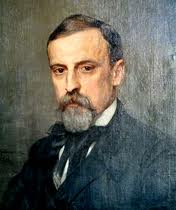
Henryk Sienkiewicz

Bernama lengkap Henryk Adam Aleksander Pius Sienkiewicz, Sienkiewicz (atau dipanggil ‘Litwos’) lahir pada 5 Mei 1846. Beliau adalah seorang jurnalis asal Polandia, sekaligus novelis yang pernah mendapat penghargaan Nobel atas kualitasnya yang luar biasa sebagai penulis epik, yang lalu menjadikannya penulis Polandia paling terkenal antara abad 19 dan 20. Karyanya yang paling dikenal luas adalah Quo Vadis? yang bersetting jaman kekuasaan Nero di Roma. Namun ia juga menulis trilogi fiksi sejarah: With Fire and Sword, The Deluge dan Fire in the Steppe.

Karena kesulitan keuangan, Sienkiewicz bekerja sebagai tutor di usia 19, dan pada saat inilah ia ditengarai menulis novel pertamanya. Tahun 1878 ia pindah ke Eropa, dan di Paris ia mulai ‘bergelut’ dengan aliran naturalism yang saat itu mulai menjadi tren, bahkan memuji-muji aliran itu. Namun belakangan ia justru mengkritik naturalism dengan menulis beberapa buku, di antaranya berjudul Letters About Zola.

Gaston Leroux

6 Mei 1868 adalah hari ketika Gaston Louis Alfred Leroux dilahirkan ke dunia. Di kemudian hari penulis yang kemudian disebut Gaston Leroux ini menjadi salah satu penulis klasik asal Prancis, selain seorang jurnalis. Novelnya yang paling dikenal dunia adalah The Phantom of the Opera yang sudah banyak diadaptasi ke film maupun teater. Selain itu, kebanyakan Leroux menulis novel detektif.

Lahir di Paris, Prancis, Leroux sempat menjalani hidup yang liar berkat warisan yang ia terima, hingga akhirnya ia mengalami kebangkrutan. Ia sempat menjadi reporter pengadilan dan kritikus teater. Salah satu kasus yang ia dalami adalah penyelidikan di Paris Opera. Kontribusi Leroux dalam fiksi detektif Prancis dapat disejajarkan dengan kontribusi Sir Arthur Conan Doyle dalam hal yang sama di Inggris, dan Edgar Allan Poe di Amerika.

Rabindranath Tagore

Rabindranath Tagore dapat dikatakan pelopor perubahan pada literatur dan musik di India. Tagore, yang lahir di Kalkuta pada 7 Mei 1861, merupakan penulis non Eropa pertama yang berhasil meraih penghargaan Nobel Prize in Literature pada tahun 1913. Beliau menulis puisi pertamanya ketika masih berusia 8 tahun!, dan pada usia ke 16 Tagore menerbitkan kumpulan puisinya dengan nama samaran Bhānusiha. Salah satu karyanya yang terkenal adalah The Home and the World (Ghare-Baire), di samping cerita pendek, drama dan novel-novel lainnya.

Untuk mengabadikan karya-karya besar Tagore, pada tahun 2011 Harvard University Press berkolaborasi dengan Visva-Bharati University menerbitkan ‘The Essential Tagore’, antologi Tagore terbesar yang pernah diterjemahkan ke dalam bahasa Inggris, dalam rangka menandai ulang tahun ke 150 Tagore.

L. Frank Baum

15 Mei 1856 adalah tanggal kelahiran seorang penulis buku anak-anak klasik asal Amerika: Lyman Frank Baum, atau yang biasa disebut L. Frank Baum. Kita tentu tak asing dengan The Wonderful Wizard of Oz, kisah fabel anak-anak yang merupakan karya besar Baum. Secara keseluruhan ia telah menulis 55 novel (termasuk 12 sekuel Oz), 82 cerita pendek, lebih dari 200 puisi dan karya-karya lainnya. Dalam karya-karyanya, Baum memprediksi hal-hal yang baru terjadi beberapa abad sesudahnya, seperti televisi, laptop (di The Master Key), wireless phone (di Tik-Tok of Oz), dan lain-lain.

Baum lahir di New York dari keluarga kaya, dan tak pernah suka dengan dama depannya Lyman, ia memilih dipanggil dengan Frank. Waktu anak-anak Baum sakit-sakitan dan suka mengkhayal, membuat orangtuanya mengirim Baum, meski hanya bertahan dua tahun, 2 tahun yang ia lalui dengan sengsara. Baum ingin membuat Wizard of Oz menjadi seterkenal dongeng-dongeng H.C Andersen atau Brothers Grimm, dengan membuatnya lebih up-to-date. Baum juga memiliki kepedulian terhadap penderitaan yang dialami kaum wanita, yang tercermin juga dalam kisah Oz-nya.

Honoré de Balzac

Seorang lagi penulis klasik asal Prancis yang berulangtahun bulan Mei adalah Honoré de Balzac. Ia lahir pada 20 Mei 1799. Balzaz adalah penulis novel dan drama. Karya terbesarnya adalah La Comédie Humaine, sebuah serial novel dengan satu teman yang tediri dari 100 novel, novella dan cerita pendek. Balzac dikenal sebagai salah satu pelopor genre realisme dalam literatur Eropa. Karyanya banyak mempengaruhi penulis besar lainnya seperti Emile Zola, Charles Dickens, Edgar Allan Poe, Fyodor Dostoyevsky, dan masih banyak lagi.

Saat masih sekolah, Balzac yang pemikir independen kesulitan beradaptasi dengan kurikulum sekolahnya sehingga sering dihukum. Namun justru karena sering sendirian saat dihukum itulah ia jadi sering membaca buku. Kelak pengalamannya itu akan tertuang di La Comedie Humaine. Sepanjang hidupnya Balzac didera oleh masalah kesehatan, kemungkinan karena jadwal menulisnya yang terlalu intens.

Hector Malot

Pada tanggal yang sama, 20 Mei tapi di tahun 1830, seorang penulis Prancis lainnya dilahirkan ke dunia. Ialah Hector Malot, yang terkenal dengan karyanya Nobody’s Boy, meski secara keseluruhan ia telah menulis lebih dari 70 novel. Pada awal hidupnya Malot belajar hokum, namun belakangan minatnya berpindah ke literatur.

Nobody’s Boy akhirnya meraih ketenaran sebagai buku anak-anak, meski bukanlah demikian maksud awal sang penulis. Pada tahun 1895 malot mengumumkan bahwa ia pension dari dunia literature, namun ternyata pada 1896 ia kembali menelurkan novelnya yang berjudul L’Amour Dominateur dan The Novel of My Novels yang merupakan kisah kehidupan literatur Malot sendiri.

Sir Arthur Conan Doyle

Siapa yang tak kenal sang penulis kisah detektif legendaries Sherlock Holmes? Ialah Sir Arthur Ignatius Conan Doyle yang lahir di Skotlandia pada 22 Mei 1859 dari ayah dan ibu kelahiran Irlandia. Sejak kecil ia disekolahkan oleh pamannya yang kaya di sekolah-sekolah Katolik. Doyle lalu masuk sekolah kedokteran sambil bekerja di Edinburgh. Selama kuliah, Doyle mulai menulis cerita pendek, dan ‘The Haunted Grange of Goresthorpe’ merupakan yang pertama diterbitkan di sebuah harian. Setelah menyelesaikan kuliah, Doyle bekerja sebagai dokter, dan menjadi ahli bedah di sebuah kapal dalam pelayaran ke Afrika.

Setelah itu, Doyle membuka praktiknya sendiri di Plymouth namun tak terlalu berhasil. Sambil menunggu pasien datang, ia mulai menulis lagi. Novel pertama yang ia selesaikan berjudul The Mystery of Cloomber. Karya-karyanya yang termahsyur seperti A Study in Scarlet, The Sign of the Four, maupun kumpulan cerita pendeknya: The Adventures of Sherlock Holmes, The Memoirs of Sherlock Holmes dsb. sudah diterbitkan di sini oleh PT Gramedia Pustaka Utama. Selain seorang dokter dan penulis, Doyle juga pernah aktif dalam kampanye politik dan penyelidikan terhadap kasus yang dinilainya tidak adil. Doyle meninggalkan warisan berupa tokoh detektifnya yang mempengaruhi banyak tokoh dan kisah detektif setelahnya: Sherlock Holmes, ketika meninggal dunia di usia 71 tahun karena serangan jantung.

T.H. White

Nama lengkap penulis Inggris yang terkenal dengan kisah Arthurian-nya: The Once and Future King ini adalah Terence Hanbury White. Beliau lahir di Bombay (British India) pada 29 Mei 1906, dari ayah yang pemabuk dan ibu yang dingin secara emosional. Mungkin karena itulah, White ditengarai memiliki kecenderungan homoseksual dan sadomasokis. Ketika di bangku kuliah, White menulis tesis tentang Le Morte D’Arthur karya Thomas Malory yang menghantarkannya lulus dengan peringkat pertama untuk mata kuliah Bahasa Inggris.

Setelah itu White sempat mengajar di sekolah dan sempat menggeluti penerbangan—sebagian untuk menaklukkan fobianya terhadap ketinggian. Akhirnya White pun mulai menulis buku yang ia sebut sebagai ‘prekuel dari karya Malory’ yang berjudul The Sword in the Stone (sudah diterbitkan Mahda Books). Dan ketika Perang Dunia pecah, Stone tinggal di Irlandia untuk menulis The Once and Future King. Kelak karya T.H. White mempengaruhi para penulis kisah fantasi seperti J.K. Rowling dan Neil Gaimann.

G.K. Chesterton

Penulis Inggris bernama lengkap Gilbert Keith Chesterton ini lahir pada 29 Mei 1874. Beliau adalah seorang penulis psikologi, ontology, puisi, jurnalisme, kritik dll, termasuk juga fiksi. Karya besarnya antara lain Orthodoxy dan The Everlasting Man, juga The Man Who Was Thursday. Chesterton dikenal sebagai ‘prince of paradox’ karena gaya penulisannya.

Secara personal, Chesterton bisa dibilang unik dengan ukuran tubuhnya yang tinggi besar (yang sering menimbulkan anekdot lucu di antara rekan-rekan sesama penulis). Ia suka mengenakan cape (semacam mantel yang panjang di bagian belakang), topi kusut, tongkat-pedang, dengan sebatang cerutu menggantung dari antara bibirnya. Chesterton sangat pelupa, sering lupa kemana ia akan pergi (harus menelegram istrinya untuk menanyakan ke mana ia harus pergi), dan sering ketinggalan kereta api. Chesterton juga senang berdebat, George Bernard Shaw dan H.G. Wells adalah 2 di antara teman-temannya yang sering diajaknya berdebat.