Wednesday, December 8, 2021

#AdventReading Day-8: The Christmas Mystery - Jacob the 2nd Shepherd


Credit: Flora Waycott


Joachim finally meets John, the flower seller who put the magic Advent calendar in the bookshop, in person! He (John) must have got Joachim's address from the bookseller, when he (the bookseller) returned Joachim's father's driver's license. Joachim tells John about his plan to keep the Advent calendar's magic a secret from his parents, and will wrap all the stories up as a Christmas present on Christmas day. John gives Joachim something to ponder upon when he's taking leave:

"I must go now. But we'll meet again, for that old story links us human beings together."

And how true is it? Don't we read/hear John's (the Baptist, not the flower seller) story again and again, especially during Advent? It's like we are never apart.

Joachim unfolds his 7th piece of paper, and the title read: Jacob. That's the name of the second shepherd, whom the seven travelers meet after they get out of boat at Kolding (a Danish town in the south of Jutland island) in 1499. While passing a countryside, Joshua notices that the lamb with a bell is missing. Of which incident, Joshua laments the difficulty of herding flocks - one sheep is always going astray from the herd, and when you finally gets it, another will be missing. "As it is written, now I must leave the other sheep to look for the one lamb that is missing." - a sentence I'm sure you're all familiar with.


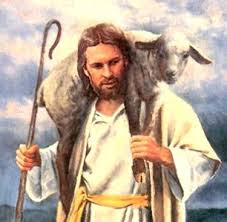
But he needs not to worry, because another shepherd comes approaching them, carrying the missing lamb on his shoulder. Of whom, Ephiriel remarks: "He is one of us" - the same remark he always utters when meeting a new fellow-traveler-to-be. Joachim often wonders how does he know - but again, he's an angel, right?

Today's story ends when the eight of them is about to enter German's frontier in Flensburg, in 1402. Tomorrow we will dive down into the depths of the Middle Ages.


Previous posts:

Day-3
Day 4
Day-5
Day-6 

Tuesday, December 7, 2021

#AdventReading Day-7: The Christmas Mystery - The Fourth Sheep


"But it’s important to be happy about the little you have. However little it is, it’s infinitely more than nothing."

From all the hidden papers which Joachim found each day inside the Advent calendar, the seventh one is the most philosophical. Anyway, when a wise man is among your fellow travelers, what more could you expect, eh?

Here's another one to chew upon:

"In the opinion of the Kings of the Orient, God spoiled humans a bit, because He created far too much at the same time. He created so many strange things to look at that many people don’t see God. [..] If only one fish could be found in the sea, people would probably have noticed how perfect it was. And then they might have started asking who had made it."

That's... well, that's something I would've never thought myself! Connecting it with Day-1 story, all I can think of is diversion. Modern life, with its complexities it offers, diverts our focus away from what God has intended us for. In a way, God is indeed spoiling us, out of His Love - which is greater than ourselves. The effect is, rather than utterly grateful for what He has created for us, we tend to take them for granted


Enough of serious reflection. Let's welcome the new comer: the fourth sheep! Tell me, how many sheep do you think Joshua the shepherd would flock on the day Jesus is born in Betlehem? ;)

The angel-watch now shows that they are now entering the 16th century. The procession runs down towards a sound (a narrow strip of water) called the Little Belt, still in Denmark, over which they are soon rowed by a ferryman.

We leave them safely on the other side of the sound, ready to go "To Betlehem! To Betlehem!", as Joshua always says while striking the ground with his crook, when the others are conversing too long.


Previous posts:

Monday, December 6, 2021

#AdventReading Day-6: The Christmas Mystery - Caspar


When our pilgrim's boat touches the shore of Danish land, who do you think the first come to welcome them? No less than Caspar, King of Nubia - or we've known him from our childhood as one of the Three Wise Men.

He's a nice and humorous gentleman too. Look at what he says to Elisabet:

"...I've been standing here waiting for you for so long that between 1701 and 1691 I had to play ." - can you imagine a king playing hopscotch? :))

It's really a nice way to lecture children about diversity. Caspar is a black king, so when he first came to Denmark, he's the first black man the Danish have ever seen. Feeling unwelcomed, he decided to retreat to 1699.


But, away to Bethlehem! The seven of them leap along through Copenhagen's cobbled street in 1648. Reaching the center of the city, they see a church with a round tower. It's the Round Tower built by King Christian VI, which served as church tower and astronomers' watch-tower - the first telescopes were just being invented at that time. That is also the picture Joachim sees inside door number six of his Advent calendar: a round tower.


Then Caspar says something wise to Elisabet - that there are two ways of learning or becoming wise:

"The best way to study the stars, in the opinion of all Wise Men, is to sit on the back of a camel in the desert. It’s almost like sitting in a tower, but a camel can move from place to place as well, a bit like the castles on a chessboard. The only thing that’s inconvenient for a camel is to go through the eye of a needle."

He's a funny guy, isn't he? :)) 
And that's what we are doing here - the second way of becoming wiser(r) - that is, sitting in... wherever we are reading this story, to contemplate about the real meaning of Christmas. 

And on that reflection, I must end today's post. See you again tomorrow!


Previous posts:

Sunday, December 5, 2021

#AdventReading Day-5: The Christmas Mystery: Third Sheep


Credit: Flora Waycott

Again, Joachim notices something that he's sure was not in the picture the day before when he last looked at his Advent Calendar. The shepherd is now holding a crook in his hand. He feels that every time he looks at the calendar, he discovers something new.

"The picture outside had never been completely finished, but it gradually painted in what was missing as somebody opened the doors and read the scraps of paper."

And that is how little Joachim starts philosophizing:

"Wasn't the whole world a magic picture which added to itself? For the world changed all the time. It was never completely finished."

It can be that Joachim's calendar IS magical - hence the changes - but isn.t it more probable that Joachim sees them differently after he reads the stories? That knowledge makes you see things differently than before.

Lund, the picturesque student town in Sweden

Anyway, the picture revealed inside door no. 5 is... a rowing boat. A new character is added into the quartet: the (third) sheep. The five of them continue on their journey through a beautiful town of Lund, where they stop to admire the big ancient cathedral. The "time" is 1745. And again, Gaarder put something to ponder upon, through the lips of Ephiriel:

"Churches and cathedrals have been built all over the world, and it all started with the Christ-child who was born in Betlehem. It's as if a tiny seed corn is put into the ground and grows into a whole field. The glory of heaven is dispersed very easily." Wow.... what a deep thought in one passage!


Lund's old cathedral

Now, for a bit of history: The great organ in the cathedral is playing such a beautiful melodies that touches Elisabet. Turns out it was composed by none other than Johann Sebastian Bach! But the sheep' bleating and its bell jingling disturbs the priest, who arrogantly drives them out of the cathedral. To which, Ephiriel scolds:

"The pastor should not be dismayed! Rather, he should not forget that Jesus was born in a stable, and that He was called the "Good Shepherd".  - bravo, Ephiriel! 

Then Ephiriel explains the concept of travelling in two (parallel) direction - through time and space, which is not impossible to God. At which words, Elisabet "marvels and hid them in her heart".  

And with that, they are off toward Denmark, on board of a rowing boat. It's already the year 1703.


Previous posts:

- Day-1
- Day-2
- Day-3
- Day-4

Saturday, December 4, 2021

#AdventReading Day-4: The Christmas Mystery: Joshua the Shepherd


Credit: Flora Waycott


The fourth door on the Advent calendar reveals to Joachim a picture of a shepherd. Our four time-travelers: Elisabet, Ephiriel the angel, lamb, and sheep is now in Sweden, 1891. They are walking along the side of River Göta, and soon reach a field. Three they meet a shepherd "wearing a blue tunic and holding a tall staff curved at the top", called Joshua. Turns out he will be coming along to Betlehem with them.


River Göta


Then Elisabet gets a bright idea. Since she hasn't been able to stroke the lamb's soft fleece since the journey began, she asks Joshua, he being a shepherd, to herd the lamb to her direction. And Joshua's reply is: "That's not difficult for a good shepherd." - do you see it again, how Gaarder managed to slip bits of bible reference (and history/geography) in every chapter? What a way of educating young people with an engaging story! 

Ephiriel also mentions about a Sigurd Jorsalfar - King of Norway - whose real name is Sigurd I Magnusson, but he was given the name Jorsalfar due to his pilgrimage to the Holy Land (Jorsalfar means "the pilgrimage to Jerusalem").

Their journey on this fourth day ends in Gothenburg, the second largest city of Sweden, in 1816.


Gothenburg - today


The missing driver's license is finally found! Joachim's father left it at the book store (where they bought the Advent calendar), and the kind bookseller returned it to Joachim's. Is that it? Hmm... knowing Gaarder, I suspect it's not the end.

But that's it for today, see you tomorrow, with more interesting bits to learn/reflect!


Previous posts:

- Day-1
- Day-2
- Day-3

Friday, December 3, 2021

#AdventReading Day-3: The Christmas Mystery: Sheep


Credit: Flora Waycott

The third door on Joachim's Magic Advent Calendar reveals a vintage car. What? But's it's not a Christmassy stuff? So thinks Joachim, but after reading the hidden story that falls down his bed, he gets eventually what it's about. 

Elisabet and Ephiriel, the angel, is still running after the lamb. A man is driving past them in a vintage car. Ephiriel then explains that they are actually travelling backward in time, to the past. Their destination is indeed Betlehem, but right on the day Christ was born, two thousand years ago

"We are running to Betlehem through time, going downhill through history on a diagonal line. It's like running before the wind, or rushing down a moving staircase."


That really corresponds with what Elisabet has experienced previously: time moved backward on Day-1 and winter changed to summer on Day-2. They are in the year 1916, but later on when they reach Sweden, Ephiriel's watch (angel watch) shows the year as 1905. I can't wait when they enter the 19th century, because Gaarder managed to slip one or two pieces of history we can learn along the way. It gets more interesting every chapter, eh?

There's something inspiring in what the angel said about what they are going to do in Betlehem:
"....and we'll also welcome the baby Jesus into the world. He was called God's lamb, because He was just as kind and innocent as the little lamb's fleece is soft." It's what Advent should be, right? Time to retreat and reflect. The lambkin - the petit version of God - is guiding us to find kindness and love. 

Then, a new character appears: a sheep. So now all the four of them are keep running through time and space toward the real Christmas. 

Meanwhile, that driver's license of Joachim's Papa is still missing. I wonder where it will be found... in this universe or another?

Interesting quote:
"Joachim was old enough to know that you can't really ruin backwards in time, but at least you can do it in your thoughts." - and that is just what I am doing right now... in my thought I am journeying to Betlehem to witness the first Christmas.


Previous Posts:
- Day-1
- Day-2

Thursday, December 2, 2021

2022 Reading Plan


2022 is around the corner, it's time to create a more ambitious new reading plan. I divide mine into three sections, and I also include some non-classics:

  • By Month/Events - I love to read certain genre/author in certain month, don't you?
  • By Category 
  • By Author - in line with my Author Challenge, and because certain authors need to be read every few years.


📚 BY MONTH/EVENTS 


JANUARY

1. 
The Tale of Genji by Murashaki Shikibu - READ

Since I'm going to read Tale of Genji for Non English category, I guess I might as well joining The Japanese Literature Challenge #15 hosted by Dolce Bellezza.


FEBRUARY

2. Martin Chuzzlewit by Charles Dickens - READ

You are welcomed to join me in my yearly #DickensInFebruary to celebrate his birthday. This time it will be Martin Chuzzlewit. Same as last year, I will create a time frame, and will post weekly about what I've been reading. Please let me know if you're interested to join, then I will make it an official #ChuzzlewitReadalong. Otherwise, I'll be reading (and blogging) silently. :)


MARCH

3. Orang-Orang Bloomington (People from Bloomington) by Budi Dharma - #BuddyRead2022 - READ

Starting 2022 I will read at least one Indonesian book every year. I freely admit that there aren't many Indonesian books which fit my taste, but I think I need to give my fellow countrymen/women a chance. And it would be a good opportunity too to inspire my non-Indonesian friends to read more Indonesian literature. I have added a "Indonesian Literature" category on the sidebar for this purpose.

For 2022 I've picked Orang-Orang Bloomington (a short stories collection), because Penguin Classics will publish the translation in April 2022; so if you feel like trying it after reading my review, you can buy the copy right away. :) It would be a #BuddyRead with my fellow Indonesian book bloggers: Melisa and Ratih.


APRIL

4. For a Night of Love by Émile Zola - #Zoladdiction2022 - READ

Of course there will be another #Zoladdiction - the 9th - coming! I have abandoned my #RougonMacquart project for nearly a year, so it's time to be back! And I'll be reading one of the most mind blowing works from Zola: L'Assommoir. I also plan to read one of two Zola's short stories collections in my TBR pile: The Attack on the Mill  For a Night of Love. Official announcement will be published around end of February or early March.


MAY

5. A Lost Lady by Willa Cather - #CatherInMay - READ

I've been maintaining a new habit these last few years - of reading Cather in May. Maybe I should create new hashtag #CatherInMay ? Hmm.... Anyway, I think it's a good idea - reading Cather in May, I mean - because after Zola in April, I would need something peaceful and soothing in May. :) Now, who wants to join me? ;)


JUNE

6.  Flappers and Philosophers by F. Scott Fitzgerald - #JazzAgeJune - READ

I didn't realized until now that I've set to read THREE short stories collection, despite of my reluctance to read this type of fiction. But, it might be a good thing, to get me to love it more. Anyway, JUNE is my month for #JazzAge reading, and for some years in future, I intend to read more from Fitzgerald.

P.S. You are also welcomed to join me if you want - doesn't need to be Fitzgerald; any #JazzAge lit will do. Or are you interested in co-hosting an event with me? Let me know!


JULY

7. My Good Life in France by Janine Marsh - #ParisInJuly - READ
8. The Girl, the Dog, and the Writer in Provence by Katrina Nannestad - #ParisInJuly - READ
9. My Four Seasons in France by Janine Marsh - #ParisInJuly - READ
10. Toujours La France by Janine Marsh - #ParisInJuly - READ


OCTOBER

11. My Cousin Rachel by Daphne du Maurier - #RIP - READ

I think it's time to read another du Maurier's. I've read Rebecca few years ago, and loved it! 


DECEMBER

12. Hercule Poirot's Christmas by Agatha Christie
13. A Very French Christmas: The Greatest French Holiday Stories of All Time

I might also re-read some Christmas-y short stories/novellas from Dickens, and/or other Christmas books I'll find along the way :).


📚 BY CATEGORY

      RE-READ: Moby Dick by Herman Melville X
14. PLAY: The Seagull by Anton Chekhov - READ
15. CHILDREN: A Bear Called Paddington by Michael Bond - READ
16. 18th CENTURY: Evelina by Frances Burney - READ
17. 19th CENTURY: Elizabeth and Her German Garden by Elizabeth von Arnim - READ
18. 20th CENTURY: The Lark by E. Nesbit - READ
19. NON CLASSIC: Mrs. Osmond by John Banville - READ
20. NON FICTION: 84, Charing Cross Road by Helene Hanff - READ


📚 BY AUTHOR

HARDY/TROLLOPE: Barchester Towers - X
21. EDITH WHARTON: The Customs of the Country - READ
22. AGATHA CHRISTIE:   - Appointment with Death  - READ
23.                                        - Murder is Easy - READ
24.                                        - And Then There Were None - READ
25.                                        - Hallowe'en Party - READ
26.                                        - One, Two, Buckle My Shoe - READ
 

                                                       📚 FREEBIES

27. The Thursday Murder Club by Richard Osman - READ
28. The Girl, the Dog, and the Writer in Rome by Katrina Nannestad - READ
29. The Knight of Maison-Rouge by Alexandre Dumas - READ
30. Jane and the Twelve Days of Christmas
31. The Christmas Hirelings by Mary Elizabeth Braddon
32. Miracle on 34th Street