Wednesday, October 25, 2023

The Cornwall Sabbatical (2023) by Jonathan E. Cox: A Non Fiction


Thanks to The Book Guild and NetGalley for providing me review copy of this book in exchange for an honest review.


πŸ”Ά️ Subtitled as 'Observations Through a Returning Pirate's Kaleidoscope', this is the debut book of Jonathan E. Cox, former journalist who returned to his mother land of Penzance, Cornwall, to study for a postgraduate writing degree at Falmouth University.

πŸ”Ά️ Jonathan Edward Cox left Cornwall in his teens, and for thirty years he built a career in journalism and financial analyst abroad. Then, Covid-19 came, and, like for most of us, changed the direction of his life. As he returned to Cornwall with his Swiss wife, Cox realized that Cornwall had taken a huge change, some to the better, but some not so welcomed. This book chronicled his new view of his beloved changing Cornwall.

πŸ”Ά️ The book opens with his first day at the university. It's a pity, that Cox doesn't explore more on this subject. I would have loved to get more glimpses - only tiny glimpses - of the university life. Cox mostly explores places - cities, villages, landmarks, beaches. During these travels, he reminisces his childhood, what the place had used to be, what it had meant to him, and how it becomes today. And with that, he would present some history and statistics on related subjects. I have nothing to complain about the travels - those are what I picked this book to read for, to get into places I've never been before, to breath in the atmosphere - but I would be more pleasant with less statistics; I never like statistics. One or two is okay, it is a non fiction anyway, but this book has too many for my taste.

πŸ”Ά️ What I cherished most is the local folklore stuff like The Hal-an-Tow during Flora Day, a festive event in Helston. Flora Day is a spring festival to celebrate the end of winter and mark the arrival of the new vitality and fertility with the trees and flowers bursting into life. [helstinfloraday.org.uk] Tradition has it that early on Flora Day morning, youths go to the neighbouring woods to collect branches of sycamore. On their return, they are joined by other young people, dressed to represent the characters in the Hal-an-Tow song. [helstonhistory.co.uk] I think it was the culminating moment of Cox's growing emotional re-attachment to Cornwall and his mother land. His two daughters visited Helston for this particular event, and it was an heartwarming family moment for them.

πŸ”Ά️ Second of my favorites is when Cox explaining about some landmarks which have literary significance. Godrevy Lighthouse, for instance, was Virginia Woolf's inspiration behind To the Lighthouse. In Landewednack village, there is a cottage called The Mariners', whose window is the inspiration of E.M Forster's A Room with a View. And in Bolventor, we get the legendary Jamaica Inn, on which Daphne du Maurier had titled her book published in 1936. 

πŸ”Ά️ All things considered, this was quite an exciting book to get to know Cornwall. Cox wrote it straightforwardly with some dry, sometimes wry, witty humor. You'll feel quite refreshed by the sea breezes after finishing the book. And if you plan to have a Cornish holiday, this book is the perfect guide for you, especially to warn you about the seagulls. What about seagulls? Well, you need to read the book to get at it, hint: they are quite funny! ;)


Rating: 3,5 / 5


**The Cornwall Sabbatical: Observations Through a Returning Pirate's Kaleidoscope was published on 28th September 2023.

Monday, October 23, 2023

Murder in Williamstown (2022) by Kerry Greenwood #AusReadingMonth


🧧 The Honorable Phryne Fisher is the most famous Australian female private detective. Live in St. Kilda, Melbourne in the 1920-1930s, she enjoys her aristocratic status, though never forgets her humble origin. In her 22nd case, Miss Fisher is assisted by her devoted assistant Dot, and her three adopted children: the twins Ruth and Jane, and Tinker. These three young persons have been taught by their adoptive mother to be a good detective.

🧧 The story begins with two separate mysterious occurrences. Threatening cards which have been found in Phryne Fisher's mailbox is one. The other is embezzlement of fund at the Blind Institute, where Ruth and Jane is volunteering. Then Phryne finds the murdered body of a Chinese man when she's taking a walk with her newest lover, Jeffry Bisset. I've kept wondering how these three would be made connected?

🧧 Meanwhile, at the end of each chapter, we follow the fate of two girls - one of them called Peony - separated from the main events. From the snippets of their dialogues, we could feel that they are in misery. But of what kind, we are kept in the dark. Perhaps this would be the binding element of the whole mystery? Peony is a common name for Chinese girls, right? Chinese girls in misery, a Chinese man murdered, there's something in it, surely.

🧧 Phryne's friend and former lover Lin Chung's secret reticent is also mysterious. Is there something fishy going on within the Chinese community in Melbourne, then? The climax comes at a party held by a prominent Chinese man called Hong, to which, Phryne and Jeffry Bisset are invited. Hong is killed at his own party. Phryne tries to catch the runaway murderer, but she is detained by several Chinese men.

🧧 This was my first Phryne Fisher mystery, and I had been excited to find another promising series of cozy mystery. I regret to say, though, that it wasn't as good as I've expected. I am a fan of Masterchef Australia, and this story reminds me of what Melissa Leong, one of the judges, used to say when she tastes a dish, where every single element is good by itself, but not that good when eaten as a whole; the dish lacks 'cohesiveness'. And that's what this story is lacking, cohesiveness. The case of embezzlement at Blind Institute and threatening letters turn out to be just detecting exercises for Tinker and the twins, respectively. Phryne works the deduction and solves the mysteries long before the climax of the main case begins. And that two cases don't have any connection whatsoever with the murder after all. That is so disappointing!

🧧 The murder itself is lacking complexity, Phryne does a minimum work of detection, there's not much of suspects, and all happen too quickly. The solution is disappointing too. When we reach near the end, there's a party held by Phryne, with everyone involved are invited, that feels like  deflating balloon.

🧧 My favorite element of this book, however, is the narration. I listened to the audiobook, narrated perfectly by Wendy Bos, a Melbourne based actor and voice over artist. After hours of watching Masterchef Australia, I've got to love Australian accent. And Wendy is everything that I expect in a narrator. I would like to try another Phryne Fisher, as long as it's narrated by Wendy Bos, who knows, it might be better than this one!

Rating: 4 / 5

I read this book for:


Friday, October 20, 2023

The Weather at Tregulla (1962) by Stella Gibbons #1962Club


πŸ’™ First published in 1962, The Weather at Tregulla is a charming book penned by Stella Gibbons, telling the story of Tregulla, a quiet little seaside town in Cornwall, and how the place influences its inhabitants' fate.

πŸ’™ Una Beaumont has lived in Tregulla since she was born nineteen years ago. She desperately wanted to leave the dull, stagnant town, and pursue her dream to be actress in London. But, alas, when the time of departure is approaching, her mother died; and with her, the inheritance money her parents had allocated for her, vanished. Una's hope is dashed, and now she might never leave Tregulla and its unchanged people, whom she had known since she was born.

πŸ’™ Enter Terrence and Emmeline Willows, who rent a cottage owned by the Trewyns, Barnabas and Hugo - Una's childhood friends - and their mother. The Willowses are brother and sister who live in Bohemian style. Terrence is a selfish moody painter, while Emmeline, an eccentric girl. Una is immediately infatuated with Terrence; more, I think, because she saw her chance of leaving her dull life in him, than actually attracted to him.

πŸ’™ As the story progressed, I could see what kind of person Terrence is - his carefree way of life, his dubious friends, his selfishness. Like most talented artists, he cares only about his paintings. Nothing is more precious than that. I was worried all along about Una. She isn't the kind of girl I would have befriended - she is a bit into herself. All she cares about is her needs; she doesn't even care about her grieving father. Still, Una doesn't deserve a man like Terrence. He will make her unhappy.

πŸ’™ Hugo Trewyn, the brooding younger brother, is also in love with Una. He never shows his feelings; I think he feels insecure about his deformity; that he's incapable of making the high-spirited Una happy. Una, of course, never treats him other than a childhood friend. If only her father isn't that apathetic concerning his daughter. I understand Mr. Beaumont's grief, but if he loves his daughter, he must have tried harder to step up from his cocoon and provide her more guidance.

πŸ’™ The other Willows, Emmeline, is falling in love with Barnabas Trewyn, which he reciprocates. However, unlike Una, he notices Emmeline’s eccentricities, her bohemian way of life, and her circle of friends. Emmeline herself is trying to break free from her brother, and to get more respectable life as young Mrs. Trewyns. But she's just a woman. Everything depends on Barnabas. If he proposes to her, her dream will come true. Her only chance is Barnabas. And Barnabas has doubts.

πŸ’™ This book might seem like an ordinary romance story, but it's much more than that. First and foremost, there's the helplessness of our female characters to pursue their dreams. As women, both Emmeline and Una, are depended on their relatives. Other people direct their fates, their lives. They can't choose for themselves. The only way to freedom is by marriage. But apparently, love, hardwork, and talent only aren't enough to secure a woman's happiness. Dozens external influences play the biggest part. And in this sense, 1960s wasn't much different than in the 19th century.

πŸ’™ What I loved most about this book is Tregulla itself. I am no fan of seaside town, but Gibbons portrayed Tregulla vividly and charmingly, that I really wanted to, at least, visit it. The numerous different events that lead to our heroines' fates are intricately woven amidst the changing landscape or weather of Tregulla. Una might feel Tregulla lifeless, but I think it's just because she has never experience living outside it, and so, cannot fully appreciate its beauty.

πŸ’™ All in all, it's a wonderful book, beautifully written by Stella Gibbons. Another satisfying read, made available again, thanks to Dean Street Press. And who wouldn't want to read the inside of that gorgeous cover?!

Rating: 4,5 / 5

This book counts for:


Wednesday, October 18, 2023

The Holiday at the Dew Drop Inn (1962) by Eve Garnett #1962Club


πŸ’ Holiday at the Dew Drop Inn is actually the third and last book of the One End Street series by Eve Garnett. I found it accidentally while searching for books to read for the #1962Club. It contains some references of the adventures in the first two books, but it doesn't hinder us to enjoy this book as a standalone.

πŸ’ The story is about Kate Ruggles, the second of seven children of Mr and Mrs. Ruggles. The Ruggleses is a working class family who live in No. 1 One End Street in Kent. Mrs. Ruggles is a washerwoman, while Mr. Ruggles, a dustman. Despite living in poverty, they are comparatively a happy, kind, and loving family.

πŸ’ The story opens with an invitation for Kate to spend another summer holiday at the Dew Drop Inn, in the fictional country village of Upper Cassington. She had gone there the year before with her twin younger brothers, but now she's going alone. Preparations are made for the journey, including a brand new macintosh and a pair of boots, presents from Mrs. Beasley - a customer of Mrs. Ruggles. Kate never owns a shiny mackintosh before - being poor, her things are usually leftover from her older sister - and she, therefore, is very proud of these presents.

πŸ’ Upper Cassington is a quintessential country village, and it's people are mostly simple and kind. The Dew Drop Inn is owned by Mr and Mrs. Wildgoose, who adores Kate. Kate arrives at the right moment too, only ten days before the Flower Show - an annual competition held for Lower and Upper Cassington, the Concert, and the Fair, begin. She is tasked by Mr. Wildgoose to enter all categories in competition for children, and also to participate in the Concert by reciting something. This naturally alarms Kate very much, but Mr. Wildgoose ensures her that they will work some of the competitions out together, while she can count on her old friend Mr. Shakespeare to help her in the flower growing category.

πŸ’ And so, Kate's days are full of excitement from working, learning, and training. But it's not all hardworking, she's having fun too in learning new things. Few adventures during the preparation also add charm to this visit. But the best part of this holiday are, first, the fair and concert, then, her father and the twin's arrival to spend the holiday with her! Though the end of summer comes too soon, she leaves Dew Drop Inn with a swelling heart - full of happy reminiscences to enlighten the next dreary months to come.

πŸ’ I love everything about this book, the flowers, the baking stuffs, every entry of the competition, and the fair, which cheer everybody up! But most of all, I loved the people - none of them are condescending towards a poor girl like Kate. Not even the handsome Lord Glenheather, he's so sweet and gentlemanly towards Kate - he never treats her like a child. Mr and Mrs. Wildgoose are a kind couple. I loved the way Mr. Wildgoose treated Mr. Ruggles like a pal, despite their different background.

πŸ’ Some readers might think Kate is too good to be true as a character, and perhaps this story seems unrealistic, because there are too much good things, and all. But I still love it. In the world where we are confronted with ugly things every day, this kind of story is a perfect counterbalance to make us feel warm and contented, even for just a few days. Needless to say, I would often revisit this story in future.

Rating: 4,5 / 5

This book counts for:


Monday, October 16, 2023

Cover Her Face (1962) by P.D. James #1962Club


πŸ”Έ️ First published in 1962, Cover Her Face was P.D. James' debut crime novel, introducing Inspector Adam Dalgleish, who would appear in 13 of other novels in the series. In this first case, he investigates the murder of Sally Jupp, a house maid at Martingale, who was strangled in her bed.

πŸ”Έ️ Sally Jupp was recommended by the local St. Mary's refuge, an institution for unmarried mothers, to stay, with her infant son Jimmy, and work at Martingale, the manor house of the Maxies. The family consists of Eleanor Maxie, the matron, with severely ill husband Simon; the son, Dr. Stephen Maxie; and his sister Deborah Riscoe. Martha, a devoted servant, is another member of the household. On that fatal day, two guests are also staying: Catherine Bowers who dreams of marrying Stephen, and Felix Hearn, former lover of Deborah.

πŸ”Έ️ Sally is ambitious, secretive, and insolent woman. With those qualities, she like to take power over others. At a fΓͺte, held at Martingale, Sally deliberately copied Deborah's outfit, and later at night she took Deborah's mug to drink her cocoa. But what astonished the family most was when, at dinner, she amusedly announced that Stephen has proposed to her – which was true.

πŸ”Έ️ That night someone put sleeping pills into her cocoa, and strangled her to death. Who killed her? Are they from the family, or was it an outsider's job? What's the motive? Jealousy? Blackmail? Or it has something to do with her past?

πŸ”Έ️ As a debut novel, this is not bad, but I wasn't overly impressed either. There are too many characters involved for my taste, which only made this quite simple a case became more complicated. The solution was clever and believable, though I still didn't understand why the fake incident should have staged at all. I could make assumptions, but it seemed foolish, and I think didn't fit the perpetrator's personality. Dalgleish's investigation and deduction wasn't highlighted enough, we didn't know what's going on most of the time, and he only revealed everything in the end. And I didn't know what's the use of including a subordinate who didn't add anything to the story. Like I said before: too many useless characters.

πŸ”Έ️ All considered, I don't think I would continue the series. Perhaps I am just more comfortable with the earlier Golden Age writers, or the modern ones, not the in-betweens. Not a satisfying read, but quite enjoyable. I enjoyed this story by listening to the audiobook, narrated wonderfully by Daniel Weyman. I liked his deep voice and distinct articulation.

Rating: 3,5 / 5

This book counts for:


For Bingo Card: Death by Strangulation

Friday, October 13, 2023

Blogger-Inspired Wishlist Ep. 9: Eight Books from Six Remarkable Ladies


Blogger-Inspired Wishlist is a feature where I post recent additions to my wish list, which had been inspired by reviews from my fellow bloggers. It includes some synopsis, as well as some excerpts of the review which have intrigued me, complete with a link to the blogger's original post.

In this episode, six ladies has inspired me to add eight new books to my wish list!

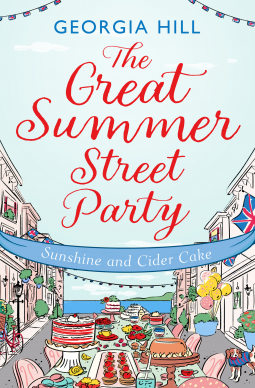
The Great Summer Street Party by Georgia Hill


Synopsis:
Ashley Lyddon arrives in the quaint coastal community of Berecombe feeling more than a little lost. The former art teacher desperately needs a fresh start after a car accident that cost her everything. How is it that the town’s older residents seem to have more zest for life than she does?
Ashley knows all too well, like the D-Day soldiers, that laying the past to rest is easier said than done although her new community seems to believe that tea and cake – lots and lots of cake – solves most of life’s problems. And as Ashley is forced to admit, they are nearly always right…

From Liz's review:
"So nicely done and very readable, with a good moral grounding (we face up to our issues, we make amends) and although some of the plot points are a little predictable, they’re lovely comfy reads you can feel safe with."


The Narrowboat Summer by Anne Youngson


Synopsis:
Meet Eve, who has left her thirty-year career to become a Free Spirit; Sally, who has waved goodbye to her indifferent husband and two grown-up children; and Anastasia, a defiantly independent narrowboat-dweller, who is suddenly landlocked and vulnerable.
Before they quite know what they’ve done, Sally and Eve agree to drive Anastasia’s narrowboat on a journey through the canals of England, as she awaits a life-saving operation. As they glide gently – and not so gently – through the countryside, the eccentricities and challenges of narrowboat life draw them inexorably together, and a tender and unforgettable story unfolds. At summer’s end, all three women must decide whether to return to the lives they left behind, or forge a new path forward.


Claudine by Marian Grudko and T.A. Young
Inspired by Emma @ Words and Peace 


Synopsis:
Claudine is the story of a ladybug who wanted more than anything to live in Paris. Surely, she belonged there: her red and black ensemble was equal to any creation from the House of Dior. And surely she would be noticed by the greatest directors of film?
She sets out with naive certainty to live an enchanted life, when - of course, there are surprises. And terrible challenges. Can Claudine find the strength of soul to achieve her destiny? Will she really be helped by Pierre, a sometime-rooster who quotes Simone de Beauvoir?

From Emma's review:
"The book seems at first glance to be for children, but as the title highlights, this is actually a fairy tale for grownups – who may still need a few life lessons! It’s a really deep and fun book at the same time, with lots of hilarious remarks on the Paris world, cafΓ©s, Fashion Week, and many other things. There are also lots of plays on words, fun interjections, some in French, and several references to Simone de Beauvoir!"


Uncle Paul by Celia Fremlin
Inspired by @ JacquiWine's Journal 


Synopsis:
Meg and Isabel were just girls when "Uncle Paul" married their older half-sister, Mildred, and he soon vanished from their lives upon his exposure as a bigamist and a murderer. Fifteen years later, Uncle Paul is about to be released from prison, and all three sisters are seized with dread at the prospect of his return. Their family holiday at the seaside village where Mildred and Uncle Paul once honeymooned becomes the setting for a tense drama of suspicion, betrayal, and revenge.

From JacquiWine's review:
"Fremlin is wonderfully adept at capturing the challenges of holidaying in the temperamental British summer, from the tension of being cooped up in a caravan with family members, to squabbles over what to do next, to the sense of pressure we feel to be outside enjoying ourselves at every moment, even if the weather is dreadful and all we want to do is to stay inside. There’s some marvellous humour here too, especially from the interactions between the various guests at the hotel, from the gallant Captain Cockerill to the stoic Mrs Forrester and her young son, Cedric – one of those insufferable little boys who knows everything and insists on getting his own way. In summary, Uncle Paul is an utterly brilliant novel, a very clever and skilfully executed exploration of fear and suspicion, very much in the style of Patricia Highsmith’s and Shirley Jackson’s domestic noirs laced with the social comedy of Barbara Pym."


Duncton Wood by William Horwood
Inspired by Mallika @ Literary Potpourri 


Synopsis:
Bracken was born on an April night in a warm dark burrow deep in the historic system of Duncton Wood, six moleyears after Rebecca. This is the story of their love, and their epic struggle to find it.

From Mallika's post:
"A lovely emotional tale around a group of moles whose peaceful world is destroyed when a mole named Mandrake begins to tyrannize over them, the whole wood starting to see the spread of evil and the abandonment of all that was once held sacred. A mole named Bracken must with others work to save their land and traditions and restore it to what it once was."


The Queue by Alexandra Heminsley


Synopsis:
Three strangers. Ten miles. One life-changing day... As the unlikely trio wind along the Thames, edging ever closer to Westminster and the Queen, it becomes clear that when they finally leave the queue their worlds will never be the same again...

From Liz's review:
"It’s really nicely done, not preachy or too obvious – of course there are themes of it being best to talk about things and that what seems on the surface like a good thing often isn’t, but there are subtler themes, too, about colonialism and Clause 28 that are woven in. I also liked the way the public art works along the walk are discussed in quite a lot of detail. By the end you hope the queuers will stay in touch and cherish the photo they have of each other."


The People on Platform 5 by Clare Pooley
Inspired by Cath @ Read-warbler


Synopsis:
Every day at 8:05, Iona Iverson boards the train to go to work. Every day, she sees the same people and makes assumptions about them, even giving them nicknames. But they never speak. Obviously.
Then, one morning, Smart-but-Sexist Surbiton chokes on a grape right in front of Iona. Probably-a-Psychopath-New-Malden steps up to help and saves his life, and this one event sparks a chain reaction.
With nothing in common but their commute, an eclectic group of people learn that their assumptions about each other don't match reality. But when Iona's life begins to fall apart, will her new friends be there when she needs them most?

From Cath's post:
"I enjoyed this immensely. It's well written and I felt very involved in the lives of all of the characters. Nice one."


Remarkably Bright Creatures by Shelby Van Pelt
Inspired by Cath @ Read-warbler 


Synopsis:
After Tova Sullivan's husband died, she began working the night shift at the Sowell Bay Aquarium, mopping floors and tidying up. Keeping busy has always helped her cope, which she's been doing since her eighteen-year-old son, Erik, mysteriously vanished on a boat in Puget Sound over thirty years ago.
Tova becomes acquainted with curmudgeonly Marcellus, a giant Pacific octopus living at the aquarium. Marcellus knows more than anyone can imagine but wouldn't dream of lifting one of his eight arms for his human captors--until he forms a remarkable friendship with Tova.

From Cath's review:
"I like books with older protagonists and lots of ordinary folk in them and this book has a nice interesting cast of characters. My favourite by far was Marcellus the octopus and I loved the chapters penned by him. There was a lovely sense of a faded resort on Puget Sound and thus a good sense of place... it sounded wonderful to me anyway! An excellent read, lived up to its hype."


Have you own/read these books? If you haven't, which book appeals to you most?


Thursday, October 12, 2023

The Classics Club Spin (CC Spin) # 35


Yay… it’s time for the last Classics Club Spin of this year. I’ve been abandoning my Classics Club reading for a while, so it’s time to shake it off a bit!

It’s easy. At your blog, before next Sunday 15th October, 2023 create a post that lists twenty books of your choice that remain “to be read” on your Classics Club list. This is your Spin List. You have to read one of these twenty books by the end of the spin period. On Sunday 15th, October we’ll post a number from 1 through 20. The challenge is to read whatever book falls under that number on your Spin List by the 3rd December, 2023.

Since I am too lazy to choose twenty, here’s my list of ten titles, doubled, to make twenty:

UPDATE - no. 2 is chosen, and I'll be reading:
  1. Right Ho, Jeeves by P.G. Wodehouse
  2. The Foolish Gentlewoman by Margery Sharp
  3. Vittoria Cottage by D.E. Stevenson
  4. The Duchess of Bloomsbury Street by Helene Hanff
  5. Cranford by Elizabeth Gaskell
  6. Queen Lucia by E.F. Benson
  7. The Country of the Pointed Firs by Sarah Orne Jewett
  8. Village School by Miss Read
  9. Three Men in A Boat by Jerome K. Jerome
  10. The Enchanted Barn by Grace Livingston Hill
  11. Right Ho, Jeeves by P.G. Wodehouse
  12. The Foolish Gentlewoman by Margery Sharp
  13. Vittoria Cottage by D.E. Stevenson
  14. The Duchess of Bloomsbury Street by Helene Hanff
  15. Cranford by Elizabeth Gaskell
  16. Queen Lucia by E.F. Benson
  17. The Country of the Pointed Firs by Sarah Orne Jewett
  18. Village School by Miss Read
  19. Three Men in A Boat by Jerome K. Jerome
  20. The Enchanted Barn by Grace Livingston Hill

I don’t have any preference, though if numbers 2,3,12,13 were to be picked, I’d also be reading them for Dean Street December. Have you read them? Spotted any favorites?