Monday, August 19, 2024

Sparkling Cyanide (1945) by Agatha Christie: A Re-read


🍸 Rosemary Barton has been dead for a year now. Yet, the six people, who gathered around the table at Luxembourg Restaurant to celebrate her birthday when she suddenly collapsed and died, could not forget her still. The coroner's verdict was that she had put the cyanide into her glass by herself, a suicide due to post-flu depression.

🍸 But was it really suicide? Or was it murder, as was hinted in the anonymous letter received by Rosemary's husband George Barton? If so, who, among the six people, was the murderer? Was it the husband himself, out of his rage of Rosemary's love affair? Her little sister Iris, to gain a large inheritance? Or was it Rosemary's male friends, Anthony or Steven - which one was her lover? Maybe it's George's secretary, Ruth, who loved George? Or Sandra, Phillip's wife - did she know of her husband's infidelity? Whoever it was, all six had strong motive to murder Rosemary.

🍸 Agatha Christie had done it again! Sparkling Cyanide (first published in the US in 1945 as Remembered Death) is everything we love in Golden Age detective fiction, especially in Agatha Christie's. Rosemary's character is an important key on this murder case. She was a self-centered, shallow-minded woman who knows how to ensnare men into her net. She reminded me a little of Rebecca de Winter (in Daphne du Maurier's Rebecca). Not the exact personalities, but her power over others that makes her loved and hated at the same time, and how her influence grips the others, that her name evokes some emotions in their selves, long after she died - it felt like she's always present, just like with Rebecca.

🍸 Colonel Race's involvement is pretty small here. He was invited to the second birthday party at Luxembourg - this time for Iris' birthday, but George Barton used it to decoy the murderer by a scenario which he refused to reveal to anyone, which of course would alarm the murderer. Would he succeeded? Or would he be the second murder victim? Quite a proper murder mystery, eh?

Rating: ⭐⭐⭐⭐1/2

Read for:

hosted by Cathy @ 746 Books


Friday, August 16, 2024

Mini Reviews for #AgathaChristieSS24: August


The Gate of Baghdad

Parker Pyne is on holiday in the Middle East. During a long motor trip journey from Damascus to Baghdad, just when everyone is sleeping of boredom, one of the passengers, a Captain Smethurst is found dead, stabbed at the back of his neck. This time Parker Pine must use his brain, not to solve a romantic or household affair, but a murder! Luckily he has a useful habit of listening to people's talk, that it helps him this time to point out the murderer. A simple, clever, and amusing mystery.


The Man Who Was No. 16

Tommy and Tuppence are helping Inspector Carter to catch the great Russian spy, the number 16. Tommy shines in this case, after borrowing Poirot's famous method of using his grey cells, to locate the villain and releases Tuppence. A good story involving disguises, some actions, red herring, and some clever and hilarious scenes. I loved the smart conversation between No. 16 and Tommy, using a lot of the number sixteen as the password. If you haven't realized yet, I also purposely posted this mini review on the 16th! I think this is going to be my favorite from Tommy & Tuppence stories - clever, witty, with perfect proportions of actions, mysteries, and humour. And it's nice too that once and a while Tommy shines over Tuppence - though in this case she was powerless to do anything, but still.... Finally, Tommy could be the Poirot of Tuppence's Hastings! :D

Wednesday, August 14, 2024

Summer Vibes Book Tag


I found this fun book tag somewhere (sorry, couldn't really remember which book blog), but it's originally created by Deanna @ The Comfy Reader.

The rules:
  • Mention the creator and link back to the original post! (Deanna @ The Comfy Reader)
  • Thank the blogger who tagged you (I tagged myself, LOL!)
  • Answer all the prompts below however you see fit.
  • Tag some friends!
  • Feel free to use the graphics.

You can click the link on the titles to read my reviews. Now let's play!


Treasure Island by Robert Louis Stevenson


Song of the Lark by Willa Cather


The Stone of Chastity by Margery Sharp


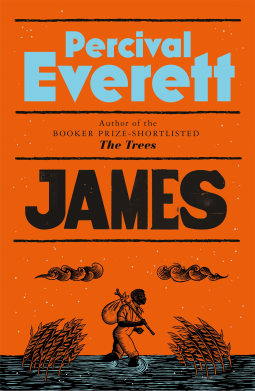
James by Percival Everett


Dear Paris: The Paris Letters Collection by Janice MacLeod

Paris is always my guilty pleasure!


Perestroika in Paris by Jane Smiley

A weird friendship of a horse, a dog, a raven, and a human child - but it's what a true friendship is supposed to be!


Vintage 1954 by Antoine Laurain

What an adventure it was to time-travel to the Paris of 1954!


Murder on the Menu by Alex Coombs 


The Fair Miss Fortune by D.E. Stevenson 


The Weather at Tregulla by Stella Gibbons

The most annoying character here is Terrence Willows, a selfish, moody painter lives in Bohemian lifestyle with his sister (very opposite him in personality).


Interested in doing the tag? Then consider yourself tagged! ;)

Monday, August 12, 2024

Blue Hawk (2024) by Chloe Turner


Thanks to Deixis Press and NetGalley for providing me review copy of this book in exchange for an honest review.


πŸ’™ Blue Hawk is Chloe Turner's debut novel - and such a brilliant debut! It's a historical fiction depicting the world of clothier in the 17th century. Our heroine is Joan, a weaver's daughter in Gloucestershire. Her father is a drunken dreamer, who ruined his dyeing business and almost brought his family to poverty, if Joan hadn't stepped up as its new captain.

πŸ’™ It sounds like many other businesses in modern time, but in 17th century, a tradeswoman, especially in clothier business, was almost unheard of. It's men's world, and with struggles had Joan gained respect from these men. She's fortunate to get acquainted to a widow, who's been assisting a dyer, and therefore understood enough of the art. From her, Joan learned the art of dyeing; the process of creating beautiful colors from plants and minerals, which she was fascinated with. Combining the two lines, weaving and dyeing, would create a new success in the business. Could Joan achieve her dream and thrive in the world hitherto was dominated by men?

πŸ’™ Joan's main obstruction actually came from inside the family. One is her beautiful but envious, shallow minded sister Alice; the other is, surprisingly-but maybe not, considering the era-her husband, the kind, loving proud young man who belittled Joan's opinion and talent. Between these two, they almost crushed Joan's spirit and made her just another stay-at-home mother and housewife, just like many women of her age.

πŸ’™ I was amazed at the fact that this is a debut novel. Turner's depiction of Gloucestershire seemed to transport me back to that era, and I felt like living amongst those people, watching with fascination how the colors of Joan's cloth turned like a magician's work. Feeling too every joy and sorrow, struggles and triumphs of her life. It is a wonderful journey of a woman's struggles in the men's world, it is also an insightful story of family, jealousy, pettiness, and friendship. All is beautifully written and thoroughly well researched.

Rating: ⭐⭐⭐⭐1/2


**Blue Hawk was published in 17 July 2024**

Friday, August 9, 2024

Our Spoons Came from Woolworths (1950) by Barbara Comyns


πŸ₯„ Barbara Comyns is an author I have first heard from #booktwitter. I've been meaning to try her book to see what the fuss really is about, when I spotted Our Spoons Came from Woolworths on the "Audiobooks Recommended for You" section on my Everand the other day. (I love you, algorithm!) And so, without further consideration, I listened to it. Now I can report back that #booktwitter had been right, Barbara Comyns is something of an author, and that I've found yet another author I'd love to read more of!

πŸ₯„ Our Spoons is a semi-autobiographical novel, based on Comyns' marriage to John Pemberton, which ended in 1935. Sophia Fairclough is the heroine, a twenty-one naΓ―ve young girl who lived in 1930s bohemian London. She's a painter, and having fond of a fellow painter called Charles, they were soon married. Young (Sophia is just about nineteen), poor - very poor, and naΓ―ve, it's pretty hilarious to follow their ignorance and blunders throughout their household lives. Sophia's cooking tasted like soap at first, and she thought that strongly wishing not to get pregnant is an effective birth control.

πŸ₯„ To support the household costs, Sophia had a job as model for painters. Whereas Charles, he's as selfish as most painter characters I've read in novels - they only think about their paintings, and what they need to create the art. If people don't buy it? Well, let them keep painting. Sophia seems to be ignorant of many things, but she correctly called Charles' behavior as Peter Pan's.

πŸ₯„ Of course, when they were poorest, Sophia got pregnant. Her labouring process provided many scenes which would have been painful to read, if Comyns didn't polish them with wit and humour, which resulted into a quite entertaining piece. It was one of several parts from the book that derived from Comyns' real experience. The hospital is terrible to poor people, and Charles' rich relatives weren't helpful either. They all blamed Sophia for being pregnant and thus hindered Charles to be creative - as if being pregnant isn't a work of two! This phase - pregnancy to the birth of their healthy boy - must have been horrifying for Comyns; though she had written about it with such humour and wit that made it ironically funny.

πŸ₯„ Then entered another artist called Peregrine, with whom Sophia had had an affair. When I thought he was a better man for her, another crisis came that thwarted my hope. But in the end, those struggles shaped Sophia to be a better person. Her cooking was much improved that she even worked as a cook. I'm happy for her in the end, she deserves a happy ending!

πŸ₯„ Needless to say, I loved this book. Comyns wrote it brilliantly, she successfully presented a satire of the hypocrite British society in that era in a funny piece of fiction. The narrator of the audiobook I listened to (Madeleine Leslay) also did a good job in performing it. She voiced Sophia perfectly.

Rating: ⭐⭐⭐⭐1/2

Read this for:

hosted by Cathy @ 746 Books


Wednesday, August 7, 2024

Snow (2020) by John Banville #JohnBanville2024 #20booksofsummer24


❄ Snow is the second book of St. John Strafford series, a crime fiction sets in the 1950s Ireland by the inimitable John Banville. I have read the first book, The Secret Guests, earlier this year for Reading Ireland Month 2024, which was slightly disappointing. So, I approached this second book with not a little apprehension. But I've determined to read at least three books for Cathy's #JohnBanville2024 reading event, so... here it is.

❄ A parish priest was found murdered at Ballyglass House, a house of the aristocratic family of Osborne, in Wexford county. St. John Strafford was summoned to investigate. He found out that the priest was stabbed behind his neck at night during his stay at the house. Not only that, his genitals were then castrated. Catholic Church ruled Ireland with iron fists in the 1950s, and you can imagine what will happen when the news of brutal murder of a priest at a Protestant family house reaches the public. This makes Strafford's investigation more difficult than it is. Not that it's relatively easy so far.

❄ The crime had happened when the house was snowbound. No forced entrance was found either, meaning that the crime was most likely be done by insider. But which one? Colonel Osborne? His insomniac frail wife who'd found the body? The idle son or the spoiled attention-seeker daughter, maybe? Or even the coquettish maid? Strafford's interviews were fruitless, he didn't have any lead for some time. When it began to be rather boring, the next chapter brought a startling revelation about the late priest. Well, actually it's not very surprising, a priest, mutilated on his genital organ, is quite suggestive on what kind of priest he might have been, isn't it? The revelation is for our- readers'-benefit, though. Strafford kept struggling until near the end.

❄ All in all, it's a gloomy read for me. The snow took almost a center part of the story. It's as if there are two villains here, the murderer and the snow. I think the mystery itself could have been a nice one; murder in a country house, snowbound house, body found in the library - very Agatha Christie-ish. However, it lacks one important element - the detective figure.

❄ St. John Strafford is the most distracted, unfocused detective figure I've ever come upon. He doesn't fit anywhere, physically not very fit, and his mind strays to his own family or hometown much too often while performing his duty. Not even Banville's beautiful eloquent prose could help raise this book to my taste. I'm afraid this is the last straw, I will not continue this series after all. Maybe another Banville's non-mystery for next read? Let's see...

Rating: ⭐⭐⭐1/2

Read for:

A Year with John Banville #JohnBanville2024
hosted by Kim @ Reading Matters & Cathy @ 746 Books


Tuesday, August 6, 2024

#WITMonth 2024: Books I've Enjoyed & Some Possible Reads


This would be my first participation for #WITMonth, an event of reading Women in Translation during August. Before coming to my list of possible reads, I would like to share some WIT books I have enjoyed so far in 2024 (click link in the title to read my review).

translated from Indonesian by Annie Tucker


Cigarette making had been an important and inseparable part of Indonesian history and culture. This historical fiction highlights the Dutch and Japanese colonialism of Indonesia from 1940s to 1960s. The story opens on the dying bed of an old rich cigarette business owner, Soeraja. He murmured an unfamiliar name of a woman "Jeng Yah" (Jeng=Madam). His three sons then began a long journey to a small town in Central Java to uncover the buried past of a long rivalry of two young men, their cigarette businesses, and an unrequited love.

I crowned this as the best Indonesian novel I've ever read so far. Kumala brilliantly captured the bygone era of Indonesia, and wove it around the historical background of colonialism. No one is overpowering the other, resulting in a very balanced story, packed with action and wonderful plot, and rich with cultural spice. No wonder it's been adapted to a Netflix serial!


translated from Japanese by Juliet Winters Carpenter


The life of foresters in a secluded little village are beautifully captured by Shion Miura in this novel, told from high school boy Yuki Hirano's eyes. He was enrolled by his parents to try forester as a career, of which he's reluctant at first, but relenting in the end, after the charm of Kamusari village won him over. A tranquil, insightful read that will bring you closer with nature.


translated from French by Ros Schwartz


A book about people who love books, and how books influence and change people - that's the appropriate summary of this book. Besides her love for reading, Juliette, the protagonist, loves to imagine the lives of her fellow mΓ©tro passengers, through books they read every day. One day she met an extraordinary book seller, and recruited as a passeur, whose job is passing particular books to match the readers, using their imagination. And Juliette's dull existence changed abruptly.

It's a sweet, tranquil book that transported you to the more tranquil side of Paris, while enjoying its mΓ©tro rides.

And now, some possible reads for #WITMonth. Since I will be joining Moomin Week, brought by Mallika and Chris, two of my #WITMonth reads would be Tove Jansson's: The Moomins and the Great Flood (SmΓ₯trollen och den stora ΓΆversvΓ€mningen) and Finn Family Moomintroll (Trollkarlens hatt). They are respectively the first and third in Moomins books (translated from Swedish), a children literature about a family of trolls who live in Moominvalley.

I also plan to read Hella Haasse's The Black Lake (Oeroeg), a bildungsroman which has been a staple in literary education for Dutch schoolchildren. It is set in a plantation in West Java, Indonesia, during Dutch colonialism. The story told by a little Dutch boy who grew up in the plantation and befriended a native boy. But the political changes estranged him from his friend until his return after WWII. What would he find? Would everything be the same as before? I have longed to read this book (translated from Ducth, of course, and really hope I can still squeeze it into this month). Fingers crossed!

Have you read any of the books I mentioned? Will you participate in #WITMonth? What will you read?