Wednesday, March 13, 2019

The Murder on the Links by Agatha Christie


The third published detective novel of Dame Agatha Christie brings us to Northern France, to a village called Merlinville-sur-Mer. Hercule Poirot has been enjoying a successful career of a private detective since his triumph in Styles case. He is now sharing a room in London with his companion-sidekick: Captain Arthur Hastings, who would take again his role as narrator for this story.

It all begins when Hastings met a French girl on the train to London. She's anything but a lady: bold, independent, temperamental; type of girl the old-fashioned Hastings dislikes. But he was somehow smitten by this girl, who gave her name as "Cinderella" before she left Hastings at the end of the journey. The next morning Poirot received a letter from a French millionaire Paul Renauld, urging Poirot to come to his residence Villa Genevieve, because he feels his life is in danger. Intrigued, Poirot and Hastings departed in no time, only to find out on their arrival, that Renauld has been murdered the night before.

Now, this story is the exact opposite of The Mysterious Affair at Styles (Hercule Poirot #1). Styles is a very simple case; so simple that it looks—but in the eyes of Hercule Poirot—like a household accident. But The Murder on the Links is full of extravagant clues and evidences. First of all, the body was found in a newly dug grave on a golf course (hence the 'Links' on the title) behind Villa Genevieve. M. Renauld was stabbed in the back with a tailor-made letter opener knife, souvenir of war from Jack Renauld, his son. Madame Renauld was bound and gagged by two masked foreign men, who forced Paul to hand them a "secret". The day before, Jack Renauld and Paul's chauffer was sent away from the vicinity. Their neighbor, a mysterious lady who lives with her beautiful daughter, Madame Daubreuil, was known to have deposited a large amount of money into her bank account for the last months. There was also some mention about Santiago-South America, where Paul Renauld had had some business. Then a second corpse was found inside a shed, with an identical letter opener stabbed into his chest! The last piece of the riddle is a love letter inside Paul Renauld's coat pocket, which was signed by Bella Duveen, the search of whom led our detectives to a couple of acrobatic actresses: The Dulcibella Sisters, one of whom was none other than Hastings' love interest: Cinderella!

Can you imagine a fast paced investigation, with a handful of plot twist and deceit, and a romantic love story (in Hastings' part)? You guess correctly. Add a snob Sûreté detective, who mocked and insulted Poirot's style, and then on became Poirot’s nemesis into the scene, and you'll find a hugely entertaining novel!

Of Poirot-Hastings cases, I have always a soft spot for this one. I loved Poirot's fatherly feelings for Hastings, their relationship changed from mere detective-sidekick to a more affectionate term. I loved their bantering over Hastings' romantic-sentimental view on the case investigations (especially when involving young beautiful women, LOL!). But I loved specially how Hastings represents common people, aka the readers; who are often deceived by sentimentality and action in crime cases, and rarely using—as Poirot often stressed it—‘our little gray cells'; who, when falling in love, would recklessly commit foolish things, or even attack our master if we thought he would put danger to our beloved. Hercule Poirot is always a kind demi-god, almost supernatural human, but Hastings is... well... just one of us!

Last thing… Of the three books I have read so far, I perceived something which I have missed on my first reading, which is the shifting women role in the world after World War I. I first noticed this from Hastings' surprise that a decent girl (Cinderella) could have had interests in a gory murder scene; that, and Cinderella's raw language, and her boldness. Then I also remembered Tuppence in The Secret Adversary. There also seems to be a pattern here (Secret Adversary and Murder on the Links); old fashioned men attracted to modern women. Moreover the center figures of the three books are always women: Mrs. Ingelthorp and Evelyn Howard in Styles, Jane Finn and Tuppence in Secret Adversary, and most distinguished is Murder on the Links which are full of strong and brave women: Mrs. Renauld, Bella, Madame Dabreuil, and Marthe Dabreuil, even Cinderella; and Christie really made a significant contrast here between the men and the women.

Considering all this, 5 / 5 is a fair credit.


Wednesday, March 6, 2019

Announcing Zoladdiction 2019 | #Zoladdiction2019 – Sign Up


Get ready, Zoladdicts!… coz Zoladdiction will be back in less than a month! For you who aren’t familiar with it, Zoladdiction is a yearly dedication to the French Naturalist writer: Émile Zola. For a month every April we will do Zola-ish things. Why April? Because it’s Zola’s birth month (he’s born on 2nd April 1840). The main object is to promote or (if you haven’t known him) to get to know Zola’s writing and works. And I can guarantee you, in the process you’ll have so much fun! ;) I have been hosting this for six years now, and am very much hoping that you’d join me this year!

What will we do? Let’s get down to it…

Signing up

  • To help spreading the words, this year I encourage you to post on your blog or social media your participation in Zoladdiction,. But it’s really up to you; you are free to participate silently too if you want.. :) Want to list books you plan to read? You’re welcome! We’ll be delighted to find a reading partner! (^_-)
  • Next, put link to your (blog or social media) post in the linky below, so we all know who we’re having fun with!
  • The linky will be closed in 30 days, but you’re free to join in anytime during April.
  • Share your posts on Twitter and/or Instagram, with hashtag #Zoladdiction2019.


Reading

  • Read anything Zola: books by him – you can look in here for inspiration, books about Zola (fiction or nonfiction), or Zola’s short stories, or just essays about Zola’s works. You can read only one work, or as many as you want.
  • Write a review for books you read, it can be on blog or just a few sentences on your Twitter or Instagram, then put the link in the linky below Master Post (will be published on 1st April). The linky will be up around the 15th or 20th, and will be there for a month, so you will have about two weeks to finish your review.
  • Share your posts on Twitter and/or Instagram, with hashtag #Zoladdiction2019


Posting

  • Not only reviews, you can post anything about Zola. You just found something interesting about Zola’s personal life, perhaps? Or you feel like writing an essay about his writing style? Just share it with us!
  • Don’t forget to link it up in the linky (same linky with the reviews).
  • For more fun…. I have provided some prompts to get you creative :) You may post on Instagram, Twitter, or blog, anyway suits you. Use hashtag #Zoladdiction2019 on Twitter and Instagram.
  • I can only think up to 11 prompts so far, so if you have ideas, please share, I’d be more than glad to use it!
  • You can post whenever you want during April, and you can repeat each prompt as many times as you can.
  • Only for number 2, let us post on April 2nd to celebrate Zola’s birthday! If you are too busy to post regularly, I’d be grateful if you can join us at least on this one only

Here are they:


01
My Zola stack – show off your stack for #Zoladdiction2019

02 (only on April 2nd)
My Zoladdiction – today is Zola’s birthday; how deep is your love for (or just knowledge about) Zola? Show us! (selfie or shelfie is allowed) (^_-)

03

1st lines – of the book you’re reading

04
I’m reading Zola – show us the proof! 😏

05
Zola Scholar – introduction or notes from editor (or author - if non-Zola) of book you’re reading

06
My Edition – book cover show-off time!

07
Chapter capture – capture 1st page of the chapter you’re in!

08
Gets Artsy! – painting or other arts related to the book you’re reading!

09
Zola the man – personal or family photos which intrigued you

10
Landscape – Zola was an Impressionist at heart, and novel was his canvas! Capture these from book you’re reading!

11
Lighting – Like a painter, lighting and angle was important for Zola in presenting his scenes. Capture these from book you’re reading!

I will make an e-poster of these prompts to be posted on IG and Twitter, for easy reminder. If you haven’t, please follow me on IG and/or Twitter: @fanda_a to get updates on #Zoladdicton2019.

And now, I’m sooo exciting to begin! Aren’t you? ;)


Wednesday, February 27, 2019

The Secret Adversary by Agatha Christie


On Friday, 7 May 1915, during World War I, RMS Lusitania was torpedoed by the German, and sank down the sea near Ireland. On board was a young British intelligent officer who was carrying a secret document. Seeing that the women had bigger chance to be rescued (because of 'women and children first'), he trusted the oil skin packet containing the document to an American girl.

Fast forward to 1919, when the war was over, two childhood friends met: Tommy Beresford and Tuppence Cowley. They were jobless, broke, but also restless. I guess there were many young people felt the same at that time. Tommy was a demobilized soldier, and Tuppence was ex war-volunteer. Jobs were scarce, and they were penniless. In the meeting, Tommy casually told Tuppence an interesting conversation he overheard on the street about a girl called Jane Finn. This particular passage was actually inspired by Christie's own experience; she overheard two women speaking about a Jane Fish – ‘what an extraordinary name!', thought she. Christie then used it, after changing the last name from Fish to Finn. Tommy and Tuppence concluded their meeting with a decision to form a joint-venture business: the "Young Adventurers, Ltd", planning to take any job they happened to encounter. A Mr. Whittington overheard their conversation, and interviewed Tuppence with the aim to recruit the young partners to do a secret job. When being asked to introduce herself, Tuppence didn't want to give her real name, and instead blurted out the first name popped in her head: Jane Finn! How Mr. Whittington was enraged and shocked on hearing it, and literally sent her away.

Intrigued by that event, Young Adventurers decided to publish advertisement, requiring any information about Jane Finn. They got two replies. One from a Mr. Carter, an intelligent leader, who explained that Jane Finn was the young girl who was trusted the secret document onboard Lusitania; that she has survived, but then gone missing for years. Mr. Carter recruited Tommy and Tuppence to locate the girl and get the document, which was now more dangerous than ever, as it will compromise the Government if it fell in the hand of a powerful enemy, who was now emerging. At the same time Mr. Carter warned them of a mysterious and dangerous 'Mr. Brown', the powerful mastermind behind the enemy whom no one has ever seen.

The second reply of the advertisement was from Julius Hersheimmer, a young American millionaire, who claimed to be Jane Finn's cousin. Without hesitation he was willing to fund the Young Adventurers to find his cousin. Tommy and Tuppence set at once to work, amused at first at their ability to secure their first job so fast and easily. But then, things began to unfold. They were forced to go separate ways, following different trails, entering dangerous zones, and always... shadowed by the presence of the elusive Mr. Brown.

The Secret Adversary is Christie's second detective novel, but it was already very different from her first: The Mysterious Affair at Styles. While Styles was narrower in scope - a murder in a close family, Secret Adversary took a national crisis, intelligent service, and a coup-d'état attempt. In Styles we met a retired crippled detective Hercule Poirot; here a vigorous young amateur couple. The slow pace in Styles is the exact opposite of fast-paced Secret Adversary. Personally, I much prefer the family or small-country-murder cases, one thing which set Agatha Christie apart from most of her contemporaries. However, I  liked Tommy-Tuppence's chemistry - not mentioning their cute, shy romancing throughout their first (of four) adventures (I liked the later less, due to the lack of this aspect). I also enjoyed following their warm and witty interactions, and loved how the sensibility and calmness in Tommy worked perfectly well with the intuitive and imaginative qualities in Tuppence. As Mr. Carter said, their differences complete each other.

In the end, the suspects for Mr. Brown were narrowing down to the three men  the young adventurers have trusted and involved in the adventure. As usual, the culprit is always the one we least suspected. I have been 'deceived' in my first reading about thirty years ago; but I also vaguely remembered the happy ending of the girl who suffered most in this story, which helped me to remove a certain man from the suspects list. This is the disadvantage of rereading mystery/detective novels; the surprise gets less and less with each reread.

Anyway, it was a thrilling and enjoyable suspense, worth of rereads (but only every ten years or so when you have forgotten most of the plot, ha!)

Final score: 4 of 5


Friday, February 22, 2019

O Pioneers! By Willa Cather


When you feel like reading but your present mind is like a spinning wheel, trust Willa Cather! And so did I. O Pioneers! was my second Cather after Death Comes for the Archbishop. 'O Pioneers! (1913) was Willa Cather's first great novel..' is printed on the back of my copy, the Vintage edition. And indeed, it was great for a first work!

O Pioneers! is the first of Great Plains trilogy, succeeded by The Song of the Lark and My Antonia. Depicting the first immigrants who settled as farmers in the Nebraska country, the story focused on the Bergsons, a Swedish-American family who owned and farmed their land. Before the father died, he trusted the land management to Alexandra, his only daughter who was much more able compared to her two brothers, Lou and Oscars, while their youngest brother Emil was still a little boy. The Linstrum's land was next to Bergson's farm, and for years Alexandra and Carl - the Linstrum boy - were friends. After two years of tereible drought and crop failure, many of their neighbors left the land to seek better opportunities in other counties, including the Linstrums. But Alexandra, despite of Lou and Oscar's objections, kept staying. Bold, strong-willed, and intelligent, she loved and trusted their farmland, and by her intuition and eagerness to learn modern techniques, she succeeded in making it prosper, while their neighbors failed.

Sixteen years later, the Bergsons were the richest landowner there. Carl Linstrum visited for the first time after he tried (and failed) to prosper in Chicago. Lou and Oscar suspected him of wanting to marry Alexandra. They trudged the idea if receiving an outsider into the farm, while it was they who had worked hard for years. Carl, who has realized after those years that he truly loved Alexandra, had no choice but left, this time to Alaska. But not before he witnessed a growing flirtatious relationship between Emil (now a handsome young man) and a married Bohemian woman, Marie Shabata, who, with his husband, has brought Linstrums' land after they left.

If you seek a slow-paced, soothing book, O Pioneers! is perfect for you. But for one tragedy near the end, this book is generally calm. It gives us chance to witness the characters dynamically developed. At the beginning, Alexandra was my favorite. But I was disappointed after she blamed Emil and Marie, while pitied Frank over the tragedy. I realized that adultery is never right, but you can't stop people of falling in love with anyone. And really, it's Frank's fault too that his wife must find another love. She fell in love head over heels with him in the first place, but he just wanted her to suffer during their marriage. Marie is flirtatious in nature, but never unfaithful. And on top of everything, murder is the ultimate crime. I can probably (though difficultly) forgive adultery, but never murder - passionately or coldly. I personally will never forgive a man who deliberately seized a gun when he was just suspicious. No, Frank has always been a murderer-to-be from the beginning. He just sought for a justification to take revenge on Marie. (-_-)

Fortunately Cather ended the story happily. At least, Carl Linstrum deserved it!

All in all, 4,5 / 5 is my final score.


Monday, February 11, 2019

This Earth of Mankind by Pramoedya Ananta Toer (An Indonesian Clasic)


Finally, I came to read this book which is considered one of the highest achievements in Indonesian literature. Set in the end of 19th century during Dutch colonialism in Indies (Indonesia), this book highlights the injustice imposed upon Indonesians (particularly the Javanese) by the Dutch for three and a half centuries.

Before continuing to plot summary, let me explain first about the ladder of social status at the time. On top, of course, was the Pure Blood - Dutch or other Europeans who lived in Indies. Below them was Indo - children who were born from European and Native (most are illegitimate); while the bottom are inhibited by the Natives. These statuses set their rights in all life aspect, from education, cultural, to legal.

Pramoedya Ananta Toer, who first 'wrote' the story orally to fellow prisoner when he was a political prisoner by Indonesian government, told the story from Minke's perspective, a Javanese - thus a Native. Descended from a prominent family with royal blood, Minke was able to study in H.B.S (the Dutch school), which at that time were exclusively attended by Europeans or Indos. One day he met a proud and remarkable woman: Nyai Ontosoroh. Nyai means Native concubine of a Dutch man. When she was a young girl of fourteen, Nyai Ontosoroh was sold, without her consent, by her father to Herman Mellema, a Dutch businessman. Her Humiliation encouraged the Nyai to passionately teach herself of science, business, and literature, under the guidance of Mr. Mellema. She soon became a cultured and intelligent woman, far superior even from any European or Indo women.

Minke was impressed by this enigmatic woman and her wisdom; and from his frequent visits, he soon fell in love with Annelies, the daughter of Nyai Ontosoroh and Herman Mellema. Through his study at H.B.S. and his involvement with the Nyai, Minke became an open minded person. He believed more and more in the equality of men; and unlike most Natives (including his own family), he was bold and confident towards Pure Bloods or Indos; whereas before, he had a slight inferiority towards his school buddies or teachers. Minke also proved that he was a good writer. His future seemed bright, especially after marrying the beautiful Annelies. Now he had everything that others could only envy.

Nyai Ontosoroh & Annelies - from the upcoming movie
this year


Then a tragedy came, and like a snow ball, it shattered and smashed all the liberal people's lives and hopes, one by one. Annelies, that poor fragile woman, must endure the pain of being separated from her beloved husband not long after their marriage. And although their marriage was authorized by Islam law, it was later considered illegal by Dutch law. Their lives and happiness were torn apart by a mere piece of legal paper authorized by the colonial government. As much hope as Minke and the liberals have ever put for a better future of the Natives, this tragedy reminded them of their complete helplessness under the colonialist. This Earth of Mankind criticized the abuse of humanity because of ambition, arrogance, and greediness of the colonialist; because one nation regarded itself higher than others. 

This book might not be my favorite, but it struck me of how far the colonialism had shaped Indonesian character as a nation today. We have had our independence 74 years ago, but most of us are still so much alike the Natives in this story: the inferiority towards European (or foreigners), the laziness, the ignorance, and shallow-mindedness. Would we be like this if history had been kinder to us? Or has it already been like that far before the colonialism era? We might never know...

One thing I liked from this book is the way Pram created divers characters to portray many different views and interests of those who were involved in the colonialism era. There's the liberal Pure Blood such as Magda Peters, Jean Marais, and Doctor Martinet, whose views were beyond race, but more on personal qualities; while other H.B.S. teachers and most of the Dutch considered the Natives as low as animals. Then there was the snobbish Indo such as Robert Mellema, who hated the half Native blood in his veins and wanted to be taken as European; while Jan Dapperste, the Native who was adopted by European parents, hated his name, and even run away from his parents when they wanted to take him to Europe, because he preferred to stay in his native land. Pram let us "live" in the heart of colonialism era through his characters - that's the main interest of this book, compensating Pram's writing style which, though vivid and bold, is not very special. I hated, though, the scene where Minke chased Darsam to the neighbor's house; I couldn't understand why Pram ever wrote it ridiculously similar to a cheap soap opera scene! That scene alone deserved one star off of what I have intended to give this book.

Minke met Annelies for the first time

On the other hand, I could mostly relate to Annelies's character. In Goodreads, many readers slander her personality as spoiled, weak, and egotistical. But I happen to know at least one real person who is similar to Annelies: my own dearest mother. I don't know what you call that... hmm.. symptom, illness? But like Annelies, my mom is never able to live independently on her own; she needs to cling to someone who loves her and accepts her as she is, and whom she trusts. As a young girl my mom was very depended on her ailing older sister. Then when she (the sister) died, my mom was so depressed and unstable, that the psychiatrist advised my father (who at that time has been attracted to my mom) to marry her very soon, as to give my mom a new solid "pillar" to cling to. What I tried to say is that there are some people in this world who are very dependent to others, not out of laziness or childishness, but because of their mental deficiencies. Annelies, I suppose, is one of this kind. And if we tear this kind of people off their "safety net", it would damage their mental balance. They tend to be suicidal too, which make it more dangerous. On this story, Annelies has also gone through these symptoms, from her calm but dispirited, into her subservient manner, before the Dutch brought her abroad. You can imagine how I was shudder while reading through this part! I kept screaming inside my head: "No, no, please don't do that, have mercy!" For it reminded me very much of my own mother; I imagined, if this should have happened to her, I know she would have never survived. And so, if Pram really knew about this mental problem, I predicted Annelies would have either gone crazy or committed suicide in the next book. Oh, have I told you that This Earth of Mankind is the first book of Buru Quartet

Considering all the strength and weakness of this book, my final score is:

4 / 5


Thursday, January 31, 2019

One Flew Over the Cuckoo’s Nest by Ken Kesey


A friend once told me a story (a true story, said he, though I never verified it myself) about an experiment held in prison, which would prove that you could only see one's original character when you put him/her into absolute power. Put someone nice and kind to be a prison warden, with absolute power, for a period of time, and see if his personality wouldn't change after that. This story came back to me while reading this book.

One Flew over the Cuckoo's Nest is about a psychiatric hospital ward ruled by a dictatorial Head Nurse. It was told from the point of view of 'Chief' Bromden, a half Native-American who pretended to be deaf and dumb. Nurse Ratched ruled the ward iron-handedly. Despite of having no credibility in mental health, she decided what's best for the patient's health, just to make them docile. Everyone (the patients) knew that they were treated unjustly, but nobody dared to oppose her. The punishment of disobediences was electroshock therapy, which was a common practice in 1960s as a cure to mental disorders. 

Then one day came a new Admission into the ward, an ex-con man named Randle McMurphy. He's rebellious; and from the beginning he resisted Nurse Ratched's authority. He began by annoying her; then gradually resisted her rules or instructions. Soon he became a hero and inspiration for the other patients. The fight is now up between McMurphy and Nurse Ratched; but can the patients really fight against the authority?

One Flew is all about abusive power. It's not just about corrupt leaders, but, as Chief Bromden calls it, the Combine – meaning the wider part of the society. Ken Kesey has interestingly picked insanity for his story. What is insanity? Who decides what is sane and what’s not? Aren't we all created by God, and are, thus, equal, though different and unique? We often label others who do not act, think, or react as our standard, as insane. We don't want to deal with them, or to be burdened by them, so we put them into asylums "for their own sake". 

What struck me most of this book, is the fact that most of the patients are as normal as we are. Some were committed, but some came there involuntarily. Involuntarily! They were rejected by the society because they were out of the standard, and therefore must be thrown out of our presence – or, in Chief Bromden's case, because he is off a different race. We talk a lot about xenophobia now, but I think it has always been human race's weakness from the beginning.

In short, this is a very disturbing book. It forced you to realise the real problem of our society – is it not we, our family, who have created it in the first place? Then the solution must have been by changing our point of views, instead of changing others' to fit ours. 

The patients in McMurphy's ward were lucky they had someone as brave as him. One man might not have succeeded in overthrowing a powerful authority, but his actions would not be in vain; it might encourage and inspire others to not let anyone else controlling our lives. I also loved the way Kesey put a tiny spark of hope by Chief Bromden's ending. He really deserves it, because his case is, I think, the greatest injustice of all the others.

This book is not really a perfect reading for opening a new year, but The Classics Club Spin #CCSpin has chosen it for me, so I must relent. However, far from regretting it, I'm grateful to have read and been inspired by it. 

4,5 to 5


Tuesday, January 29, 2019

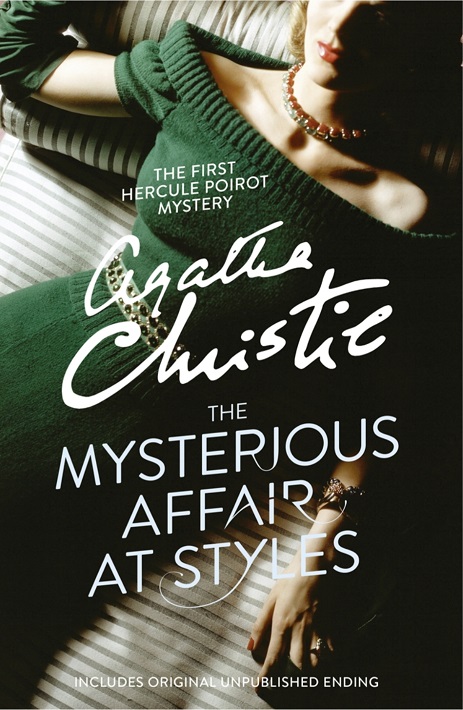
The Mysterious Affair at Styles by Agatha Christie


"I bet you can't write a good detective story," that was how it all started. Mary Westmacott (Agatha Christie's real name) was challenged by her sister Madge (herself was a detective story at that time). With her professional knowledge of poisons, which she possessed from working at the dispensary at local hospital; and with many Belgian refugees from World War I entering her village, Mary Wesmacott wrote her first detective story: The Mysterious Affair at Styles

This book introduced us to one of the most famous fictional detectives in the world: the genius, charismatic, and flamboyant Hercule Poirot. It also marked the first appearance of Captain Arthur Hastings, Poirot's dearest sidekick. Interestingly, Christie would later couple them again in Poirot's last case: Curtain.

As a first work, The Mysterious Affair at Styles struck me with it's beautiful writing and simplicity. The murder is far from gory or violent; it feels more clever and scientific, and... so simple. Indeed, in her later works, simplicity is most oftenly becomes the tone.

Mrs. Emily Cavendish was an old wealthy widow who remarried Alfred Ingelthorp (a total stranger), and became Mrs. Ingelthorp. Although fair and generous, Mrs. Ingelthorp always expected people whom she helped to be dependent on her. She provided her two sons: John (with his wife Mary) and Lawrence Cavendish with luxury and comfort, and also handsome allowances. She even took her orphaned relative Cynthia Murdoch, and the old spinster Evelyn Howard (Alfred Ingelthorp's cousin) into her care. But they were all dependent on her, and never had freedom.

One night she died of poisoning; and there's no doubt that someone inside the family circle has deliberately killed her. Hastings was at that time being invited to stay at the house by John, and he brought Poirot to investigate the case to avoid any scandal, which would have been the case if the police was being involved. 

The rest is typically the same as most detective stories: interviews, proof searches, cross examinations to find alibis, 'misleading red herring' (usually using the side kicks, who'd lead us to believe the suspect was A, while it turned out to be B), and finally: plot twist. But again, Styles is unique for its combination of Christie's particular knowledge of poisons and simplicity. It reminded me again, that murder is more about chance and decision. Anyone can do it, you don't need sophisticated weapons. When you find the extraordinary chance is presented to you by itself, all you need to do is to decide. To kill or not to kill, that's the question.

This was my second read (the first was perhaps more than 30 years ago), and I'm lucky to have read the e-book version I bought from Google Playbooks. It has John Curran's introduction, and includes the original unpublished ending. As you may have been familiar with Poirot's conclusion or revelation method; he always holds a mini conference with everyone involved, then presented his chronological investigations dramatically, and finally 'pointed his finger' to the murderer. However, in the original script Christie wrote the scene as court investigation before the judge and jurors. Luckily her editor asked her to change that, and after that Christie always used the mini conference as her trademark revelation scene, as we know now.

This is my first entry for Agatha Christie Perpetual Challenge. This time I will read chronologically from publication date list. What a perfect start I have had for this fun perpetual journey! 

4 to 5