Thursday, May 23, 2019

North and South by Elizabeth Gaskell


Margaret Hale has been living happy and peacefully in a Southern small village: Helstone, when suddenly her father - a parishioner - announced that he has decided to leave the Church due to his "miserable doubts". As it was disgraceful in 19th century, he must leave Helstone, and consequently with the whole family, to live in a Northern industrial (cotton manufacturing) city called Milton.

Like the two poles of earth, the North is completely different from the South. It's noisy, busy, harsh, ugly. But live there they must. Margaret was then introduced to the never ending conflicts between masters and workers. And to a handsome mill-owner, self-made entrepreneur called John Thornton.

This was my first Gaskell, and I'm slightly surprised to find that her writing was straightforward and bold, very unlike the flowery Dickens - who was her mentor when she first became author. Frankly speaking I personally didn't find Gaskell's writing very distinguishable, but her topic is very engaging - and bold for her time.

For 25 years I have been working as a business assistant in two different trading companies selling industrial parts to factories. So I am quite familiar with Gaskell's industrial topic: masters vs workers. In my opinion, the never ending conflicts will always be there, and will never end. What about Gaskell's ideal relationship of Mr. Thornton and Higgins, then? Wouldn't it possible to apply such mutual understanding atmosphere in real factories? My answer is: it's just a dream! I don't know how it goes in other countries, what I offer here is my personal insight from my own experience in Indonesia. There might be some factory owners like Thornton, who really care for their workers, and not merely about profit; who see the workers as assets, not machines. But seriously, if I were a master myself, and must continually be annoyed by strikes demanding unreasonable higher wages, I would do what Thornton or others did in this novel: punish the perpetrators and replace them with better ones. Or, just move the factory away.

But how about the workers' perpetual poverty? Don't the masters have consciences? More often than not (again, from what I see), it's the workers’ own foolishness. They keep demanding high wages, but work lazily. They spend more than their income, so they apply for credit to the masters. If the masters refused (because by and by they'll take it for granted), they'll say that the masters are bad, they don't care for them, and so on. Mr. Thornton makes a good example by approaching the workers and treating them kindly (eating lunch with them, for example). The reality is, no sooner than the masters allow himself to be placed almost equal with the workers, why, the workers won't pay any respect to them. They will get lazier and more demanding. No, I don't buy Gaskell's suggestion in this novel. Clearly she didn't understand industrial business. I understand that she wrote this to promote humanity, but then, the mill owners were businessmen, they just do what others do: to make a living. If the workers cannot cooperate, the company could not running well for both sides.

Apart from the industrial controversy, North and South is also about the struggle of its characters to face what life has in store for them. There's a bit of a Darwinian touch in it. Of the Hales, only Margaret was able to adapt to her new life, to make peace with the past (mistakes), and to welcome the future. And that's why she eventually meets a brighter one. Her mother is the opposite; she could never accept reality, kept going to the golden days of her past. The bitterness finally eroded her life. The same happened to Mr. Hale.

Speaking of Mr. Hale, I still don't get what his "miserable doubt" really was. Does it mean that he did sermons and other services for years, then one day did not really believe on what he's been preaching? He said it isn't religion, but then what? Of all characters, I hate him most, for being weak (vague), coward, and selfish.

Second of all, I hate Mrs. Hale too for being whiny, self-centered, irresponsible. How could she demand Frederick - the fugitive son - to come home while the risk was that big for the family? Being dying doesn't mean you can ask anything without thinking about the safety of others! And that was a foolish decision too from Margaret to grant it - unfortunately not the last either! She seems to always say or do things she shouldn't, and never do what she should.

John Thornton is my most favorite. He reminded me of my own boss - a self-made businessman, tough, fair, no nonsense, respectable, kind hearted but not sentimental. If his worker went to do riot against him like Boucher did in this novel, I'll gladly recommend him to be sacked!

All in all, I loved North and South. It offers a different but relevant and interesting topic compared to general Victorian novels. Not one of my most favorites perhaps, but it's been heart-warming and delicious. I'd certainly read more from Mrs. Gaskell!

Score: 4 / 5


Friday, May 10, 2019

Post Zoladdiction, and Some Future Reads


I may still be in a hangover from Zoladdiction - I just can’t take my brain off Zola! No, not reading more of his books – I think two books in a row is my limit – but I keep getting thirsty of Zola-ish things. The other day I spent my morning at work browsing Zola’s traces in modern France. Did you know that at least four cities in France have named their public squares or streets with Zola? One day I must go back there (I visited Paris in 2000, when I haven’t “found” Zola), and will certainly include Zola’s house in Médan (now it becomes Dreyfus Museum) on my itinerary!

But, back to earth… here’s some reading updates:


Books read January – April: 11 / 25


What’s next?


MAY
I am reading North and South - Elizabeth Gaskell right now for #elizabethgaskell2019 readalong on Instagram, hosted by Helena @reading.the.classics. From February to August we read different books, and Helena hosted an Instagram group discussion at the end of each month. I only participate for May’s, because North and South is the only Gaskell on my TBR. I love it so far, it’s a perfect read after Zoladdiction! And I would certainly read more of her – maybe Mary Barton next!

Next week I will finally delve into my #ccspin book: Cannery Row -John Steinbeck. Some say it’s hilarious and funny, let’s prove it! Actually these two were my most anticipated from my Classics Club list, so May would be a fun-filled month for me, reading-wise!

JUNE – JULY
I haven’t got any fixed plan yet, but, since I have only been tackling five books for Classics Club in 2019 by May, and as in August I will take a ‘journey to the sea’ (ehem…), I MUST slip 1-2 more books from list into these two months to catch up.

Also, I have Dante’s Purgatorio on my radar. Adam will be hosting a readalong (or something like it) by summer, but haven’t fixed on the date/month. Before that, I’m planning to read Vita Nuova, of which, the translator of my The Divine Comedy copy – John Ciardi – recommends to read before Purgatorio. And since I have read Purgatorio long ago – and have, alas, failed miserably! – I determined to do whatever it takes to succeed this second time. If Ciardi asks me to read Vita Nuova first, read it I will!

AUGUST
Brona has not posted it publicly, but yes… I am going to join her Moby Dick readalong in August! And knowing her, I suspect we’ll have a lot of fun during August. Very excited!

SEPTEMBER
Didn’t I say I’m still having a hangover from Zola? Actually I still have one unread book of the Rougon-Macquart: The Dream. I might read it after a train of readalongs. Then next year I’m going to start an ambitious project: reading all twenty novels in Rougon-Macquart cycle in chronological order – rereading all from the start!

And I might add another classic for Classics Club.

OCTOBER
It’s time to read some spooky books! So I picked two of my Classics Club list: Rebecca - Daphne du Maurier and We Have Always Lived in the Castle - Shirley Jackson. And if there’s enough time, I might be in for John Grisham’s Camino Island. It’s the first bookishly thriller from Mr. Grisham – about a lost manuscript of F. Scott Fitzgerald – and I think I’m about to love it!

NOVEMBER
This would be my last chance of completing my target of reading 12 books for Classics Club in 2019. Two last books from the list to close the year would be perfect.

DECEMBER
Time for some Christmas readings! I will read mostly from Christmas stories by Enid Blyton, Anthony Trollope, and, of course, Charles Dickens. Beyond that, I’ll read any book I’d fancy when the time comes!

And that will be my future reading life. What’s yours?


Wednesday, May 8, 2019

Black Count and The Man in the Brown Suit [Mini Reviews]


Black Count by Tom Reiss


The subtitle of this biography of General Dumas (Alexandre Dumas's father): Glory, Revolution, Betrayal, and the Real Count of Monte Cristo, tells you exactly what this book, written by Tom Reiss, is about.

General Thomas-Alexandre Dumas was a son of a renegade nobleman: Marquis de la Pailletarie and his slave: Marie-Cessete Dumas. He was born in 1762 in French sugar colony: Saint Domingue. Sold by his own father as slave when he was 14 y.o., he was educated as aristocrat after later being bought back by his father.

Alex Dumas was extraordinary because he was the first man of color with highest rank in Europe. His bright career from soldier, officer, to General-in-chief in a short time, along with his heroic bravery actions and his passionate love for his country, should have placed him a special account in French history. Instead, but from this biography, his traces seemed to be vanished from history and memories. Why? Blame it on Napoleon Bonaparte! Don't believe any novel about Napoleon, however sweet he was pictured in it; the real one was ten times more evil and disgusting! I seriously hated him with all my heart throughout this book! Have you read Alexandre Dumas' The Count of Monte Cristo? Of how Edmond Dantes was unjustly imprisoned? It's inspired - not loosely - by the real event where Napoleon set up General Dumas for criticizing his (cruel, racist) policy.

On the whole, it was not an enjoyable read. But if you like French history, this book will interest you. But most of all, this book will be interesting for those who love Alexandre Dumas’ novels, as now we know the origin of those heroic passages in most of his famous novels, especially The Count of Monte Cristo and The Three Musketeers. I loved especially the deep love and admiration Dumas showed to his father in everything he later wrote (diary and novels). I’d feel the same too if I have had a father like the honorable General Dumas!

Score: 4,5 / 5


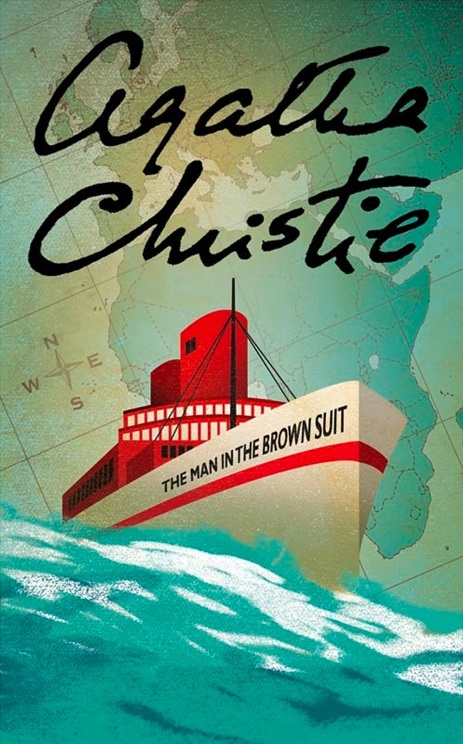
The Man in the Brown Suit by Agatha Christie


This fourth novel of Agatha Christie introduces us to Colonel Race, though his involvement in the crime is very vague, at one point, I even suspected him as the villain. Instead, this story, again, was dominated by a woman. Anne Beddingfield is a restless young woman longing for adventure, and...bam! An adventure met her on the next corner. She coincidentally witnessed an accident, which turned out to be a murder, and the next instant found a piece of paper a man has unconsciously dropped. Then she entered a house where another murder has been committed, and when casually rummaging inside a closet, coincidentally found a canister of undeveloped film, which, of course, turned out to be another clue.

There are too many coincidences in this story to my taste, it often felt "staged". I could not relate with Anne, the amateur detective, and certainly was not impressed by her "romance with a mysterious guy on a deserted island". It was really the most un-Christie-ish I've read so far. Perhaps it's because at that stage, Christie was still searching for the best style she wanted to adopt for her future books.

The most positive from this one is the hilarious Sir Eustace Peddler, from whose witty and sarcastic diary accounts, along with Anne's account, we were told of this story.

It's clearly not my favorite, perhaps my least favorite of Christie's four early novels. 

Score: 3 / 5


Monday, May 6, 2019

#Zoladdiction2019 Wrap Up


April has gone, and so has Zoladdiction 2019. For me, especially, it has been a thoroughly fun and inspiring. I dare say that #Zoladdiction2019 was the best I've ever hosted. Thirteen participants (the biggest number since I hosted it in 2011 for the first time) have decided to join in. We have talked about Zola's works, shared our posts as well as our reads. We have made new friends with some Zola’s fans, and even got a new Zoladdict! J One participant in Instagram even chatted with me (via Instachat) about our favorite Zolas, and he recommended some Zola movies I’m eager to watch. And I have also treated myself with two new Zolas: The Dream (which I plan to read this year), and OWC's edition of La Débâcle


In short, I've had a huge fun last month! How's yours?


Nevertheless, it must stop now. I only hope that you all have had as much fun as I did. And I do hope you will continue reading and loving Zola. Don't worry, next year Zoladdiction will be back!

Meanwhile, don't forget to link up your posts/reviews in the linky (if you haven't). It will be up until 15th May. Zoladdiction is over, but you can still post anything still left over your reads.

Lastly, thousands of thanks to you all, it has been awesome! Until next year!


Thursday, May 2, 2019

Understanding Émile Zola’s “La Joie de Vivre” in Van Gogh’s “Still Life with Bible” Painting


Have you ever had any idea that Vincent Van Gogh – the famous Dutch post-impressionist painter – was a Zola’s fan? In his letters to his brother Theo, Van Gogh often quoted some excerpts from Zola’s books, and he was thoroughly influenced by Zola’s ideas. Van Gogh was born into a religious family; his father was a minister of the Dutch Reformed Church. Before plunging headlong into painting, Van Gogh was a fervent evangelist in one of coal-minings in Belgium. In fact, his two years stay with the coal miners left deep impression in the village, that Émile Zola later depicted his Abbé Ranvier character in Germinal from Van Gogh’s image, when Zola stayed there in doing researches for his masterpiece-to-be.

One of Van Gogh’s “Still Life” paintings (a work of art depicting mostly inanimate subject matter, typically commonplace objects which are either natural or man-made - wikipedia) is: Still Life with Bible, which he painted in 1885.


It is a gloomy painting of an open bible on the table against dark background, with a candlestick beside it. In front of the bible, with a faint yellow light, sit a battered copy of Zola’s La Joie de Vivre. The painting’s caption on Van Gogh museum’s website read: “This hefty Bible had belonged to Van Gogh's father, a Protestant minister. Van Gogh painted it just after his father's death. He placed his own copy of Émile Zola's La joie de vivre next to it. That book was a kind of 'bible' for modern life. The books symbolize the different worldviews of Van Gogh and his father.” While in his letter to his brother Theo – with whom he often had a lengthy discussions of his painting progress – Van Gogh described this painting as 'a still life of an open, hence an off-white Bible, bound in leather, against a black background with a yellow-brown foreground, with an additional note of lemon yellow.'

Normally I won’t be interested in this painting – it’s too gloomy, and poor of color – but for Zola’s book in it. Now, I have just read The Bright Side of Life (English title for La Joie de Vivre published by Oxford World Classics), and while searching for some background texts, I accidentally stumbled upon an article about this interesting fact. And so, I began to scan the painting thoroughly, and tried to unfold its meaning.

What struck me immediately while scrutinizing it for the first time, is the lighting. You can see that the background is totally dark. Yet, there is the yellow light on the foreground; and from the way the shadow projecting from the book, the light could not come from the foreground. Then, where does it come from? There is a candlestick beside the bible; it even has a candle on it, but unlighted. I’m not a painter, and perhaps I’m not quite qualified to discuss paintings, but in my opinion, normally Van Gogh won’t have seen the objects in that way of lighting. So, was it intentionally, then – to emphasize an idea, perhaps?

Before trying to solve the “mystery of the lighting”, let’s discuss first about the bible and the book. We know that the bible belonged to Van Gogh’s father, the Protestant minister, who, I imagined, had planted Christian doctrines into his son’s head eversince Van Gogh's childhood. The bible is open, and we can see the blur prints on it – out of curiosity, I zoomed in the painting several times, trying to catch the title or a word or two to define to which part of the book it opened – I failed. Either my file is in low pixel (but I couldn’t find a better one), or it’s my eyes that are too weak! Anyway, I googled through, and finally found a text that says that the bible actually open to a certain passage from Isaiah 53:

“He is despised and rejected of men; a man of sorrows, and acquainted with grief: and we hid as it were our faces from him; he was despised, and we esteemed him not.
Surely he hath borne our griefs, and carried our sorrows: yet we did esteem him stricken, smitten of God, and afflicted.
But he was wounded for our transgressions, he was bruised for our iniquities: the chastisement of our peace was upon him; and with his stripes we are healed.” (King James edition)

Most coincidentally, I am a Lector at my local church, and for these months I have been reading this particular passage so many times I almost remember them, as I was preparing to read it on Holy Friday mass. So, technically, I have read Zola’s La Joie de Vivre along with Isaiah 53 – both pictured in this painting – during April, amazing, eh? That’s why I could relate very much to this subject.

Texts from Google which I have consulted were mostly convinced that Van Gogh saw La Joie de Vivre as a “new bible”, as Van Gogh was in a process to synthesize (if not replaced – as believed by a Cliff Edwards) religion with modernity. But, in that case, why is the bible opened, while the book shut? If he had wanted to replace religion with modernity, will it not make more sense to do the opposite? Some also argues about the different sizes of bible vs book – the book is way too small in comparison with the bible. But I don’t buy it; it’s mentioned in the museum website that the bible was “leather bound - hefty”, so it is only possible that it’s measured four times of the book (mass-market size?) Anyway, I’m more inclined to analyze the context, than the sizes of the object.

Isaiah 53 speaks about God’s man – a selfless man – who, though purely innocent, was chastised and must endure pain, solely for the salvation of others. Isn’t that directly correlated with La Joie de Vivre’s heroine, Pauline Quenu, who chose to endure the betrayal and robbery of the family only for their sake/happiness? Thus, in my opinion, the bible needed to be opened to show its precise passage, to be studied in parallel with the main theme of La Joie de Vivre. Do you think it’s possible?

Then how to explain the curious lighting angle (which many regard as symbolically shutting off his father’s rigid religion and shifting to a new-modern one)? In my opinion, still in conjunction with Isaiah 53, the dark background and unlighted candle reflected death (of God’s man or Christ, as well as his father’s perhaps), while the yellow light reflected the joy of life. Because, isn't it true that both Isaiah 53 and La Joie de Vivre speak of death and pain which in the end bring glory and joy? We could interprete the "wrong" angle of the lighting as symbolically alluding that the dark of death has been replaced with a simmering light of life. Does it mean modernity has become Van Gogh's "new religion", as he left his father’s religion? It is more likely that La Joie de Vivre has let Van Gogh adjusted his old view (influenced by his father and his almost puritan mother) on death and sorrow, to be brighter and more optimistic than before.

What do you think?

Zola's influence proved to be quite deep in Van Gogh, as besides this painting, Van Gogh also painted La Joie de Vivre in his "Still Life with Oleanders". The poor miner family in Germinal was also depicted in Van Gogh's "The Potato Eaters".

Still Life with Oleanders - 1888
The Potato Eaters, 1885


Tuesday, April 30, 2019

His Excellency Eugène Rougon by Émile Zola


Reading a political novel right after election (in Indonesia, where I live) is really not a good choice! But it's Zola, and I thought if there's any writer who could make politics - the most boring subject for me - slightly interesting, it should be Zola (he wrote about miners poetically in Germinal, after all!) I'm not entirely wrong, this sixth book of Rougon-Macquart cycle provides some enjoyable intrigues; but the rest are dry and boring. It is by far my least favorite of Zola's.

Eugène Rougon is the eldest son of Pierre and Félicité Rougon, who, in The Fortune of the Rougons has used his influence as Minister of the Republic to provide his parents with information on crucial political situations before the coup d'état in 1851. The novel opens when Eugène has just handed his resignation as Minister of the Second Empire regime, after having a conflict with the Emperor. This situation worried his political cronies, as they had hoped that Rougon could do their personal favors, using his influence. One of them was Clorinde Balbi, an Italian woman with dubious background. Clorinde knew that Eugéne was obsessed with power to control others. She shared this obsession, but unlike Eugène, as a woman, she could only work in the background. She seduced Eugène with a hope of marriage, but Eugène rejected her. Insulted, Clorinde decided to take revenge. She took side with Eugène's successor Cound de Marcy. Meanwhile, his cronies started to do lobbying to raise Eugène's popularity, encouraged by Clorinde.

The Senate in session

About this time, Eugène got an inside information about an assassination plan to the Emperor, but decided to do nothing. The plan failed, but it encouraged the Emperor to appoint Eugène to be Minister of Interior. Using his new power, Eugène rewarded his friends, and punished his enemies. But the ungrateful and greedy friends (of whom Eugène has made efforts to grant every favor) began to think he had done nothing for them, and even did harm to them. Clorinde did her best to ripen her schemes to throw Eugène down from the power, now that she has become one of the most powerful persons in the Empire, by becoming the Emperor's mistress.

This novel emphasizes how fragile and subtle the foundation of one's political entity is. To be on top, one depends absolutely on others' support and loyalty; and to buy these, one must obligingly do endless favors for them. There is no friend in politics, only supporter or enemy. Politicians are like wild animals, who, in any gathering must always keep an eye on each other; every gesture, every word, every eye contact can mean anything. People, who today support you to be on top, can dethrone you tomorrow. They can instill you with power, but can also rob you of it the minute you fail to satisfy them.


"These were the death throes of his power. Strong as he was, he was bound these idiots by all the work they had done together for their mutual benefit. As they withdrew, each of them robbed him of part of himself."

This is a novel about the hypocrisy and dynamics of political life, manipulation and cronyism during the Second Empire of France. Zola based many of his characters and events from historical facts. One of the most interesting is the baptism of the Prince Imperial. Zola captured the atmosphere perfectly as a journalist would when reporting a grand event live from the center of it. And indeed, wasn't he a journalist before he became a novelist?

While the topic might be uninteresting, Zola's style of allegorizing the protagonist's agony with the nature, as usual, spices up the story.

Here is Zola's portrayal of how the cronies have treated Rougon:

"They were all around him. They clambered on to his lap, they reached up to his chest, to his throat, till they were strangling him. They had taken possession of every part of him, using his feet to climb, his hands to steal, his jaws to tear and devour. They lived on his flesh, deriving all their pleasure and health from it, feasting on it without thought of the future. And now, having sucked him dry, and beginning to hear the very foundations cracking, they were scurrying away, like rats who know when a building is about to collapse, after they have gnaw great holes in the walls."

And here is how the weather fluctuates following Rougon's mental struggle following his last fall, and his subsequent resurrection.

[Right after the Emperor really accepted his "feigned" resignation – he must really resigned in the end – Rougon walked back to his Minister-quarter - from which he soon must move out]
"On the skyline, a storm was brewing. Below him was the Seine, an oily, dirty green coloured, flowing sluggishly between the embankments with their clouds of dust. In the garden, guts of hot wind shook the trees, whose branches then drooped again, their lifeless leaves hanging limp. He followed the path between the huge chestnuts. It was almost pitch dark. A damp heat was rising from a cellar."

"Paris, The Seine & Alexander Ili's Bridge" - 1896, Frank Myers Boogs


[At home, moved by the calmness of his wife after receiving the news]
"The storm was refusing to break. Reddish clouds filled the horizon. Huge thunderclap resounded down the Champs-Élysées. The Avenue was deserted. The thunder was like a series of cannons going off."
"By now the storm had broken. It was incredibly violent. The downpour was accompanied by heavy thunder. [..] The Champs-Élysées were now a lake of mud, yellow, liquid mud, stretching from the Arc de Triomphe to the Place de la Concorde as if the bed of a river had suddenly been drained of water. [..] In the sky, the storm had left behind a trail of tattered, coppery clouds, a low hanging, dirty mass covering the remains of the day, a cut-throat, sinister gloom."

"Les Champs-Elysees Lido Paris" - unknown


[Daydreaming about the future]
“In the miserable light of the copper-coloured sky, a procession was approaching through the slush of the roadway, on its way back from the Bois, the bright uniforms glinting in the darkness of the avenue. In the front and at the rear cantered a squad of dragoons. In the middle was a closed landau, drawn by four horses. At the doors were grooms in full gold-embroidered livery, impassive as the mud spattered them with each turn of the wheels. They were already caked in it, from their turndown boots to the tips of their helmets. And in the darkness of the closed landau Rougon could make out a child. It was the Prince Imperial looking out, his pink nose pressed to the plate-glass window, his ten little fingers spread out on the pane.”

"Bois de Boulogne" by jean Beraud


From these train of scenes, I could feel some hope in Rougon’s mind – and in whole France – of the better future of their beloved nation. And I can’t help but admiring how Zola could portrayed the Prince Imperial scene so vividly – it’s as if he has taken a photo when the landau passed the street, and he explained to a blind man, every tiny detail of the picture!

Overall, like I said before, it’s not an enjoyable novel for me, but I can’t help acknowledging how relatable it is to every nation’s political lives – and that’s why politics often disgusts me!

Score: 3,5 / 5


Tuesday, April 23, 2019

The Bright Side of Life by Émile Zola


The twelfth novel of the Rougon-Macquart cycle turned out to be the most autobiographical of Zola's. He wrote The Bright Side of Life when he was 44 years old, and was in one of his much mental instability cases caused by the death of his two friends – one of them was his mentor: Gustave Flaubert – then followed by his mother's. From age 30, Zola too has been suffering from necrophobia (irrational fear of death) and obsessive-compulsive disorder. From these few facts, you know what's to expect from this novel. Despite of the original title: La Joie de Vivre, there's also a balanced dose of pain and sorrow. In fact, The Bright Side of Life is all about paradox: life force vs death, health vs pain, optimism vs pessimism. But Zola's true aim is that optimism must counterbalance pessimism, which was spreading in France when he wrote it.

Our heroine this time is Pauline Quenu, the daughter of Lisa Macquart and Quenu (from The Belly of Paris). She is, perhaps, the most mentally-stable member of the Rougon-Macquart clan. From the first, Pauline is a cheerful, hopeful, loving, and persevering young girl. Whatever her condition is, she always brightens her surroundings, spreading positive vibes around her. Pauline was orphaned after Lisa's and Quenu's death. She was adopted and lived with Chanteaus family on the seaside village called Bonneville. She tended her uncle Chanteau, who suffered from gout, with extra tenderness. And with Lazare, her cousin, Pauline often played outdoor near the seaside. Now Lazare was Pauline's opposite. He was gloomy and pessimistic, and gradually it became clear that he suffered from obsessive-compulsive disorder. He had an obsessive fear of death (necrophobia) – yeah, he is Zola’s embodiment in this novel – and he could never settle his mind on anything. Despite of their huge age difference and character difference, Pauline and Lazare were attracted to each other.

Pauline inherited a large sum of money from her parents, and from the first Madame Chanteau insisted that she would keep the money intact in the drawer at her desk until Pauline come of age to manage it herself. However, with Lazare's incapability to earn money, Madame Chanteau began to borrow Pauline's money for daily household, which the girl was always too pleased to lend. Then Lazare would come up with an idea which he believed will make the family rich, but had no money to fund it. Pauline would lend her money for capital, of which the Chanteaus made sure of returning after Lazare's success. He failed eventually, the money evaporated, and the pattern repeated over and over again! Madame Chanteau, out of her shame and indignation of "begging" from her niece, eventually just took the money without consulting Pauline. Moreover, she shut down her conscience by turning the blame to Pauline. She made herself believed that Pauline has brought bad influence to the family, and began to treat Pauline with hostility. On the face of all this, Pauline felt sad, but persevered and maintained her loving and cheerful manner. Pauline and Lazare were about to be married (Madame Lazare's genius idea of legally robbing Pauline's money), but one day in came a sophisticated town girl called Louise, whose femininity attracted Lazare. So now, it's not only her money, they robbed her of love too. She has sacrificed everything for the happiness of others, yet she was treated badly.

"Le Joie de Vivre" copy in Van Gogh's "Oleanders" - 1888


I have been wondering through the story, why Zola titled this book the joy of life, while it is filled with sorrow and pain – Pauline's heartbreaking is nothing compared to Louise's suffering in her greatly painful labor (Zola pictured it too vividly, that I felt my stomach ached only to imagine it!) So, where is the "joy"? I think this is the most philosophical novel from Zola which I have read so far. It takes us to reflect upon life and its meaning. Why must we continue living and persevering if at the end death is inevitable? Is life all sorrow and hopeless, then? Through Pauline, Zola wanted to raise France from its pessimistic slumber. Life might not be full of joy, but the joy of life is in life itself – being alive, having survived through perseverance in one's daily routines, sharing, loving and sacrificing for others' happiness, that is the joy of life! That is humanity. I loved how Zola symbolized Pauline’s emotional struggles with another “living character” of this book: the sea! When Pauline is happy, the sea is calm and beautiful, but when jealousy outburst (the only family-inherited “flaw” found in Pauline) violently shook her, the sea, too, became dark, raging, and turbulent.

In a way this novel is very Zola, but at the same time, it's very un-Zola – in term of the writing style. You won't see any of his usual exaggerated (or as I prefer to call it: intense) narrative. It was actually Zola's intention from the beginning to create a "simple" story. "This is the novel I want to write. Good, honest people placed in a drama that will develop the ideas of goodness and pain. Then, it will all be down to how it is written. Not my usual symphony. A simple, straightforward story. Environment still playing its necessary role, but less to the fore; description reduced to minimum. The style direct, correct, forceful, without romantic flourishes. The kind of classical language I dream of writing. In a word, honesty in everything, nothing dressed up." ~Zola's preliminary sketches of this novel. To be honest, I rather miss his “dressed up”, powerful, intense style – a quality I rarely found combined with beautiful prose in any other writers. Nonetheless, it’s one of the most honest books I’ve ever read; it’s OUR lives, OUR journeys, and OUR struggles.

My score: 4 / 5