Sunday, November 21, 2021

Death on the Nile by Agatha Christie

πŸ’œ Linnet Ridgeway possesses everything a girl wants most in the world: she is a wealthy heiress and very beautiful - she always gets all she wants.

πŸ’œ Her best friend Jacqueline de Bellefort, on the other hand, is neither rich nor beautiful. But she's happier than Linnet could ever be, because she's (too much) in love with her fiancΓ© Simon Doyle. Therefore, when Linnet snatches Simon from his fiancΓ© and becomes Mrs. Doyle, Jaqueline gets resentful.

πŸ’œ On a trip to Egypt, Hercule Poirot meets newlywed Mr & Mrs. Doyle, who are on their honeymoon, with the bitterly jealous Jacqueline stalking the couple as her way of revenge.

πŸ’œ Then on that terrible night on board the steamer from Waldi Halfa, strings of incidents happened. Jaqueline quarrelled with Simon, which ended with the girl shooting Simon, wounding his leg. The morning after, Linnet was found dead in her cabin, shot into her head in her sleep, while her pearls were missing.

πŸ’œ The question is, whodunnit? Is it the easiest guest, Jacqueline; or Linnet's trustee who have most probably squandered her money? Can it be one of the passengers whose father had been ruined by Linnet's father, or the usual suspect, the husband?

πŸ’œ I know that this novel is one of readers' favorites, but I found it a bit unsettling, when the ending is concerned. In some conversations (within this particular book or others), Poirot states that a murderer is a criminal, whatever is his/her motive. However, his action towards some murderers are sometimes inconsistent, especially when he particularly likes them. I found it unsettling - like Poirot is playing God.

πŸ’œ The case itself isn't too bad. A murderer within a bunch of strangers in a holiday trip is always promising, though in this case I had my suspicion due to the over melodramatic of one of the incidents. Nice, packed with actions, but not really exciting.

Wednesday, November 17, 2021

My Christmas 2021 Reading Plan

Why wait until December? I think the most perfect time to start Christmas reading is Mid November. It is when the weather starts getting cooler (here in Indonesia monsoon season is just beginning), and one is beginning to get impatient for Christmas to come.

Actually I've been waiting for A Literary Christmas 2021 for happening, but until this post is written, I haven't seen any sign from Tarissa's blog. Do you happen to know whether it's going to happen at all? It would be more fun to participate in an event and read with a group, but nevertheless, event or no event, here is πŸŽ„ My Christmas 2021 Reading Plan πŸŽ„:


The Nutcracker by E.T.A. Hoffman


It would be my last classic this year, which would be counted for both Back to the Classics 2021 and The Classics Club. This would be my first read of this children classic, and I'll start soon after finishing the last Agatha Christie on my 2021 list (all is coming to the end, eh?)


The Christmas Mystery by Jostein Gaarder


If you think this one is a usual mystery book with murder and all, you're wrong! With Jostein Gaarder, it will always be a complex story (this one is a story inside of a story). It's about a boy who found written stories hidden inside an Advent calendar - one story for each day until Christmas! It would be fun to read them along the Advent calendar, so I'd start in November 28th.


Mistletoe and Murder by Robin Steven's


Between Nutcracker and the Advent reading, I'd need a real murder mystery to get along. For once I'd leave Agatha Christie behind, and pick something lighter. This one looks fun!


The Story of A Nutcracker by Alexandre Dumas


And what could have been nicer than reading Alexander Dumas' take on The Nutcracker to wrap Christmas up, eh?


Do you plan your Christmas reading ahead? Or you just go with the flow and grab any book you feel like reading? Do you start early or wait until December?

Saturday, November 13, 2021

The Inimitable Jeeves by P.G. Wodehouse

🌞 The Inimitable Jeeves is the first comedic novel in Jeeves series from P.G. Wodehouse, one of the greatest humorists and writers of 20th century. Well, it's actually more of semi-novel, as it's constructed of eleven short stories which are assembled chronologically into a novel. You can detect its lack of cohesion after each chapter - which make the whole reading experience becomes...well, unwholesome.

🌞 Jeeves is what they call a gentleman's gentleman - a highly competent valet - to a wealthy "idle rich" gentleman called Bertie Wooster.

🌞 Wooster is fond of Jeeves, because of his almost perfect competence in either serving his comfort or solving his personal (and general) problems.

🌞 In this first semi-novel, most of Wooster's problems come from his best friend Bingo Little, who is always falling in love with the next charming girl he ever lays his eyes to, and his rather tyrannical Aunt Agatha, who always persuades him to marry. Other than that, Jeeves' domineering manner sometimes annoys him when the valet disapproves his flamboyant fashion styles, although in the end he'll relents to it, rather than being deprived of Jeeves' flawless services.

🌞 Overall, it's a witty, humorous piece to read. It's the kind of book you'd need to keep you sane in difficult or dreary times. It's amusing and entertaining, but lack of deeper or meaningful values. You'll have fun while reading it, but most probably forget most of it after.

Am I going to read more of Wodehouse, or Jeeves' series in particular? Certainly, you'd need one or more comic antidote every year, right?

Rating: 3,5 / 5

Sunday, November 7, 2021

The Franchise Affair by Josephine Tey

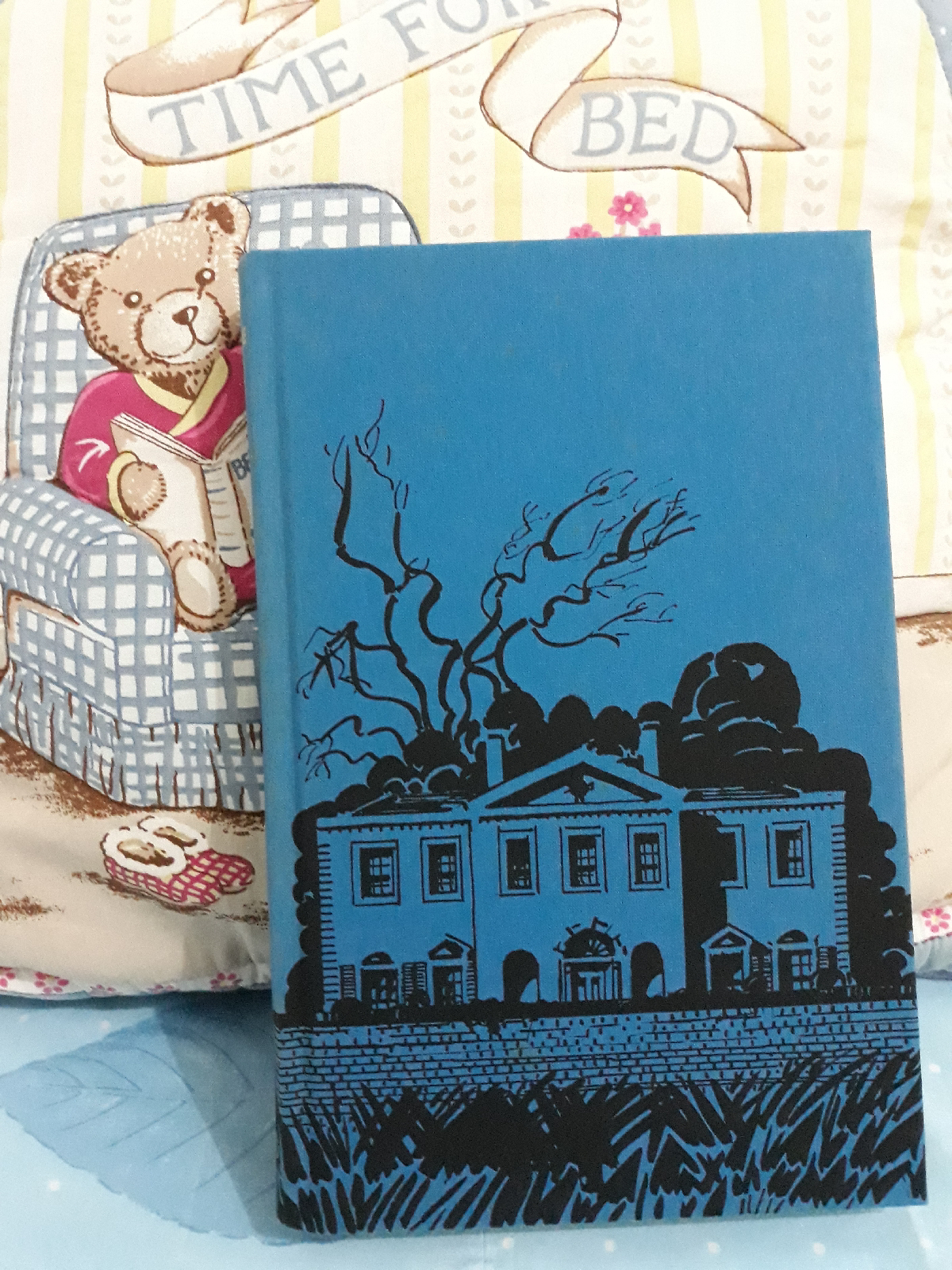
Followers (or frequent visitors) of my blog should have known by now that Agatha Christie is one of my favorite authors. For some time I've been searching for her contemporaries in crime/detective fiction, who is as good as (or even better than, though I doubt there'll ever be!) Christie. I've tried Dorothy L. Sayers - quite good, but lacks the human nature aspect. Then I saw a beautiful Folio Society edition of Josephine Tey's book in my boss' shelf, and I couldn't resist to borrow it. So, this is it!

πŸ”Ή️ The Franchise Affair is about two eccentric women from Milford - mother and daughter - who are accused of kidnapping a young girl to force her to work as housemaid.

πŸ”Ή️ Marion Sharpe (the daughter) called a local lawyer called Robert Blair to assist her in an interview with Scotland Yard. A 15 y.o. girl called Betty Cane told the police a rather fantastic story about how two women from The Franchise (the Sharpes' house) had given her a lift, wanted to hire her as a maid - which she refused - and imprisoned her in the attic and beat her. She gave a detailed information about Marion and her mother, the car, the house - which is surprisingly quite accurate


πŸ”Ή️ So, this is not a usual whodunit story, but rather to decide which party is a liar.

πŸ”Ή️ Though quite reluctant at first, Robert vigorously defended Marion and her mother - and in the process, fell in love with Marion! To prove that Betty Kane lied (Robert trusted the Sharpes from the first), Robert must find witnesses who saw/ knew where Betty was during the period when she said she's abducted.

πŸ”Ή️ If you expect a fast-paced crime story, this one isn't for you. The investigation runs quite slowly, along with our introduction to each character. And since Robert is a lawyer, of course there's a few court scenes. Add a bit of romance into it, and voila... you get the gist of the book.

πŸ”Ή️ Was I impressed by the book? Not really, I was just curious how Betty did it (oh yes, half through the book you won't doubt about her credibility). And since you'd be sure that in the end the Sharpes will win, the only curiosity left is how they will achieve it and how Betty will react (will it be a sweet revenge?) Not very impressive, huh?


πŸ”Ή️ Disappointed as I was with this book, I still want to try another from Josephine Tey: Brat Farrar. I heard good things about it. If it's failed, then I'll drop her from my list altogether.

πŸ”Ή️ Which author do you think is comparable to Christie? Any recommendations? Some say Ngaio Marsh is one of the best, though not as good as Christie. Do you think she worth a try? Or should I just stick to Christie only?

Rating: 3,5 / 5

P.S.
I think picking this title for Folio Society collection is wasting money. My boss should have bought Christie's The Murder of Roger Ackroyd - not only it comes with great story, the pictures look fabulous too. This one's is meh...

Sunday, October 31, 2021

Lady Windermere's Fan by Oscar Wilde

🌸 Lady Windermere is a woman with puritan upbringing. Despite living in the corrupted society (where it is common for married men or women to have lovers) her view of marriage is still pure and innocent.

🌸 Lord Darlington loves Lady Windermere, but she chided him for giving her much attention, while showing him her beautiful new fan, a gift from her husband, Lord Darlington. I believe the fan is a symbol. In this case, it symbolizes love and fidelity in marriage. It's a token of a happy marriage.

🌸 Then a Lady Berwick told her that Lord Windermere is having a mistress, a Mrs. Erlyne - apparently infamous as a lose woman. When confronted by Lady Windermere, he denied of betraying her, but couldn't say anything else. He even insisted to invite Mrs Erlyne to their party to help her back into the society.

🌸 Believing his husband is lost, Lady Windermere sought help from Lord Darlington, who took the advantage to propose elopement. She rejected it at first, but eventually relented, she wrote a letter to her husband and went to Darlington's apartement, but he's not at home.

🌸 Mrs. Erlyne, reading Lady Windermere's letter to her husband, followed her to Darlington's and persuaded her to return to her devoted husband. But Lord Darlington entered his apartement, together with Lord Windermere and other gents, which forced Lady Windermere to hide herself behind the curtain. However, she left her fan lying on the table, and the men interpreted that she, too, has been corrupted. Here the fan represents her (nearly) infidelity.


🌸 Mrs. Erlyne was quick to the rescue by claiming that it was she who has absent-mindedly brought Lady Windermere's fan there - putting the blame on herself, and thus sacrificing her own chance of restoration to the society. And finally, here, the fan represents two things.

🌸 First, the injustice that the hypocritical society imposed upon women. And most importantly it symbolizes how thinly the bar between good and bad. This play's complete title is Lady Windermere's Fan: A Play about A Good Woman. The question is, who is the good woman implied on the title? Lady Windermere? But she was on the brink of ruin, had not Mrs. Erlyne been in for the rescue! It's Mrs. Erlyne, then? But she's a self-centered woman, without morality, so to speak. Can one good deed compensate her many bad ones? I think it's just what this play is about, besides a critic against the corrupted society, where infidelity became a fashion; it is that good and bad are never absolute. In a bad environment, there could be one good element - pure and untainted. As it was in a bad person, there might be one kindness in him/her, ready to shine to protect the pyrenees of the good one.

🌸 It's been awhile since my last reading of Wilde's play - An Ideal Husband - if I remember correctly. I've been expecting this one to be as hilarious as either An Ideal Husband or The Importance of Being Earnest, but I was wrong. J is more subdued, full of secrets and mystery, but as poignant as always.

Rating: 4 / 5

Saturday, October 23, 2021

Lady Audley's Secret by Mary Elizabeth Braddon

πŸ‘’ Lady Audley's Secret is the most famous novel of Mary Elizabeth Braddon. It was labelled a sensation novel, because of the "accidental" bigamy committed by its "heroine". Braddon herself lived with her publisher John Maxwell and had children with him when he's still married, while his wife lived in an asylum. She could only marry Maxwell after his wife died.

πŸ‘’ Lady Audley was Lucy Graham, a governess, before Sir Michael Audley was enchanted by her innocent beauty, and married her to become the lady of Audley Court.

πŸ‘’ George Talboys is coming home to England after three years of gold prospecting in Australia, only to find that his pretty wife, Helen Talboys, has died.

πŸ‘’ Robert Audley is Sir Michael's nephew, and friend to George Talboys. He brought his mourning friend to Audley Court, but Lady Audley avoided him. Nevertheless, he viewed a painting of Lady Audley when she's not at home, and seemed to be struck by it. Then, one day George Talboys disappeared on the next visit to Audley Court - leaving his friend, the listless Robert Audley, to solve the mystery.

πŸ‘’ By the time Lady Audley tried to avoid meeting George Talboys, I thought I knew what her secret is. And when he's missing, I suspected that my lady's secret is way much deeper than what I've thought.

πŸ‘’ For me, Lady Audley's Secret is a cozy and comfort reading. But I can imagine how sensational it was when first published in 1862. Though bigamy isn't extraordinary within the society of mid 19th century, I think it's considered rather daring when a woman openly wrote and published the subject in a novel.

πŸ‘’ The story is believed to be inspired by a real event: Constance Kent case in June 1860, which became a sensation for years.

πŸ‘’ Robert Audley, with his lazy, easy going manner, is easily my favorite character. I loved how he always treats Lady Audley tenderly and with respect, and how he considered what's best to do for her - when Sir Michael just left, ignoring everything with 'I don't want to know what you did for her' manner. I know he's terribly hurt, but how irresponsible and selfish it is!

πŸ‘’ In the end, there's the question of Lady Audley's madness. Is she really mad? I personally don't think so. It is clear that she is self-centered and morally flawed, but I see her more as a trapped and scared animal in desperate attempt to free itself from the cage, and find a safe home. It's not madness; it's survival - desperate and persistent survival.

πŸ‘’ And like any other women of that century, they were persistently belittled by men. In my opinion, George Talboys brings himself his fate when he left his wife just like that. For three years. Maybe his purpose is for improving the family financial - there's nothing wrong with that, of course - but how the wife is supposed to survive for years with neither explanation nor assurance? Men like Robert Audley or Sir Michael never blamed what George Talboys did to his wife, but of course Lady Audley's conduct is out of pardon, condemned without question.

πŸ‘’ This novel is quite interesting, if not intriguing. The kind of reading I'd happily pick for comfort.

Rating: 4,5 / 5 

Wednesday, October 20, 2021

Watership Down by Richard Adams

🐰 I've found a new favorite this year! It's no less than an adventure novel featuring a group of rabbits, leaving their endangered warren (a network of rabbit burrows, where a group of rabbits live together), exposed to dangers, challenges, and excitement, to seek a new home.

🐰 From the first I have liked a rabbit named Hazel. I thought he'll make a great leader because he trusts Fiver, his younger brother, who prophesied that a catastrophe is about to destroy their warren (Sandleford). Hazel knows that each person.. err.. rabbit, I mean, has his unique strength, and that to succeed in a mission, he has to trust on his instinct and the others' strength. In the critical moment, he trusts Fiver, and they ran away from Sandleford without delay, followed by nine others.

 
🐰 After running into several dangerous adventures, they came eventually to a perfect down which they picked as their future warren: Watership Down.

🐰 The novel is special because, while Adams wrote convincingly about rabbit's life - indeed, I seemed to see them alive, hopping in front of me all the time - it is, at the same time, a perfect portrayal of human nature. Each rabbit represents different character we often find in our own society.


🐰 I believe any leader-to-be of whatever community needs to read this novel. There are numerous lessons they can learn for their own good. Not only for leaders, the followers can also learn every type of leaderships we commonly find in leaders, to guide us in choosing the right one.

🐰 Other than brave, intelligent, loyal, and visioner, Hazel's respect to other creatures is remarkable. He is one proof that a leader doesn't have to be perfect - nobody is perfect anyway - but he must be insightful, kindhearted, and compassionate.

🐰 Watership Down is a whole novel - adventurous, heartwarming, and inspiring; well written and relatable.

Rating: 5 / 5