Friday, April 21, 2023

The Ladies' Paradise by Émile Zola: A Reread from Audiobook


👗The Ladies' Paradise (Au Bonheur des Dames) is one of my favorites from Zola. It is less "raw" than the others in Rougon-Macquart cycle, so obviously, more cheerful. In this second reading, I realized that this book is the one where Darwinism struggle for existence is most strongly applied.

👗 Ladies' Paradise is the first department store in Paris (inspired by Le Bon Marché). It was first founded by Madame Hédouin (told in previous novel in Rougon-Macquart novel - which I didn't review - Pot-Bouille), where Octave Mouret has worked as a salesman. He was a charming womanizer, and at the end of Pot-Bouille, he married the widowed Madame Hédouin.

👗 The Ladies' Paradise begins a few years after Madame Hédouin died, leaving the store to Mouret. Besides being charming, Mouret was, apparently, a visionary and innovative business man. Under his management, Ladies' Paradise doubled its capital in a short time. Mouret's key formula was by 'tickling' women's senses and greedy desires, which was achieved through colossal artistic displays, enormous mass gatherings, sensational promotions, and generous discounts.

👗 I could imagine how fascinating it was for the Parisian women. A glamorous building, the adrenaline rush seeing the crowds (let's get those silks before the others take all!), then the beautiful colorful arrangements which makes one buy what she doesn't need. And the cheap prices too! It's enough to lure any woman to buy impulsively.


👗Moreover, Mouret strategically placed relatable departments far away from each other. It makes one who needs a dress and a coat, for instance, after buying the dress, must pass furniture, haberdashery, and children departments, before she could reach coat department. It resulted that she might be tempted to buy also a lamp, buttons, and a cute jacket for her daughter, which she didn't plan at all.

👗 Mouret could run those schemes at all because he knew women's character perfectly. Or he thought he knew, until Denise Baudu, a plain country girl who's just arrived in Paris to work, entered his life. His life changed (for the better) when he fell in love with Denise. Now, Denise is an extraordinary character - I have written about her character - she's nothing like common working-class girl, and her dignity surpasses those of bourgeois ladies. Moreover, Denise is intelligent and as visionary as - but more kindhearted than - Mouret. I imagine, if they join forces in the management, the Ladies' Paradise would become a truly formidable establishment!


👗 However, while the Ladies' Paradise enjoys its phenomenal success, many conventional shop keepers in Paris suffered from huge loss. They lost their customers because they couldn't compete with the department store, and many ended up with bankruptcy, or even ruined. This is where the Darwinism struggle of existence theme becomes relevant. These bourgeois have been used to just provide the clothing items on their store and sit relaxed behind the counters; customers would automatically come through their doors. When a rival came, they were indignant; lamenting, even cursing, but did nothing. Some, perhaps, couldn't do anything to compete with Ladies' Paradise, but few of them weren't as hopeless as they've thought. Monsieur Bourras, the umbrella shop owner, for example, could have done something to rescue his business, as I have suggested in previous post. It was, indeed, the struggle of existence - only the fittest would win.

👗 For this second read, I listened from an audiobook, narrated by Leighton Pugh. I'm glad I've done that, because the listening has enhanced Zola's picturesque description of the Ladies' Paradise to another level. Reading from printed copy might have been a bit boring (Zola's descriptions can often be dragging on and on!) But by listening, it surprisingly provided a vivid portrays of the scenes. Far from boring, I enjoyed it imenesely like I were visiting the department store myself. It was very rewarding!

👗 Finally, there is the love story of Mouret and Denise - the only romantic story you would find from Zola's Rougon-Macquart! On the whole, it has been a very satisfying reading!

Rating: 5 / 5

Wednesday, April 19, 2023

Classic Character: Denise Baudu from The Ladies' Paradise (Émile Zola)


Denise Baudu's is perhaps one of the most wonderful character-developments in literature. She came from a small village in France, where she worked as shop assistant. Denise is about 18 y.o. when she first arrived in Paris as an orphan with two little brothers to take care of.

Despite her uncle's unceasing hatred towards the grand department store across the street, which ruined his and other shopkeepers around the block's businesses, Denise is fascinated and greatly attracted by this modern establishment.


She arrived at the Ladies' Paradise, on her first day to work, as a timid, skinny, unkempt country girl, with her worn wooden clogs and wild hair. The other staffs laughed at her. The humiliation and her bewilderment with metropolitan Paris made her failing at the job she must've been qualified, thanks to her former experience.

Her first meeting with Octave Mouret, the genius behind, and owner of, the Ladies Paradise, left unexpected effect on each of them. Denise admires Mouret's visionary genius but a bit afraid of him - at least that's what she thought she's felt. I think Denise has fallen in love with him from the first (and it's reciprocated, though Mouret, too, didn't realised at first)!

During the bullying and poverty phase, Denise shows her true quality. Her only friend, Pauline, shows her how easy to solve her problem of poverty: take a lover! Apparently it was a common thing for Parisian working-class girls to take a lover, who would buy them dinners, take them to nice places, and buy them dresses. But Denise vehemently rejects the idea. Denise, who appears to be meek, is actually a strong girl full with resilience and determination.

With those quality she succeeded to return to the Ladies' Paradise after her earlier dismissal (by people who dislike her). Not only return, but return triumphantly with promotion - although this is partly due to Mouret's support - but Denise really deserves to be Assistant Buyer.

Octave Mouret is a womanizer. But neither his charm nor his wealth could tear down Denise's determination - she always says 'No!' She loves Mouret, this she finally realizes, but she don't want to be a man's mistress.

I admire Denise's courage and resilience. She is disliked by her colleagues, and humiliated by Mouret's former mistress, but she bears them valiantly, never loses her integrity. She's still the amiable, humble but dignified, kindhearted girl from the country, though she is now a respectable manager! Not only that, Denise is a very intelligent girl. The Ladies Paradise keeps improving thanks to Denise's many feedbacks to Mouret. I can't blame Mouret for being obsessed with this skinny, plain girl, for she's single-handedly changed both Mouret and his employees' life for the better!


Denise's humiliation by Henriette


Denise Baudu is now officially my most favorite character from Zola's Rougon-Macquart universe.

Monday, April 17, 2023

Blogger-Inspired Wishlist...with a Twist, Ep. 4,5


Okay, it's not really a twist, but it rhymes! 😜 As you've probably been familiar with this blog feature, Blogger-Inspired Wishlist is a feature where I post recent additions to my wish list, which had been inspired by reviews from my fellow bloggers. Now, about the twist...

While browsing Twitter, I often stumbled upon books that interest me. It could be from someone's tweeting about his/her latest book haul, or someone's retweet of book promotion from his/her favorite bookstore. Either way, if the title/cover and its Goodreads' summary attracts me, I'll put it into a list. This is that list. Of twenty one books. No extract of reviews, only the title and author. And some book covers or little notes here and there.

The Summer Book by Tove Jansson

Away with the Penguins by Hazel Prior
From @PeriwinkleCott1  quote tweeted by @LadyTeapots 


The Black Spectacles by John Dickson Carr
From @BL_Publishing, retweeted by @kaggsy59

The Rotten Core (The Lady Hardcastle Mystery) by T.E. Kinsey

All Done by Kindness by Doris Langley Moore
From @LouiseCulmer1, retweeted by @DeanStPress

Maud Martha by Gwendolyn Brooks
From @barkerforbooks, replied by @chriswolak


Bloomsbury Girls by Natalie Jenner
Inspired by Laurie (Goodreads)
This is the only one I've got from Goodreads (shared in a tweet)

The Christie Affair by Nina de Gramont
From @Kim_A_Howard, quote tweeted by @mary_russell

Renoir, My Father by Jean Renoir
From @artistmonet (a fan account of Claude Monet)

The Poisonous Solicitor: The True Story of a 1920s Murder Mystery by Stephen Bates

Priceless Betrayal by Victoria Tait


The Hymn Tune Mystery by George A. Birmingham
From @GaiaBird1 

The Boy and the River by Henri Bosco

Bellevue by Alison Booth

The Lonely Hearts Book Club by Lucy Gilmore

Fortunata and Jacinta by Benito Pérez Galdós
From @neglectedbooks, retweeted by @alokranj

Green Money by D.E. Stevenson
From @Valster11 


Twice Round the Clock by Billie Houston

A Town Called Solace by Mary Lawson

Fresh from the Country by Miss Read

Vera Wong's Unsolicited Advice for Murderers by Jesse Q. Sutanto
The first cozy mystery ever from an Indonesian writer! I think I'm going to read this one straight away after my current read!


Have you spotted a favorite or two? Or have I inspired you to acquire one, two, or more to your TBR? 😏 

Friday, April 14, 2023

Pigeon Pie by Nancy Mitford: A Review for #1940Club


🐦
I have found this little gem through my searching for a book published in 1940, to read for the 1940 Club. I was struck first by the title: Pigeon Pie. Now, I like eating pigeon, but never on a pie. So, it sounds really delicious to me (the book title, not the pie). And I wasn't wrong, it was a light, delicious, highly entertaining book! Though I wonder, why titled it Pigeon Pie. There was, indeed, a pigeon in the story, but I didn't remember it being killed to be cooked in a pie - although Sophia eating a pigeon pie at the end of the story should be wonderful, I came to think, for it would be a---, wait... maybe I should start from the beginning!

🐦 Nancy Mitford written this book in late 1939, just before World War II began. But it was written as a lighthearted, hilarious satire on the outbreak of a phoney war. I think it's a satire of British high society's views on serious matters, such as war.

🐦 Lady Sophia Garfield is a highly imaginative, flippant woman, who is easily distracted. When the news about the outbreak of the war was broken, she is both excited and bored at the same time. Her husband, Lord Luke Garfield, on the other hand, doesn't believe there would be a war, because Herr Hitler and 'Our Premier' is in good relationship.

🐦 The Garfields' marriage is rather a failure. Luke keeps a woman called Florence Turnbull to stay in the house, Granby Gate; while Sophia is in love with Rudolph Joselyn. Both husband and wife settle on with this neat arrangement. And I think that’s the best for both parties, at least they are still happy and respect each other. While Luke joins a new religious cult: the Boston Brotherhood, Sophia enrols at First Aid Post as a receptionist.

🐦 Counting laundry at the First Aid Post (of which she is terrible) isn't a glamorous occupation. Sophia is dreaming about being a beautiful spy. All the more because her nemesis, Olga Gogothsky (née Baby Bagg) - whom Sophia nicknamed ‘duck-billed platypus disguised as a Sultana’ 🤣 - keeps boasting about being on secret mission as a spy.

🐦 Then a series of events is rapidly happening in succession. Her godfather Sir Ivor King, the legendary singer is found dead, Luke goes to America, and Sophia stays alone in the house, with Florence and two men from the Brotherhood. She then finds out that her house has been the nest of spies! And, as if answering her wishes, she herself is offered a job as a spy!

🐦 I have never read Mitford before, but after this, I'd certainly read more of her! Witty and hilarious, fast-paced but light story about, otherwise, a gory one about war. However, it doesn't feel like she's mocking or taking the war lightly, but more of seeing it from more positive perception. In reality, Mitford wrote a preface, apologizing that Pigeon Pie was written by Christmas 1939, but only published in May 1940.

🐦 My favorite part is perhaps Sir Ivor's 'propaganda': the Pets Program, where he sings for the benefits of all animals, including Millie, Sophia's dear bulldog. But the funniest part is maybe from the rivalry of Olga and Sophia, which produces some of the funniest banters, such as this one:

Olga: “Dearest, I must tell you that it’s a secret. However, when you hear that I have an appointment under the Government, that I have to undertake great responsibilities, and that I may often be called out in the middle of the night without any idea of where I am to go, you may guess the kind of thing it is. More I cannot say.”

Sophia: “Sounds to me like a certified midwife.”

Like I said, this was a silly and hilarious story, very engaging and entertaining.  it! 

Rating: 4 / 5


*I read and reviewed this book for:*


Wednesday, April 12, 2023

The End of Book Depository and the New Era of My Reading Life


You must have heard by now about the closing down of Book Depository, the global online bookshop, owned by Amazon. I was terribly sad by the news, as were, I believe, many people who have been counting on Book Depository to get access to affordable imported books at their doorstep.

For me personally, Book Depository (BD) had been my ONLY source for English books. Amazon is sometimes cheaper, but their shipping cost to Indonesia is crazy! The shipping alone is often higher than the book itself. We have a local imported bookstore here, but their prices are higher than BD, and they provide mostly popular book, or classics in certain edition only. In short, all printed book I own, mostly came from BD.

I will never forget the exciting, hopeful wait for my ordered books to come (since they were shipped via post office, one couldn't track the package, and could only hope the package would arrive safely and on time). Once it arrived six month after order, that I have even forgotten I've had ordered it. But eventually, the books arrived. And that's what matters. But now, no more such things. For me, at least, it's the end of an era.


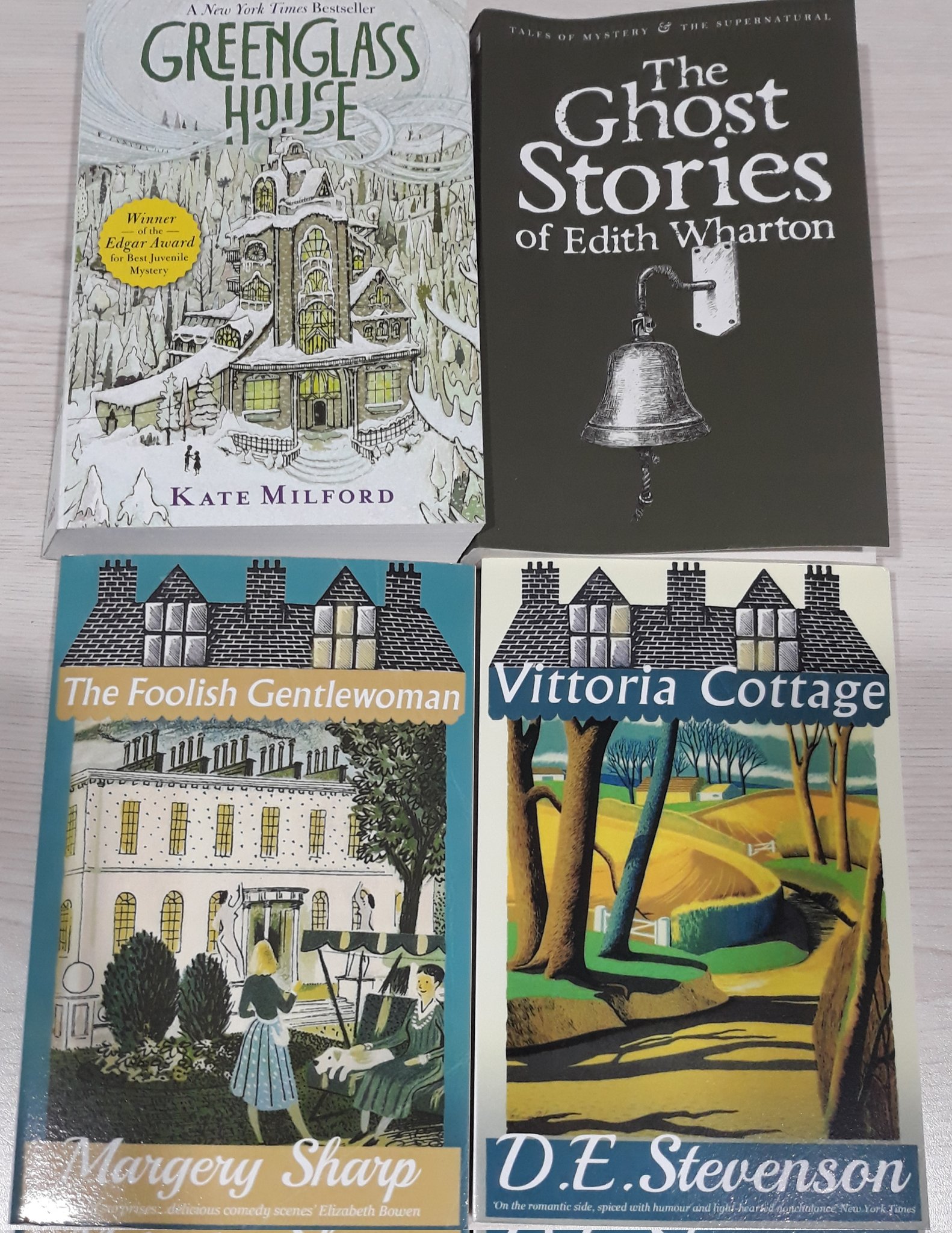
These, apparently, were the last batch I'd ever received 
from Book Depository!


What next, then?

I have hinted before in another post, my concerns that has encouraged me to consider audiobooks. Long story short, I've had problems with my eyesight, which compelled me to reduce activities which threaten to strain my eyes. Since my fulltime job requires me mostly to use computer, I can't do anything about it. It leaves me to reduce my reading and watching (TV/movies streaming). Of course I can't do that, can I? So, I have made these compromises:
  1. Stop watching either TV or movies. I have, sadly, cancelled my subscription to Netflix. But it has to be done if I want to keep reading. And I want to be able to read - I WILL - until I can't!
  2. Stop reading printed books, and switch to e-books or audiobooks. As I have said in this post, I started listening to audiobooks this year, and so far, enjoy it. But I can't rely my reading 100% to audiobooks because: a) not every book has audiobook version, b) if any, it always depends on the narrator, c) I can't listen to audiobooks at my lunch break or during commute. And there is where e-books are my hero!

What I love about digital books is the adjustable font sizes and background, which can't be found in printed books. Thanks to e-books and audiobooks, nowadays I can read comfortably without further injuring my eyes.

And they are much cheaper too than printed books! I've subscribed to Scribd, which cost me about $5,5 per month, with free access to all books available. If I can't find certain book, I could buy an e-book in Google Playbook. Either way, it's much cheaper than buying printed. And that is what my future reading life looks like.

Back to Book Depository's closing down, it's saddened me because of so much happy memories I've experienced of its brilliant services. But it's not so devastating, since I've decided not to buy printed book anymore. I still occasionally use my existing printed copy though, but only to consult something I don't quite get from audio or e-book.

In short, it's the end of an era, but on the other hand, it marks a new era in my reading life. Come what may, I'm happy to be able to keep reading for years to come. That, in the end, is what really matters, isn't it?

Monday, April 10, 2023

The Stone of Chastity by Margery Sharp: A Review for #1940Club


💙 This was my first acquaintance with Margery Sharp, and I must say that I wasn't too impressed.

💙 Professor Pounce, an expert in folklore, came to an old village called Gillenham, after learning about an ancient legend of the stone of chastity. According to the legend, there was a stepping stone on the local stream, on which a chaste woman would cross safely, but an impure or unfaithful one would certainly slip into the water.

💙 Accompanying the Professor, were the meek Mrs. Pounce, his sister in law; the idle Nicholas, his nephew; and a voluptuous girl called Carmen, whose capacity nobody knew about. They all lived in Old Manor. The Professor's first campaign for his scientific study was distributing a questionnaire on general knowledge about the stone of chastity (have you heard about it, do you know where it's located, and so on) to all the villagers, enlisting Nicholas to assist him.

💙 This questionnaire immediately stirred the village. The vicar's wife was enraged, marked it as paganism. Nicholas tried to warn the Professor about it, but to no avail. He received only one response to the questionnaire, but it's enough, because he's finally found the stone!

💙 Next step is the experiment. Professor Pounce, regardless of the women's rejection, invited all women of Gillenham to participate in the experiment (by stepping into the stone). Pious Mrs. Pye organized the village women to confront the Professor over this outrageous plan.

💙 Now, as I have said in my 1st Impression on this book, this is a ridiculous, hilarious, but clever satire. Unfortunately, I didn't feel as connected to the story as I've expected. It is quite entertaining as a book, but lacks of charm. The only interesting and relatable main character here is probably Professor Pounce. Nicholas is flimsy with all his romantic pursues; Carmen doesn't feel alive - only a voluptuous figure without soul.

If you are looking for a light, silly, ridiculous book, this would be it!

Rating: 3 / 5


*I read and reviewed this book for:*


Friday, April 7, 2023

The Émile Zola Tag #Zoladdiction2023


My answers to The Émile Zola Tag, for Zoladdiction 2023:

How was your first introduction to Émile Zola? We'd love to hear your stories!

It was at a business event about twelve years ago, which I attended as representative of my boss who couldn't make it. As I have anticipated that I would be bored (it's a sort of celebration of the our client's company anniversary), I brought my new copy of Thérèse Raquin. I didn't know then who Émile Zola was - I even thought him as a she! And the cover of my edition indicated the book as a literary romance. OK, perfect book to read at the back seat, while now and then I will clap my hands with the others, I thought. But, alas, I was wrong! And then I was so thoroughly absorbed into this wonderful psychological thriller, that I almost finished it during the whole event (breaking only during lunch). I must have given a queer sight to the other guests, absorbed in a book at a business event! At that point I knew that I have fallen in love with Zola - imagine, to be able to write like that! The rest is history.


Do you read Zola's randomly, or do you follow a certain, or even your own order?

I started the Rougon-Macquart from L'Assommoir, then continued randomly to several other titles, before I read the first one: The Fortune of the Rougons. It was years later that I realized I should have read the cycle chronologically. 


What do you like and/or dislike from Zola? It can be his works, views, or personalities.

What I like most from Zola is his writing style. It often has the quality of a painting - picturesque and eloquent. Then, there's this brutal honesty in his narrative; the powerful intensity in his description that often send blows to one's mind.

As a human being, I admire Zola's persistent love of truth, which is reflected on his involvement in the Dreyfus Affair. And, though I disagree with his attachment to his mistress Jeanne Rozerot, at least he still respected and cared about his wife Alexandrine.


If you must spend a day with one character from Zola's books, who would you rather be with? And what both of you would do?

Denise Baudu from The Ladies' Paradise. I've just re-read this book, and realized how amiable and clever Denise was! Hanging out with her would make my morning delightful! I would love to take a stroll with her in the Jardin des Tuileries, while listening to her smart business ideas. Then after an impromptu picnic (my treat!), we would visit the Ladies' Paradise, where she could show me their lovely displays with splendid color plays. What a feast it would have been! 😉


Name one of Zola's books you would recommend others to read! Or if you haven't read him, which book do you like to start with?

Germinal. Always! It's such a perfect book in many aspects.


You were invited in Zola's soirée (Zola's famous literary dinners of Naturalism writers) at Médan tonight. You may listen to all the conversation/discussion, but you're only allowed to suggest one topic - what would that be?


I would LOVE to be in one of Zola's soirées! The topic of my choice would be: Free will. I would throw this question to them: "What do you think about free will? You guys write much about determinism, that our action is determined/dictated by our hereditary flaws. Don't you believe that with efforts, we could fight against those flaws?" - that would be a discussion I'll never forget! Do you think they will invite me again after this? LOL


What is your least favorite book from Zola?

Every writer must have a flop, right? Nobody is perfect. My least favorite from Zola is His Excellency Eugene Rougon. Politics is never my cup of tea, and Eugene Rougon is perhaps the most 'soulless' character from all the descendants of Tante Dide!!


Have you read any book/work by other authors about Zola? Biography, companion book, essay, historical fiction, etc. Share them, please! (It may inspire others). If you haven't, would you like to?

Here's the list, with links to my reviews.
🔹️The Life and Times of Émile Zola by F.W.J. Hemmings
🔹️A Biography of Emile Zola by Alan Schom
🔹️The Disappearance of Émile Zola by Michael Rosen
🔹️Zola: Photographer by Francois Emile Zola
🔹️An Officer and A Spy by Robert Harris (historical fiction of the Dreyfus Affair, Zola appeared, but not much)

I have also in my TBR:
- Brian Nelson's The Cambridge Companion to Émile Zola.

Still on my wishlist:
- Ernest Alfred Vizetelly's With Zola in England - the story of Zola's exile during Dreyfus Affair.
- Eileen Horne's Zola and the Victorians: Censorship in the Age of Hypocrisy


Of the Rougons, the Macquarts, and the Mourets, which family do you like best? Why?

This is a bit difficult. Coming from middle class background myself, I feel more related to the Mourets; they are mostly quite pleasant, respectable people. However, the Macquarts had mostly been depicted in Zola's best stories (and my favorites): L'Assommoir with Gervaise, Germinal with Etiènne, La Bête Humaine with Jacques, etc. They always brought the most compelling dramas, so... I'd go with the Macquarts!


My favourite Zola's quote(s):

"Now the April sun, in the open sky, was shining in its glory, warming the earth as it went into labour. From its fertile flanks life was leaping forth, buds were bursting into green leaves, and the fields were quivering with the growth of the grass. On every side seeds were swelling, stretching out, cracking the plain, filled by the need of heat and light. An overflow of sap flowed with whispering voices, the sound of the germs expanded in a great kiss. Again and again, more and more distinctly, as though they had come right up to the soil, the comrades were hammering. In the fiery rays of the sun, on this youthful morning, the country was pregnant with this rumbling. Men were springing forth, a black avenging army, germinating slowly in the furrows, growing up for the harvests of the next century, and their germination would soon overturn the earth." ~ the ending of Germinal.