Friday, June 9, 2023

Book Title Challenge


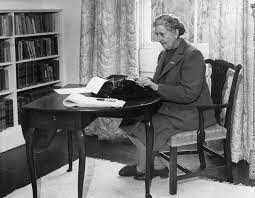
Woman Writing by Hendrik Jacobus Scholten

I saw this fun bookish tag in Golden Age of Detective Fiction blog, who had also seen it in another blog. I thought it would be a fun way to bring back some favorite books I have read and reviewed here years ago. So, let's play!

A Book with A Number In The Title

Twenty Years After by Alexandre Dumas

You might be more familiar with Dumas' Three Musketeers, but my favorite from this series is actually the direct sequel: Twenty Years After. It is, as the title hinted, twenty years after the four friends' last action in The Three Musketeers. We saw them in this book as more matured men. They struggled with more personal or family issues, and it all changed their views. But one thing stays rather the same: their friendship. It was even more deepening toward the end. A very compelling, heartwarming book, still with some swashbuckling scenes to entertain you.


A Book with A Name In The Title

The Brothers Karamazov by Fyodor Dostoyevsky

One of my favorite books that deal about conscience and free will. "If God does not exist, then everything is permitted" always provides you ample ground of argument.


A Book with A Setting In The Title


This book remains one of my favorites from Christie. It's a straightforward case, inside a family, and set in a peaceful English countryside. It is also Christie's first book. And having been listening about the writing process in her autobiography very recently, only added the book's charm in my memory. Christie even named her first house 'Styles'!


A Book with An Animal In The Title

Lord of the Flies by William Golding

A wonderful book that deals on the two sides of human being: the good and the evil.


Book with a Colour In The Title

The Black Tulips by Alexandre Dumas

A lesser known work of Dumas, though with the same intricately woven plot. Combining historical events and passionate agricultural personages, the result is highly entertaining story.


A Book with One Word In The Title

Beloved by Toni Morrison

A very powerful read that will blow your mind. If you have to read only one from Toni Morrison, this one would the perfect choice. It's a beautiful albeit bitter story about slavery in the South of America around the end of Civil War, or in the Reconstruction era.


Feel like doing this yourself? Then consider yourself tagged!


Wednesday, June 7, 2023

Summer by Edith Wharton: A Review


πŸ’š Charity Royall is one of just a few of Edith Wharton's heroines who didn't come from upper class society. She came from "up the Mountain" - a slum raked with poverty - but her mother gave her away to be brought up by a lawyer in a respectable house.

πŸ’š Charity grew up with these two identities pulling each other inside her. In a way, she's ashamed of her origin, and grateful of her respectable house. But she also feels of not really belonging in the Royalls' family, and longing to be independent. That's why she takes a job as the village librarian in order to fulfil her dream, though she hates the job.

πŸ’š When Lucius Harney - a handsome young architect, nephew of her boss - comes from the city, Charity is attracted to him. I think she's more attracted to the prospect of leaving her shameful past, than to Lucius himself. Or is it that she feels flattered to be loved by an educated man? Either way, Lucius is Charity's only ticket to freedom and more exciting life. The fact that Mr. Royall wants to marry her, and even made an inappropriate advance to her (ugh!) only strengthens her longing.

πŸ’š As much as I'm excited for Charity's growing intimacy with Lucius, knowing that it is a Wharton's story, I was having trepidation along the reading. Wharton's naturalism meant that most of her heroines are unable to make a life of their own. Charity and Lucius' fourth-of-July cheerful outing is so good that I feared something terrible must awaits in the next chapter(s).

πŸ’š Summer is a coming-of-age story. I'm happy with Charity's development into a matured and wiser woman. Maturity means that one can accept of one's self as it is, and thus, knowing what must have to be done and what's best for one's own.

πŸ’š I have read this book in a very wrong moment, and that's why I didn't enjoy it as much as I should've been, though I realized it as one of Wharton's finest writings. I think I might have to stay away from Naturalist authors for some time. It's not good for my depression. At this moment I only need cheerful stories with happy ending, or fast-paced stories that don't require me to feel anything.

Rating: 3,5 / 5


Tuesday, June 6, 2023

Top Ten Tuesday: Books That Feel/Look Like Summer


Top Ten Tuesday is a weekly meme hosted by That Artsy Reader Girl, and this week's prompt is...


Top Ten Books or Covers that Feel/Look Like Summer

The first four are books with the word "summer" in their titles. I have only read two, while the other two are in my TBR.


Summer by Edith Wharton (Read but not yet reviewed)
The Summer Book by Tove Jansson
A Midsummer Night's Dream by William Shakespeare
The Greengage Summer by Rumer Godden


The next five are with covers that looks like summer:


My Good Life in France by Janine Marsh
The Earth by Γ‰mile Zola


And the last one is simply the essence of summer trapped in a book:

Dandelion Wine by Ray Bradbury


Have you read any of them? Any favorite?


Saturday, June 3, 2023

Six Degrees of Separation, from Friendaholic to The Martian


Six Degrees of Separation is a monthly meme, now hosted by Kate @ books are my favorite and best.

On the first Saturday of every month, a book is chosen as a starting point and linked to six other books to form a chain. Readers and bloggers are invited to join in by creating their own ‘chain’ leading from the selected book.

This month we start from:


0.
Friendaholic
by Elizabeth Day

"As a society, there is a tendency to elevate romantic love. But what about friendships? Aren't they just as – if not more – important? So why is it hard to find the right words to express what these uniquely complex bonds mean to us? In Friendaholic: Confessions of a Friendship Addict, Elizabeth Day embarks on a journey to answer these questions." - Goodreads

I haven't read this book, but the title says it all. The center theme is about friendship, which I picked to build my first chain - a friendship of two men which was developing throughout the years, or throughout the books where they were in together. I'm talking about....


1. The Big Four by Agatha Christie


...Hercule Poirot and Captain Hastings. It was when fighting this international intrigued which threatened to control the world, that Poirot and Hastings were in the closest danger of death. In the most crucial hours, we get to see how deep their friendship was.

For my next chain, I used the word Four from the title, and picked another book from Christie with the same number in the title:


2. 4.50 from Paddington by Agatha Christie


It is one of Miss Marple's cases, where she looks into her friend's claim that she witnessed a murder on a train.

Again, I use one word from the last book title: Paddington, for my next chain:


3. A Bear Called Paddington by Michael Bond


Everyone knows who Paddington is, a fictional animal character who can think and talk like human being.

Another book with animal who can think like human being, and even narrate the book from its point of view is:


4. The Black Beauty by Anne Sewell


"Black Beauty's story, as told by himself, is the fascinating tale of the life of a horse a hundred years ago, when horses were a part of daily life." - Amazon

Another book with a horse in the story as well as in the title, would be my next chain:


5. All The Pretty Horses by Cormac McCarthy


Before finding this book in online second hand bookstore, I didn't know that this book has been adapted into movie starring Matt Damon! Have you watched it?

And so, for my last chain, here is another book from my TBR with Matt Damon starring in the movie adaptation, and also appears in the cover:


6. The Martian by Andy Weir


"A meticulously researched, briskly paced and surprisingly funny story about an astronaut left behind on Mars, presumed dead, who must now figure out how to survive and let the folks back on Earth know he is alive and needs rescue." - a Goodreads review.

I haven't read this, because this is a rare condition where I have watched the movie first before reading the book. Serious question: is it worth reading?


There, another fun chain to build. It begins with a book which provides many possibilities to create lovely chains. The one I posted here was my third options, which I found most interesting.

Have you read those books? If you do #sixdegree, how it worked out for you this time?


Thursday, June 1, 2023

Throwback Thursday #1: Baking Cakes in Kigali by Gaile Parkin


Throwback Thursday is a monthly bookish meme hosted by Davida @ The Chocolate Lady's Book Review Blog every first Thursday of the month, where we are highlighting one of our previously published book reviews.

I see this as an opportunity to re-post (or translate posts originally published in Bahasa Indonesia) my old book reviews, previously posted in my old (now inactive) blogs.

For my first #ThrowbackThursday, I picked a book I've read and reviewed in June 2014. It's a heartwarming, mouthwatering book about baking cakes and humanity.


Baking Cakes in Kigali by Gaile Parkin


🧁 In 1994 Rwanda was torn by ethnic genocide. Now in 2000, six years after the tragedy, the survivors are still in traumatic condition. Distrust and fear are still thickly clouding their daily lives. In this condition, the Turangaza family move in from Tanzania, and live in an apartment.

🧁 Angel Tungaraza is a professional cake baker, and through this business Angel spread to the neighborhood the spirit of reconciliation. Reconciliation of the two ethnics that were fighting in the genocide: the Tutsis and the Hutus, as well as personal reconciliation with each of their pasts.

🧁 In Kigali, seems that everyone has experienced the losing (at least) a family member. Although coming from Tanzania (and did not experience the genocide), Angel and her husband, Pius, are also victims of traumatic experience of losing their children by death. AIDS, as we all know, is another deathly terror in Africa at that time besides Rwandan genocide. The Tungarazas’ children have died of AIDS, and now Angel and Pius must raise their grandchildren (five of them!) by themselves. Fortunately, in the time of resurgent after the tragedy, there are plenty of things to be celebrated. And, what is a celebration without a cake?

🧁 Since the best cake in Kigali is Angel’s, her business springs, and people from all background come to her apartment to order cakes. Gaile Parkin described the cakes to tiny details in every chapter, and that—apart from the people struggles—gives the book its unique attraction. Each chapter portrays each cake, each event of celebration, each individual, with each problem.

🧁 Angel’s cakes are not only delicious in taste, but they are also impressive in decoration. The cakes are rich in colors (as the African like it) and they are tailor-made to the celebration itself (or the person who is celebrating it). But Angel does not run the business only for money, more than that, she helps her customers to regain happiness in her own simple way.

🧁 When customers come, Angel would let them sit down, and gives them her portfolio for their reference, while she is preparing her Tanzanian spiced tea, accompanied with cupcakes. She never runs out of these cupcakes because she used to make them from what’s left of the cakes she makes for customers.

🧁 Over the tea and cupcakes—and most of all, her friendly but professional manner—Angel would drive her customers to tell their success—or bitter—stories of life. Being a good listener with tender heart, Angel often brings hope—if not solution—to them. And, as a bonus, she gets the order, plus the happiness of baking and decorating beautiful cakes, which is her passion.

🧁 For a debut, Gaile Parkin has written a tremendous work. ‘Baking Cakes in Kigali’ is a sweet and pleasant reading which bears a serious theme. It flows naturally and conveniently, offers sweetness (from the cakes things), a bit of mystery (from Angel’s traumatic past), and a lot of humanity aspects (love, racialism, freedom, etc.). I love it from the beginning, and the book certainly made me craving for cupcakes! :)


Have you read this book?
I just realized that it has a sequel - I would love to go back to Kigali and 'taste' Angel's cupcakes again!


Wednesday, May 31, 2023

Goodbye May!


A woman reading on her balcony (Oscar Coddron)


My reading life has slackened a bit this month, after April excitement subsided. Well, another "storm" hit our lives again, but like always, it, too, will pass. Meanwhile...


πŸ“š Books Read in May

Agatha Christie: An Autobiography
(started in March)
Read from: audiobook

The Professor's House by Willa Cather
Read from: printed book

Summer by Edith Wharton (not yet reviewed)
Read from: printed book

The Professor's Commencement by Willa Cather (short story)
Read from: e-book


πŸ“š 2023 Statistics

πŸ“Š Total books read so far: 22
πŸ“Š Total short stories read so far: 5
πŸ“Š Challenge progress:
* 2023 TBR Pile Challenge: 7
* 2023 Victorian Reading Challenge: 2
* 2023 Audiobook Challenge: 9


πŸ“š What's happening in June

πŸ”Έ️ For the first time, I'm joining #20BooksofSummer hosted by Cathy @ 746 Books. I opted for 10 Books. Here's the list of books I'd be reading.

πŸ”Έ️ Another fun event I'm joining is Reading the Meow hosted by Mallika @ Literary Potpourri


How about you, how has your May been?


Monday, May 29, 2023

Agatha Christie: An Autobiography | An Audiobook Review


"To be part of something one doesn't in the least understand is, I think, one of the most intriguing thing about life."


🧑 Dame Agatha Christie is one author whose books I continually read since I was 11 years old. Yet, I didn't really know much about the author herself. Until I read this book, her autobiography. From now on, I would call her Agatha - or Aunt Agatha - because that's how I felt about her after reading this Autobiography, as intimate as an aunt and her niece!

🧑 Agatha wrote this autobiography at the age of 75. It covers her life from childhood (about five y.o.) to the time she wrote this. It is by no means a chronological account of her life. Instead, she wrote from memory. Scattering bits and pieces of bygone events and perceptions which came to her memory as she's writing, she told it us; adding sometimes her views on certain subject, or comparison with her present situation.

🧑 Just imagine listening to your grandma telling you stories about her past: "I remember one day when I was about five or something..." - it's that kind of stuffs. But from these stories, and Agatha's comments on the events, we came to know much about her. Just like how you would've known your grandma more intimately after listening to her for half an hour every day during one summer holiday. You would feel you've known her all your life. And so, this review would also be bits and pieces of what has impressed me from this book.

🧑 Agatha's father was a caring, generous man with sense of humor, and liked by many people. Her mother was shy, impulsive, and melancholic. And she was a good story teller. Her stories was always different. One of them was The Curious Candle - a detective story! Her mother, however, didn't allow her children to read before age 8. Nevertheless, Agatha taught herself to read from story books. She could read at 5 y.o., and loved story books (and telling stories) ever since.
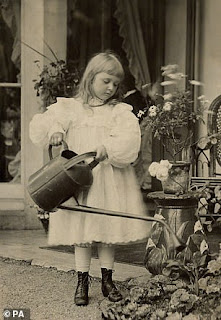


🧑 Agatha first ever story-telling in childhood was when her friend Margaret lost her front teeth and made her speech incomprehensible. Agatha daren't say she didn't understand what she said, but didn't want to not having conversation either, so she invented a story about fairy. Later, when Agatha didn't have friend at same age, she invented imagery friends and instilled different personalities into each. She would chat with them while playing outside. And that's how the seeds of a novelist was sown, I believe.

🧑 Agatha first wrote a detective story (The Mysterious Affair at Styles) was due to her sister's challenge. But later after her father's death and financial problem, she began to write as a profession (though 'till the end she never embraced her status as a succesful author). But, as we all know, monetizing hobby could be an unwholesome job. To divert from this, Agatha loved writing plays, and do it wholeheartedly.

🧑 Besides writing, her other passions were travelling, archeology, and houses. Agatha is one of the most adventurous persons I've ever known. She always tried to do new things, and almost always found them interesting. Either it be her work at the dispensary during War (where she got to know several poisons for her murder cases), or being assistant to her second husband Max Mallowan during their excavation gigs.


Max Mallowan & Agatha Christie during excavation gig at Ur, 1931


🧑 Speaking of husband... I hate Agatha's first husband: Archie Christie! When her mother died, Archie didn't accompany his wife during her grief because he couldn't stand sorrows and miseries. He then returned to their home asking for divorce because he's in love with another woman, who was there for him during his wife's absent. Dude, she was grieving her mother's death! How do you expect her to amuse you? It's you who should've been there to support your wife in those difficult times. Didn't like funerals? Nobody did! But that's life. Are you human or not?! Actually I didn't like him from the first. He seemed to be egotistical person. And it turned out he was.

🧑 Though I enjoyed every second of my listening to this book (I listened to audiobook), as a reader, my favorite part is when Agatha's taking about her favorite books, her writing and publishing books I've read, and various inspirations of them. Agatha's favorite character from Dickens' Nicholas Nickleby was the man who courted Mrs. Nickleby by throwing vegetable marrow. Did this where Poirot's throwing vegetable marrow in The Murder of Roger Ackroyd came from? (She said "maybe", but I'm certain it did!)


🧑 Many of her unique novels were mostly inspired (or persuaded) by her acquaintances. The Pale Horse, for instance, was inspired by a chemist (Agatha's instructor during war). Death Comes at the End was the result of Agatha's friend' persuasion that she need to write a murder story set in ancient Egypt. A colonel (Archie's boss) 'asked' her to put him as character in her novel -The Man in the Brown Suit was the result. It's fascinated to learn this backstory of her many novels!

🧑 Of Agatha's own favorite writers and books: her Walter Scott's favorite was The Talisman (didn't surprise me considering her fascination of the Middle East), while Bleak House was crowned as her favorite Dickens. She also loved Dumas (my face too!), especially 1st volume of The Count of Monte Cristo. But her most favorite author was perhaps May Sinclair.

🧑 I listened to this audiobook almost every day for about 6 or 8 weeks, and those were happy days! I loved Judith Boyd narration, though her "excitement squeals" were rather unpleasant. But overall, it's been entertaining as well as inspiring. Agatha lived her life the fullest, and she always found joy in everything she did. My readings of Agatha's books will forever change after this! What a life, and what an autobiography!

Rating: 4,5 / 5